MBABANE – A total of 1 516 girls left school due to pregnancy between 2023 and 2025, while the number of reported violence cases in schools increased from 45 in 2023 to 204 in 2024–2025.
This has raised concerns about learner protection and retention in Eswatini’s education system.
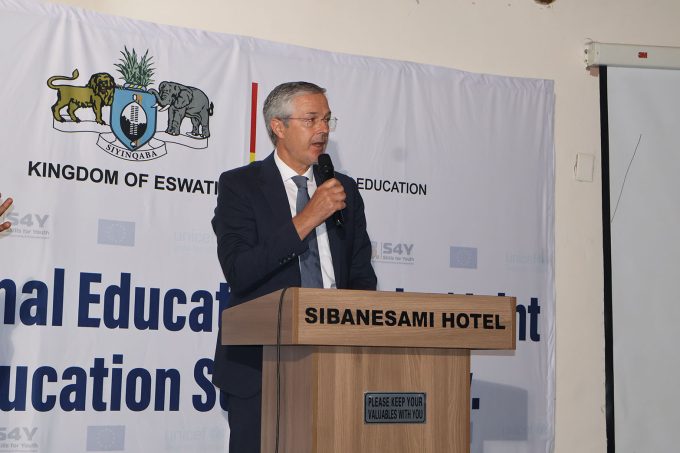
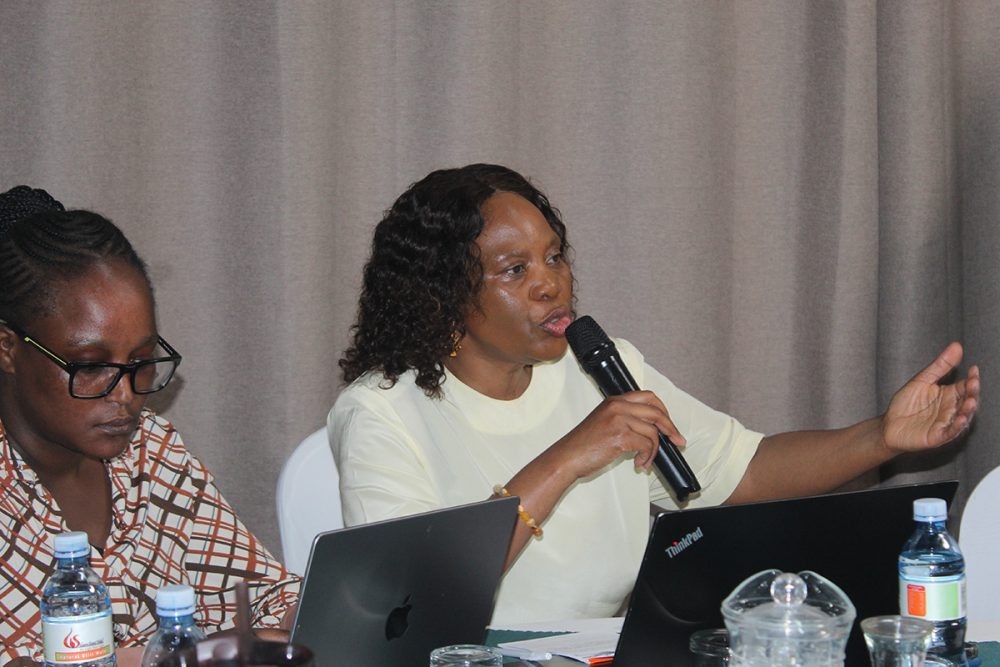
The figures are contained in a presentation on the Guidance and Counselling Programme, delivered by Acting Director of Guidance Londiwe Ngci Dube during the 2026 Education Joint Sector Review (JSR) Indaba, held at Sibane Sami from October 26 to 28.
According to the presentation, the number of primary school girls who left school due to pregnancy increased from 88 in 2023 to 180 in 2025, representing a rise of about 105 per cent. At secondary school level, the figure increased from 964 to 1 336 over the same period, a 39 per cent increase.
The presentation warned that pregnancy was the leading recorded reason for school dropout, while other reasons, including abuse at home, substance use and bullying, also increased.
The figures are counts rather than dropout rates, and the presentation cautioned that some of the increase could be attributed to improved reporting. It said enrolment figures were needed to calculate accurate dropout rates.
The presentation was made under the JSR’s deep dive into equitable access, participation and inclusion. During the ongoing Education Sector Review at Sibane Sami Hotel. It assessed progress in guidance and counselling services against the Education Sector Strategic Plan (ESSP) 2022–2034, particularly the commitment to assist learners at risk of dropping out.
Despite the growing challenges facing learners, the presentation revealed that no full-time guidance and counselling posts had been created in schools.
It said this was despite the commitment dating back to the 2011 Education and Training Sector Policy, which called for dedicated guidance teachers, counselling rooms in schools, reduced subject loads for guidance teachers and guidance resource centres.
Dube noted that only 180 of the country’s 7 538 primary school teachers had been trained to deliver life skills education, representing 2.4 per cent.
Meanwhile, 258 of 291 secondary school heads, or 88.7 per cent, had received orientation on violence prevention and positive discipline.
A total of 139 schools, representing 47.8 per cent of the 291 secondary schools cited in the presentation, had been trained on Care and Support for Teaching and Learning (CSTL).
She identified limited staffing, inadequate financing, insufficient training at primary school level and weaknesses in case management as major obstacles to effective guidance and counselling services.
Without dedicated staff, guidance and life skills education are often delivered alongside teachers’ other responsibilities, potentially limiting the time available to identify vulnerable learners and provide support.
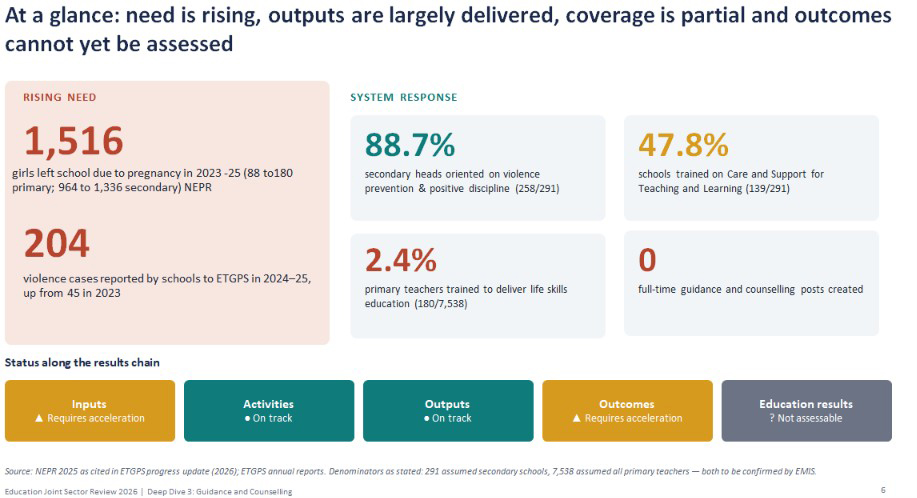
The presentation further highlighted an increase in cases of violence reported by schools to the Ministry of Education and Training’s Educational Testing, Guidance and Psychological Services (ETGPS).
Reported cases rose from 45 in 2023 to 204 in 2024–2025. Emotional abuse emerged as the largest reported category, increasing from one case in 2023 to 93 in 2024–2025.
Physical abuse cases increased from 10 to 44, while neglect cases rose from nine to 35. Sexual abuse cases increased from 25 to 30, and three cyberbullying cases were recorded in 2024–2025, compared with none in 2023.
Dube cautioned that the relatively low number of school-reported cases, when compared with national findings on children’s exposure to violence, could point to under-reporting rather than low levels of need.
She cited a 2016 Drivers of Violence study which found that 88 per cent of children experienced violent discipline.
The presentation also referred to the 2025 Global School-based Student Health Survey, which found that 28.3 per cent of learners had ever had sex. The proportion was higher among boys, at 38.5 per cent, compared with 22.4 per cent among girls.
E-cigarette use was another concern, with 20.7 per cent of boys and 13.2 per cent of girls reporting use in the preceding 30 days.
The presentation said emotional abuse had become a significant psychosocial support concern, underlining the need for counselling services that go beyond reporting and responding to physical violence.