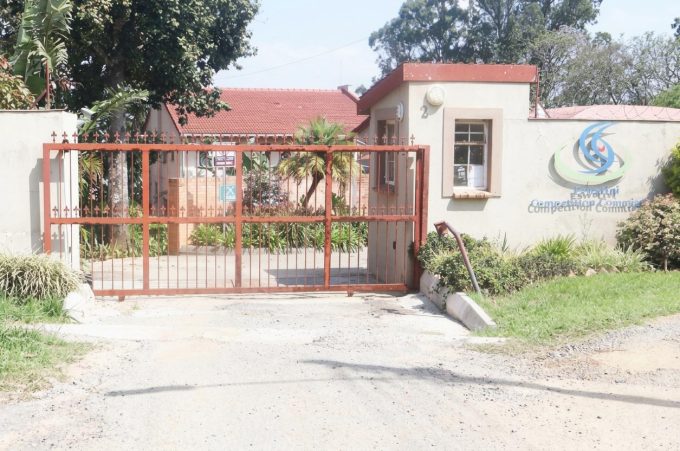
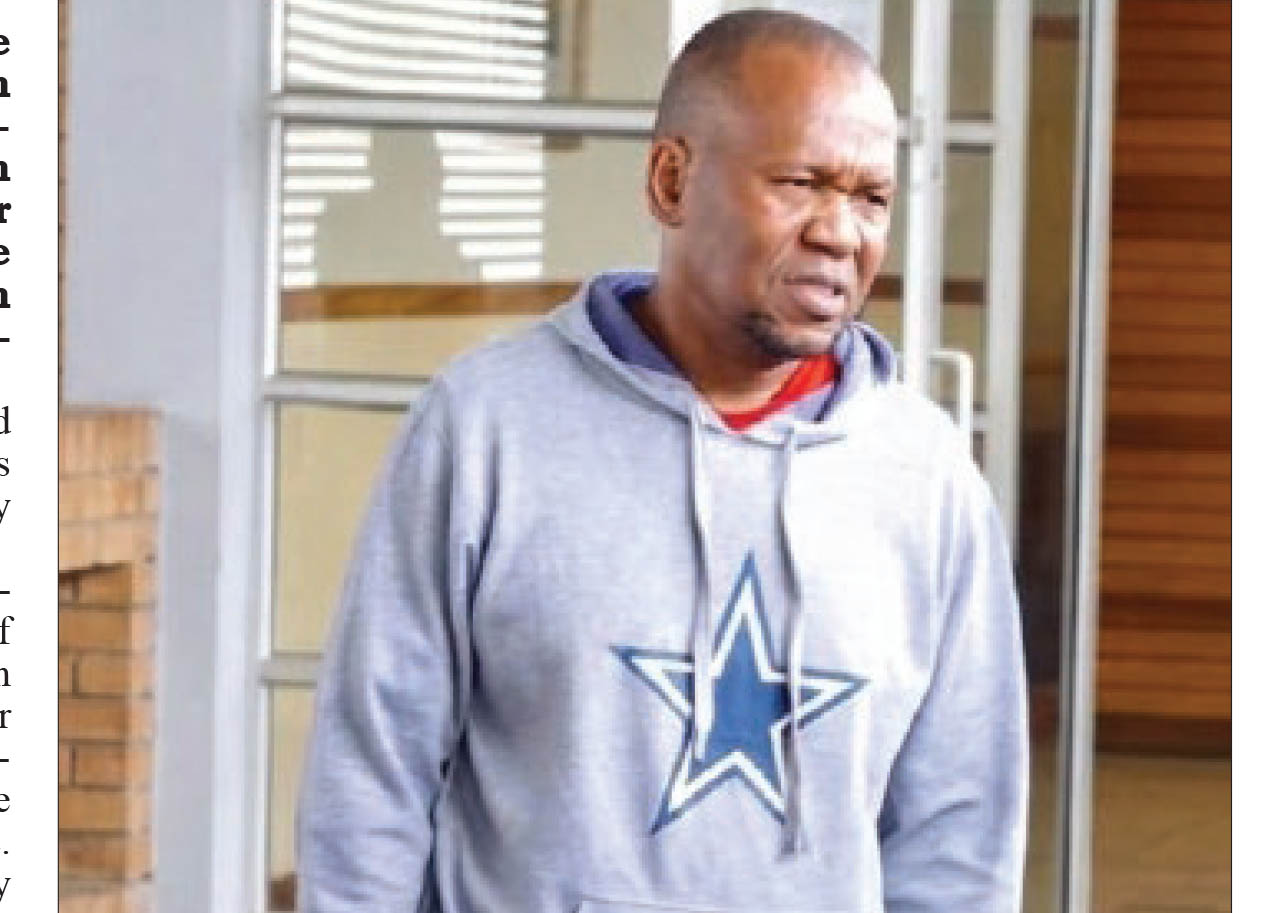
MBABANE – Judge Lorraine Hlophe has dismissed an application by Eswatini Communications Commission (ESCCOM) Finance Manager Sifiso Gulwako seeking the removal of the chairperson presiding over his disciplinary hearing.
The Industrial Court judge found that Gulwako’s aaing Chief Financial Officer, failed to establish a reasonable apprehension of bias or exceptional circumstances warranting the court’s intervention in the incomplete disciplinary proceedings.
ESCCOM instituted disciplinary proceedings against Gulwako following allegations that he transferred about E17 million into his personal bank account.
In the notice of disciplinary hearing on accusation of misconduct, ESCCOM stated that ‘specifically, you withdrew company funds, made point-of-sale payments with the company card for personal use and processed and transferred around E17 million of your employer’s money into your personal bank accounts’.
This amount, according to ESCCOM, was allegedly misappropriated for ‘your own benefit, depriving your employer of the use of approximately E17 million for its business’.
The suspension notice states that Gulwako, then acting chief financial officer, occupied a position of trust and had access to the commission’s financial systems, records, documents and other information relevant to the investigation.
The commission said it had become aware of allegations that between December 2025 and July 30, 2026, certain payments had been facilitated into Gulwako’s personal accounts from ESCCOM’s funds without lawful justification.
At that stage, ESCCOM estimated the loss at E720 000, subject to further verification through its investigation.
Gulwako had approached the court under a certificate of urgency seeking, among other things, an order staying his disciplinary hearing pending determination of his application. He also wanted the court to review and set aside a ruling refusing his application for the chairperson’s recusal and to remove the chairperson from the disciplinary proceedings.
He was suspended with effect from July 30, 2026, following the institution of an internal investigation into allegations of financial misconduct.
According to the judgment, ESCCOM had received information that some of its funds had allegedly been diverted into Gulwako’s personal accounts between December 2025 and July 2026. At the commencement of investigations, the implicated funds were estimated at about E720 000.
On August 12, ESCCOM wrote to Gulwako informing him of charges of alleged misconduct and directing him to attend a disciplinary hearing.
The charges included allegations of gross dishonesty, theft, fraud, misappropriation and mismanagement of commission funds.
According to the notice reproduced in the judgment, ESCCOM alleged that between January 2023 and July 2026, information on creditors’ invoices was falsified or forged by changing bank account details from those belonging to creditors to Gulwako’s personal bank details when payments were processed.
ESCCOM further alleged that company funds were withdrawn through automated teller machines and that a commission card was used for personal goods and services. The disciplinary charge alleged that about E17 million of ESCCOM’s money was processed and transferred into Gulwako’s personal bank accounts.
The disciplinary hearing was initially scheduled for August 14, but did not proceed after Gulwako requested documents which the employer intended to use during the proceedings.
When the hearing subsequently convened on September 1, Gulwako applied for the recusal of its chairperson. The application was dismissed and written reasons were subsequently delivered on September 8.
Gulwako then approached the Industrial Court challenging that decision. His concern about the chairperson’s impartiality arose from the latter’s professional interaction with Gulwako’s former wife, who worked for the Royal Science and Technology Park (RSTP).
The chairperson was an attorney for RSTP and had received correspondence from Gulwako’s former wife concerning a disciplinary matter involving an RSTP employee.
Gulwako contended that the professional interaction created bias and meant the chairperson would not be independent or impartial when determining his disciplinary case. The chairperson disputed that contention, maintaining that his work for RSTP concerned a completely different and unrelated matter involving a different employer.
The court found that Gulwako did not provide evidence demonstrating why the professional interaction would result in bias against him.
It said he had not established that the chairperson had expressed an opinion on his guilt or otherwise outside the disciplinary process or that the chairperson possessed prior knowledge of facts relating to his disciplinary proceedings.
Hlophe said a person alleging bias in a disciplinary process had to establish that the apprehension was reasonable, with the test being objective rather than based on a litigant’s subjective perception.
The court found that the reasonableness of Gulwako’s apprehension had not been established.
It said it remained unclear why instructions allegedly given by his former wife to the chairperson in his capacity as an attorney in different and unrelated matters involving another employer would create a reasonable apprehension of bias.
The court also noted the chairperson’s explanation that Gulwako’s former wife had at one point acted as RSTP chief executive officer and had written a letter concerning an RSTP employee.
The chairperson further stated that he would not be able to identify Gulwako’s former wife if he met her and that the person he dealt with at RSTP was Nompumelelo Ndlela. The judgment states that these assertions were not challenged or refuted by Gulwako.
The court reiterated that it would not interfere with ongoing disciplinary proceedings unless exceptional circumstances existed.
It found that Gulwako’s allegations were too remote to justify the chairperson’s recusal and that his assertions were not supported by substantial evidence.
The court further found there was no acceptable proof of a close working relationship between the chairperson and Gulwako’s former wife that would result in bias against him.
“Exceptional circumstances cannot be established merely through an allegation of bias and the applicant has failed to make a case for the court to intervene and interdict the disciplinary process,” said the court.
Judge Hlophe consequently found that, viewed objectively, no grounds had been established requiring the chairperson to recuse himself and no exceptional circumstances justifying judicial intervention had been proved.
Gulwako’s application was dismissed, with the court making no order as to costs.