
MBABANE – EmaSwati working abroad are losing 16.4 per cent of money sent home, a report has found.
Remittances refer to money sent by people working or living outside their home countries to relatives, dependants or other beneficiaries back home.
For many emaSwati whose family members have migrated in search of employment opportunities over the past six years, these transfers provide an important source of income for household expenses, including food, school fees, healthcare and other necessities.
financial burden
However, the cost of transferring this money is emerging as an additional financial burden for migrant workers. The country’s Global Compact for Migration (GCM) Progress Report, published in April 2026, puts the estimated cost at 16.4 per cent.
The figure is more than five times the United Nations Sustainable Development Goal (SDG) target of three per cent, which seeks to make international money transfers more affordable.
For many emaSwati working in countries such as Taiwan, South Africa, Ireland, the United Kingdom, the United States and Canada, the charges associated with sending money home have become an unavoidable part of their financial responsibilities. Some have resorted to pooling their money to reduce individual transaction costs.
Interviews conducted by eswatini News with emaSwati living in Taiwan this week revealed that some have adopted a collective approach to sending money home. They combine their contributions into a single transaction before distributing the money among their respective families.
The arrangement, they explained, allows them to share the costs of international transfers rather than each person independently incurring the charges.
The workers said the arrangement had become particularly useful because of the additional costs involved in transferring money from Taiwan to Eswatini, including foreign exchange conversion charges.
They identified two local banks through which they sometimes receive substantially reduced amounts, with deductions reportedly reaching as much as E500 on certain transactions.
dissatisfaction
Although some of those interviewed expressed dissatisfaction with the deductions, they said they had become accustomed to them, particularly because they felt they had little control over the charges imposed by financial institutions.
Similar concerns emerged from interviews with emaSwati living in Ireland, Canada and South Africa, who described the uncertainty surrounding the amounts ultimately received by their families.
A doctor working in Canada, who preferred to remain anonymous, explained that she had been forced to deliberately send more money than her family required because she could not always establish beforehand how much would be deducted during the transfer.
Meanwhile, for the more than 1 000 emaSwati working in Taiwan, the findings of the April report were particularly disappointing.
They expressed concern that the situation was compounded by the exchange-rate relationship between the New Taiwan Dollar (NT$) and the Lilangeni. This means they incur additional costs when converting their earnings before the money reaches its intended recipients.
implications
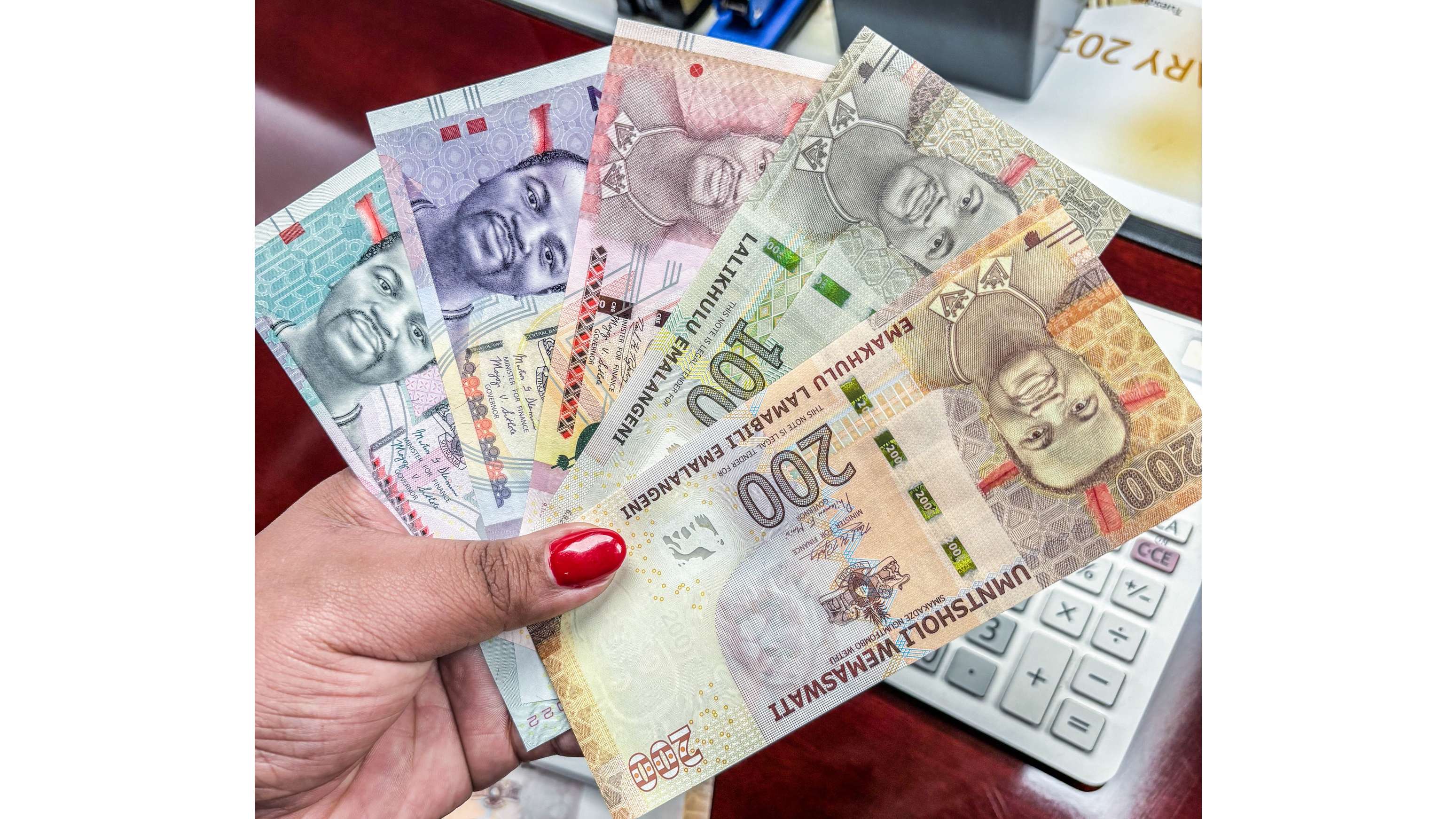
To illustrate the financial implications, a liSwati sending NT$30 000 to Eswatini would be transferring approximately E14 982 when converted into the local currency.
Applying the reported 16.4 per cent remittance-cost benchmark to this amount would translate into approximately E2 457 in transaction costs, leaving the recipient with about E12 525.
In contrast, if the transaction costs were reduced to the internationally targeted three per cent, the charges would amount to approximately E449, leaving the family with E14 533.
The difference of approximately E2 008 illustrates how much more people working abroad have to part with each time they send money home.
Similarly, a liSwati working in South Africa and sending E5 000 home would face different costs depending on the transfer channel used.
The World Bank’s third-quarter 2025 data placed the average cost of sending money from South Africa to Eswatini at 11.62 per cent. At this rate, a transfer of E5 000 would attract approximately R581 in costs, leaving the recipient with about E4 419.
The Rand and Lilangeni are pegged at parity, meaning R1 is equivalent to E1. However, this does not automatically make cross-border transfers free, as processing fees and other charges may still apply.
The World Bank’s assessment of the South Africa-to-Eswatini corridor covered nine service providers, demonstrating that the cost varies considerably depending on the institution selected.
concerns
The concerns come at a time when increasing numbers of emaSwati are seeking employment opportunities beyond the country’s borders.
South Africa remains a significant destination, particularly for emaSwati employed in the trucking industry, formal employment and various unskilled occupations. However, in recent years, many others have travelled further afield, including to Taiwan, where emaSwati teachers have secured employment opportunities through the country’s efforts to improve English proficiency under its Bilingual 2030 policy.
The initiative seeks to develop Taiwan into a bilingual society with greater proficiency in Mandarin and English by 2030. It has opened up employment opportunities for foreign English-Language educators, including teachers from Eswatini.
In addition, some emaSwati have secured employment in Ireland and Canada, while the United Arab Emirates is emerging as another potential destination following the announcement of a recruitment initiative this week.
remittances
Meanwhile, the World Bank has identified remittances as an important source of livelihood in Eswatini, with the country receiving approximately E1.32 billion (US$80 million) in international remittances during 2023. South Africa accounted for more than 90 per cent of these inflows, demonstrating the importance of migrant workers in supporting households and contributing to the domestic economy.
However, the cost of moving this money across borders remains a significant concern. An assessment of Eswatini’s international remittance market found that the country was among the most expensive destinations in the Southern African Development Community (SADC) region for receiving international transfers.
Local banks were identified as the most expensive providers, with an average transaction cost of 17.72 per cent, while money transfer operators averaged 9.23 per cent.
The report further established that digital channels were generally cheaper than cash-based transfers, with average costs of 11.32 per cent and 17.15 per cent, respectively.
The World Bank explained that the total cost of remitting money comprises both the fee charged by the service provider and the foreign exchange margin applied during currency conversion.
This means that the amount lost by a sender is not necessarily reflected in a single deduction on a transaction receipt. Part of the cost may instead arise from an unfavourable exchange rate applied when converting the money into the receiving country’s currency.
motion
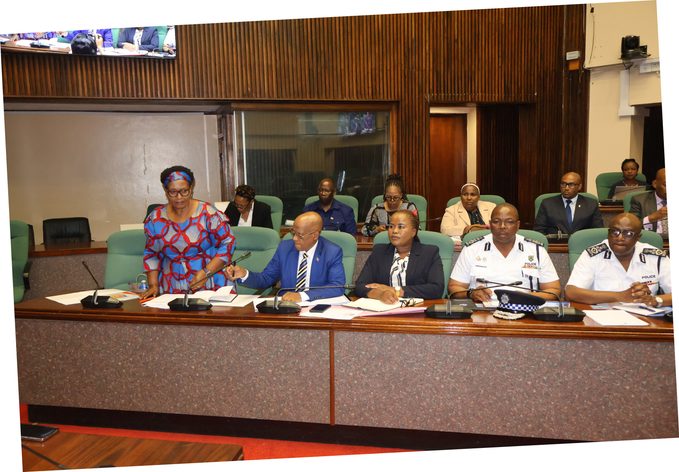
Meanwhile, the cost of banking services has also attracted attention in Parliament, with legislators recently raising concerns about charges imposed on customers.
On Monday, September 28, 2026, Lobamba Lomdzala Member of Parliament Marwick Khumalo moved a motion, seconded by David Ngcamphalala, calling on the minister for Finance, working together with the Central Bank of Eswatini, to investigate service fees, transaction charges and withdrawal fees imposed by Standard Bank Eswatini.
The motion followed concerns that some banking fees were excessive and particularly burdensome to low-income earners, pensioners, students and small businesses. Although the parliamentary motion specifically addressed domestic banking charges rather than international remittances, it brought renewed attention to the affordability of financial services in the country.
The concerns raised by migrant workers therefore emerge against a wider background of questions about the cost of accessing banking services and the financial burden placed on ordinary customers.
advice
When approached for comment, Central Bank of Eswatini Head of Strategy and Communication Mandla Luphondvo first sought clarification on whether local banks had been engaged on the matter, noting that they were among the institutions charging for the services in question. He subsequently advised customers who were dissatisfied with financial service charges to use established channels to lodge complaints and seek clarification, including the appropriate financial services complaints structures and the Ombudsman.
The names of the two banks identified by the workers interviewed are known to this publication but have been withheld for ethical and fairness considerations.
In addition, questions were sent to Eswatini Bankers Association Executive Director Zakhele Lukhele, seeking clarification on the factors contributing to the high cost of international transfers, the industry’s position on the findings and possible interventions to make remittances more affordable.
However, no response had been received by the time of going to print.
regional comparison
In contrast to Eswatini’s relatively high remittance costs, the regional picture shows that the challenge extends beyond the country’s borders, although the extent varies between destinations. South Africa, which is a major source of remittances to Eswatini, also faces challenges with international transfers.
The World Bank’s third-quarter 2025 assessment placed the average cost of sending money from South Africa to Lesotho at 11.25 per cent, slightly below the 11.62 per cent recorded for transfers to Eswatini. Nevertheless, both corridors remain substantially above the United Nations’ three per cent target.
Lesotho, like Eswatini, has strong economic and labour market links with South Africa, making cross-border financial transfers particularly important to households.
The World Bank’s 2023 figures showed that remittances represented approximately 22.9 per cent of Lesotho’s Gross Domestic Product (GDP), compared with 1.8 per cent for Eswatini.