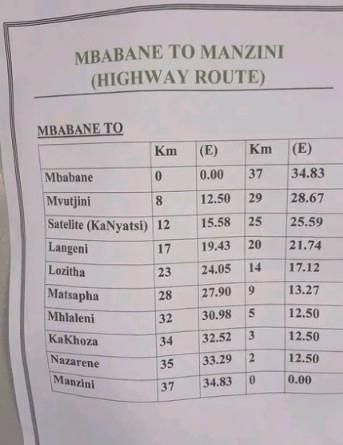
MBABANE – Some passengers have complained of being overcharged following the implementation of the new public transport fares.
The implementation of the new fares has generally been met with minimal complaints, although some passengers have accused public transport operators of charging amounts above those gazetted by government.
The aggrieved passengers reportedly questioned the fares charged by some operators, alleging that they were being made to pay more than the approved increases.
This was confirmed by Swaziland Local Transport Association Secretary Musa Dlamini, who said the association had received a complaint from a passenger travelling from Mbabane to Pigg’s Peak.
Dlamini said the passenger had been referred to the association’s regional offices for assistance, adding that operators had been warned against charging passengers amounts that had not been approved by government.
“I got a call from Mbabane to Pigg’s Peak. I referred them to our offices from the regions. There were also a few other complaints of a similar nature. We referred all of them to the concerned offices within their routes. We do not anticipate problems moving forward though,” he said.
He explained that one of the complaints related to the 25 per cent increase, with the passenger questioning why the adjustment was so high.
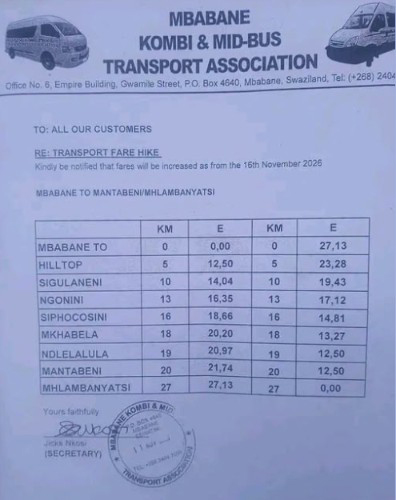
Dlamini said the association was cautioning its members to adhere strictly to the gazetted fares to avoid disputes with passengers.
“We are warning our operators to stick to the gazetted amount as some passengers were feeling that they had been overcharged,” he said.
He added that complaints should be formally reported to the association’s offices so that they could be addressed. However, he had not received any further reports at the time of the interview.
Asked whether operators were already seeing an improvement in their income margins following the increase, Dlamini said it was still too early to assess the overall impact of the new fares, as the adjustment had only recently been implemented.
He said the association would review the situation as time went by, noting that operators were also facing increasing operational costs, particularly fuel.
He argued that the increase in transport fares came at a time when the cost of running public transport businesses had risen significantly, leaving operators with very limited profit margins.
Dlamini cited increases in the prices of everyday commodities and vehicle maintenance items as some of the factors contributing to the rising cost of operating kombis.
Describing himself as a coffee lover, he said a product such as Cremora, which previously cost between E50 and E55, was now selling for about E65, while the price of a vehicle air filter had increased from E150 to E225.
He said such increases had affected operators’ operating expenses, making it difficult for them to sustain their businesses under the previous transport fares.
“The fuel hike is too much. If you buy groceries, you would know that prices have increased exponentially,” he said.
He argued that public transport fares had previously lagged behind the rising cost of operating vehicles, leaving operators struggling to make meaningful returns.
“Transport was really lagging behind, such that there was no profit, but we were merely serving our obligation to service the industry,” he said.
Dlamini maintained that despite the fare adjustment, operators’ profit margins would remain minimal when the various operational costs were taken into consideration.
He said operators needed to be given time to adjust to the new fares, particularly as they continued to incur expenses such as refuelling their vehicles.
He urged passengers and operators to allow the process to unfold while the association monitored the implementation of the new fares and addressed any concerns raised.
The new fares come amid rising fuel prices and increasing pressure on public transport operators to meet their operational costs.