

Sir,
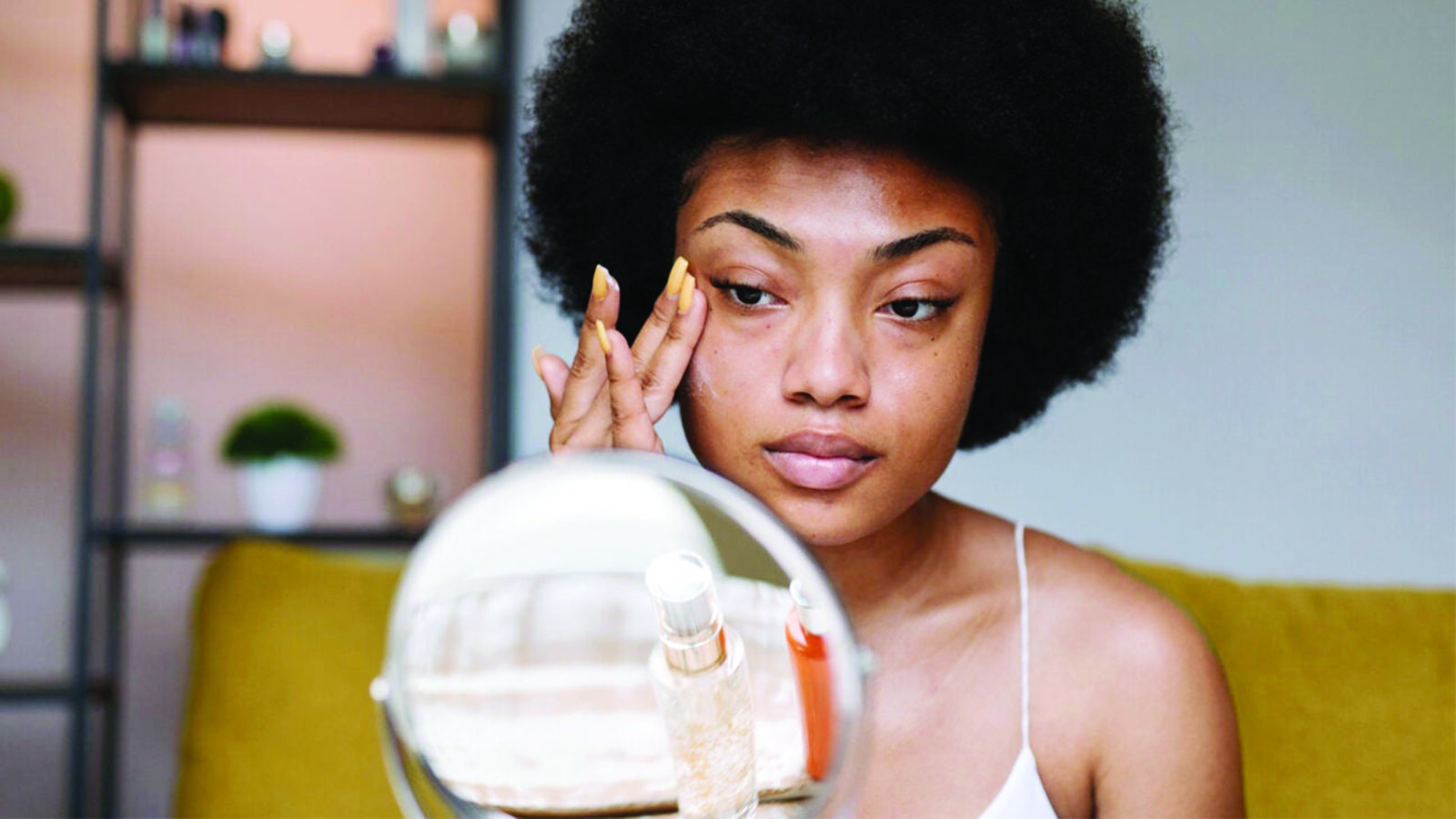
I want to address the issue of women desiring a certain complexion and investing in skin care to lighten their skin tone. Some get disappointed when they give birth to a baby heavily blessed with melanin. They then get uncomfortable parading a dark baby around.
They then order baby glow, a heavily advertised baby cream which claims to ‘brighten and lighten baby skin, ‘with no side effects’.
It is a growing trend in Africa for bleaching mothers to want to have children with matching complexions, and the trend is even worse in South Africa, Tanzania and West Africa.
Surprisingly, most of these products are illegal, however, due to the porous nature of countries’ borders, they find their way through.
For as little as E150, one can get the baby glow product.
Dr Misheck Ruwende, who runs a campaign to spread free evidence-based health information on social media, says baby bleaching will have its consequences felt in a few years to come as the chemicals start having detrimental effects on the child’s health.
Creams
“It is really sad. It won’t happen overnight, but these people are slowly killing their own children. These creams are heavily laden with chemicals that should never come into contact with human skin, let alone baby skin which is much thinner and more delicate, but the problems go way beyond the skin. Babies could even suffer total organ collapse with some of these chemicals and no matter the type of advertising, none of them are safe,” said Dr Ruwende.
The World Health Organisation warns that skin bleaching can cause liver and kidney damage, permanent scarring psychosis, brain damage in foetuses and cancer.
Because of the many harmful chemicals that the products contain such as mercury, phenol, steroids and hydroquinone, there is huge risk involved when using them.
Due to a lack of education and awareness around the dangers, 90 per cent of skin-lightening product users are unaware of these effects.
The Medicines Control Authority of Zimbabwe (MCAZ) has heightened its enforcement after confiscating unregistered skin-lightening creams, body-altering products, expired drugs and other illicit medicinal products that were illegally on sale countrywide.
Supplements
Another new skin-bleaching treatment that is catching on is the intravenous application of glutathione — a natural antioxidant produced by the liver. Intravenous glutathione treatments can lighten skin, and the product can now also be obtained in the form of antioxidant supplement tablets.
Global campaigns against skin bleaching are gaining momentum, although smuggling syndicates are also fast gaining entry to previously untouched territories due to social media, helping them reach such zones.
Many individuals widely use skin- lightening creams to achieve lighter skin tones to meet societal standards of beauty and improve the appearance of hyper-pigmentation and other skin blemishes. They may, however, pose detrimental health effects to children exposed to them prenatally and in early childhood. Some of these harmful effects include acrodynia, nephrotic syndrome, glomerulonephritis dermatitis, among others.
Not only are toddlers at risk, but foetuses whose mothers are bleaching are also at high risk and could even be born blind.
“It’s very dangerous for pregnant women to take bleaching tablets,” warns Catherine Tetteh, Founder of the Melanin Foundation, a Geneva-based non-governmental organisation that campaigns against skin bleaching.
It is also becoming increasingly difficult for authorities to test products, and sometimes the dangerous mercury component is added to a product after it has been tested. Then there are also various innovations around the products, like glutathione, which is a chemical compound that can be ingested or injected.
Exposure
According to the international journal of medical practitioners, children’s exposure to mercurial skin-lightening agents at any time during their development, from intra-uterine to early developmental life, can lead to severe detrimental health effects.
This is because skin lightening agents contain inorganic mercury as their active ingredient at varying concentrations that exceed acceptable levels. Mercury does not confer any physiological benefit to the human body, and as such, it has only been linked to numerous adverse effects on users and may pose a possible health risk for children born to, living with and in contact with skin-bleaching agent users.
There is a high prevalence of cosmetic skin lightening among women of reproductive age in African countries, with prevalence of 25 per cent in Mali and 30 per cent in Tanzania, according to recent studies. This has been attributed to the influence of societal portrayal of lighter individuals as beautiful and the perpetuation of this notion by mass media and popular culture in some areas.
Andile Tshuma
Protect environment
Sir,
As an environmentalist who also happens to care deeply about the status of women in the country, it hurts me to the core each time I see someone carelessly throwing trash outside the window of a moving car. It baffles me each time having to figure out what could possibly be going on in the mind of that person at that moment for them to be that inconsiderate of the environment and the impacts their trash might have on it.
While many of the people who do not care about the environment may live in town, women living in rural parts of Eswatini tend to be natural resource managers as they use the environment to gather food, water and firewood. And from a young age, many of us traditionally assisted our mothers with this work.
Resources
So this is not news, really. Again, this may be news for those living in town, but as resources become scarcer with decline in the environment’s health, girls are attending less and less school to be able to dedicate more time to finding water, or simply because school fees are no longer available as crop cycles become less predictable. The literacy rate for women is already staggering way behind men, and anything that disturbs this even further will only widen the gap. You can imagine the cycle of poverty that this spawns.
As if that wasn’t enough, due to traditional and patriarchal gender roles that devalue unpaid work like childcare and water retrieval, women’s specialised knowledge in smart and effective climate change adaptation is typically not respected or taken into consideration in most community decision-making processes.
The money that government uses in communities for sanitation, is money that may as well be used for more important things such as education, community development and in projects that can help fight crime and gender-based violence in order to create a safe and easy living environment. An unclean environment also has very bad effects on health, and the number of clinics and hospitals in the country, coupled with the state most of them are in, is just not enough to care for all of us. Exposure to toxins can result in grave health impacts, from high incidences of asthma to a cancer epidemic.
Nomsa
















Leave a comment