

It was reported in the Times of Eswatini of July 31, 2025, that an attempt to halt the sale of properties belonging to ratepayers indebted to the Municipal Council of Manzini for non-payment of property rates or taxes had been unsuccessful.
According to the Minister for Housing and Urban Development, Appolo Maphalala, a determination was made by his ministry during a meeting with the Municipal Council of Manzini that the sale of properties belonging to ratepayers in arrears was a last resort, after several attempts to engage with property owners had failed to yield the expected results.
While it may be true that some municipal councils in the Kingdom of Eswatini, particularly the Manzini Municipal Council, have demonstrated patience and a willingness to engage with property owners in arrears, the reality is that selling people’s properties will provide only temporary relief to municipal councils and will also render many elderly persons homeless, thereby worsening the country’s homelessness problem.
The fundamental problem for Eswatini’s municipalities is that, in some respects, the government’s public finance policy is lacking, to put it mildly. When government decided to stop supplementing municipal council expenditure through subventions, no alternative measures were implemented to cover the resulting budget shortfalls. Local government entities were left to ‘sink or swim’ financially, so to speak.
Meanwhile, government proceeded with various projects, some of which are questionable, and these continue to strain public finances with little or no return on investment.
Exacerbating the issue is the lack of independence of the auditor general (AG), which limits oversight of the use of disbursed funds and reduces the AG’s ability to sanction officials when the inappropriate use of funds is identified. This is of particular concern to taxpayers, who have had to watch as Parliament administers ineffectual fines for poor expenditure decisions by government officials in various ministries during performance report presentations.
These misused funds could have been used to bolster the finances of municipalities, which are in desperate need of supplementary funding to provide essential services to ratepayers, many of whom struggle to pay outstanding rates consistently and on time.
Nevertheless, there is hope for improvement if prudent measures are implemented promptly. First, municipalities should be enabled to undertake a variety of income-generating projects and commercial ventures to create sustainable sources of revenue to finance infrastructure maintenance, such as roads and municipal buildings.
For example, following the Business Investment Conference at the Royal Villas several weeks ago, where about E32 billion was pledged by international investors, it has been reported that 21 Taiwanese businesses are set to invest E1.85 billion, which will create around 13 000 jobs in key industries.
If these investments materialise, Eswatini could look forward to a significant reduction in unemployment and the emergence of new consumers, especially among currently unemployed university graduates who may aspire to become homeowners.
Accordingly, these first-time potential homeowners are likely to find the newly announced sectional title development programme attractive.
This presents an opportunity for municipal councils and ratepayers in arrears to collaborate in addressing land demand and establishing sustainable revenue sources for both councils and property owners.
Since the Housing Ministry officials indicated that most properties in arrears are neglected or abandoned, the Manzini Municipal Council should engage with these property owners to consider assigning their land to property developers, in accordance with the Sectional Titles Act of 2003.
This would result in new sectional title unit owners becoming ratepayers, and landowners receiving income determined by the developer’s body corporate managing the infrastructure. This would be a mutually beneficial arrangement.
Municipal councils must avoid prematurely selling off such properties, as forming agreements with property owners over sectional title units on suitable land could ensure sustainable revenue for municipalities in the long term.
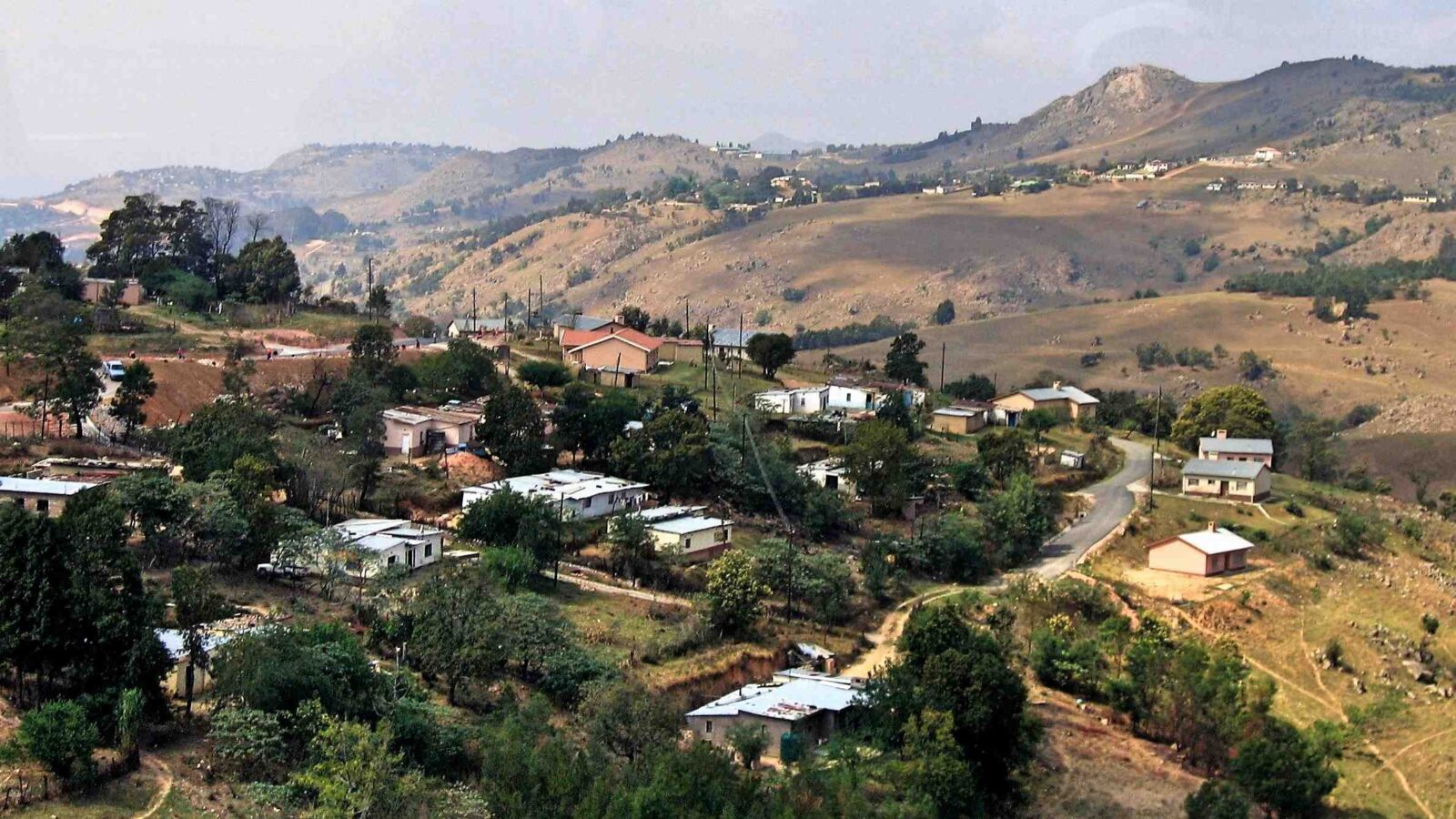
A similar strategy could be adopted with property owners in peri-urban areas, which typically consist of makeshift structures or shantytowns. These rundown dwellings house many low-income workers from urban commercial enterprises and remain largely unimproved due to government inaction on landlord regulation.
This has persisted because government has failed to compel landlords in these areas to maintain their properties, forcing many people to endure poor conditions and substandard safety while still paying rent that is not justified by the state of these premises.
For example, a 2024 article in the Times of Eswatini described conditions in parts of Kwaluseni as a potential source of disease outbreaks such as cholera, owing to inadequate sanitation.
In addition, these areas tend to have high crime rates, which put residents, including students or night-shift workers, at risk. Many such peri-urban areas exist in Eswatini, and it is remarkable there have not been more outbreaks and tragedies related to overcrowding, sanitation and lack of proper infrastructure.
It is urgent that municipalities move towards mitigating these potential hazards, particularly because government priorities in recent years have focused more on major projects than on addressing health risks in support of the Ministry of Health’s sometimes inconsistent disease prevention strategies.
Such upgrades to peri-urban residential properties could be financed by local authorities in partnership with international entities such as the African Development Bank (AfDB).
Local government entities should have the authority to negotiate directly with international financiers, rather than relying on a central government whose priorities have evidently failed to support municipal sustainability.
This could allow municipalities to issue bonds or debentures on the Eswatini Stock Exchange or elsewhere to raise funds for capital projects. Such bold actions are required, especially as government has failed to enact laws compelling landlords in peri-urban and other areas to maintain their properties adequately.
As a result, families—some with school-aged children—are forced to live in unsafe and unsanitary conditions while paying high rents.
It is disheartening that these families must pay exorbitant rent to landlords who threaten eviction after a single missed payment, yet refuse to make essential repairs or improvements.
While the private sector has pushed for deregulation to promote business, it is evident that some regulation is still necessary in areas such as urban housing and development.
The ministry is, therefore, urged to focus its attention on improving housing in urban and peri-urban areas through collaborative efforts with local authorities, aiming to uplift living standards as previously discussed.
To achieve lasting results, the Housing minister must actively and boldly pursue urban and peri-urban renewal, so that his legacy is remembered as ‘an era when housing in Eswatini was transformed in collaboration with the DPM’s Office to resolve the nation’s housing crisis’.
g



















Leave a comment