

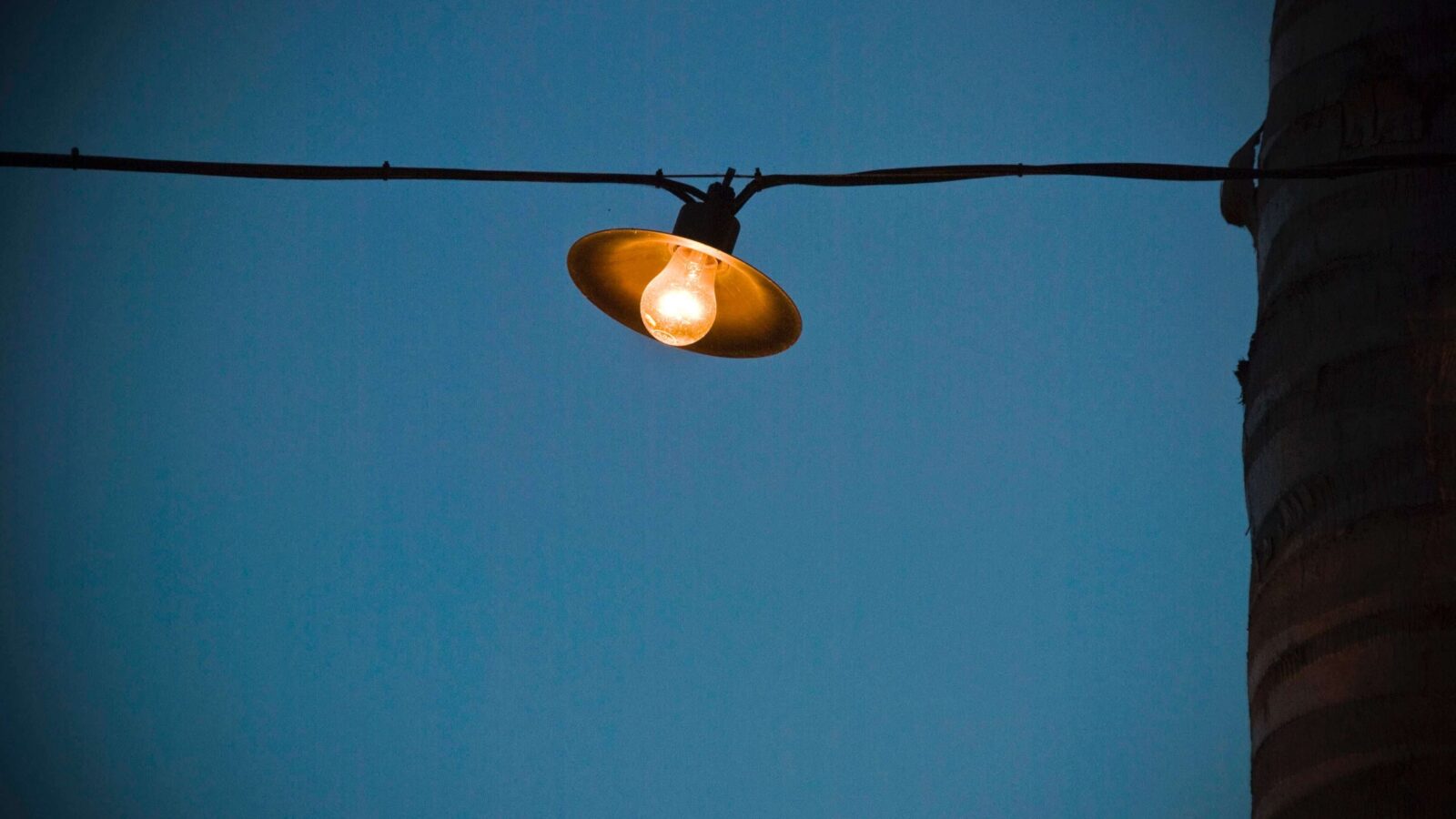
“Affordable electricity is the thin thread separating light from darkness; hope from despair – and for cash-strapped citizens in Eswatini, that thread is dangerously close to snapping.”
This vital and crucial utility is – on the surface – so ordinary that most of us only think about it when it is gone. A switch flicked. A bulb glowing. A stove heating up.
A fridge buzzing. Yet, behind this everyday miracle lies one of the most recent, pressing questions of our time in Eswatini: Who can afford it – electricity, that is – and at what cost to the nation?
Here’s the brutal truth and harsh reality: Life today is very different from what it was, say, 22 years ago; and pretending it is not is just fooling ourselves. Money doesn’t stretch, last long or buy the basic necessities of life the way it used to. Everyday essentials – like groceries, water and yes, electricity – are becoming harder to afford, priced as if they were luxuries instead of basic needs.
There was a time when a E100 or E200 amount respectively, made a real difference. You could fill your shopping basket comfortably and still get some change back. But now? That same amount feels like a punch in the gut. Electricity – something we always took for granted – has turned into a luxury for some. What was once a necessity is now almost a status symbol. Meanwhile, many of us are left scrounging for every coin, worrying about how long we can keep the lights on.
Rising electricity tariffs in the country are no longer a technical debate confined to energy regulators and utility boardrooms. They are now a kitchen-table crisis, shaping how families cook, how children study and how small enterprises survive. Tariffs have become political. They cut across class, geography and aspiration. They expose, more than anything, the gap between policy ambitions and the daily grind of the poor.
We, as consumers, more often than not, constantly lament the brutal fact that, faced with our dire financial statuses, we are being robbed in broad daylight.
You spend E100 on electricity and walk away with just 43 or so, units – barely half of what you’ve paid for. And yet, with those few units, a household is somehow expected to light the home, cook meals, iron clothes, heat water for bathing, and keep food fresh in the fridge. Instead, the fridge warms your food while your money vanishes.
Tell us, how long can 43 units possibly last? The answer is simple: Not long at all. Families are now trapped in a cycle of buying, topping up and buying again – just to keep the lights on. For many, the cost has spiralled beyond reach.
This is the cruel reality: We are rationing electricity like it’s a luxury, returning to firewood to cook our meals and warm water for bathing. This is not progress. This is a crisis.
When power becomes a privilege:
Let’s face it: Electricity isn’t just a nice-to-have item anymore. In our modern world, being without power means missing out on so many opportunities. Imagine your neighbours snickering behind your back because you can’t keep the lights on. Students rely on light to read and study, while entrepreneurs need power to operate their machines, welding tools and refrigerators.
Families aren’t asking for luxury; they just want the dignity that comes with being able to cook a meal without having to gather firewood, iron school uniforms or keep medicine cool. Yet, for many, these basic needs are slipping further out of reach.
The power grid might stretch across the country, but for countless families, the real divide between light and darkness is affordability.
Every time rates go up, whether it’s justified or not, it feels like another barrier to a decent life. For middle-class families, it often means cutting back on little luxuries, turning off geysers earlier or grappling with the stress of rising bills. For those struggling to get by, it leads to heart-wrenching decisions: Do you pay for electricity or buy food? Do you light candles or sit in darkness? Do you opt for warm meals or endure the cold meal?
We often convince ourselves that development is all about building roads, clinics and schools. But what’s the point of any of that if affordable power isn’t part of the equation? What’s the use of a new clinic in a rural area if the fridge for vaccines runs on a generator that eats up expensive fuel? And how can we talk about free education when students go home to places too dark to study?
The logic of rising costs:
Let’s not get too emotional, now, hey! and, look at both sides of the coin, ma-Swati akitsi..
Does the energy utility raise tariffs on a…whim? Let’s not pretend the matter is that simple. We must face the hard facts: Without any shadow of doubt, yes…electricity is expensive to generate, import and maintain. Much of Eswatini’s supply is imported, making us vulnerable to the price fluctuations of our larger neighbours, South Africa and Mozambique.
In fact, it’s a known fact that we import between 60 – 90 per cent of our electricity supply from South Africa and Mozambique. Transmission lines must be maintained. Infrastructure must be upgraded. And the global transition towards cleaner energy sources doesn’t come cheap.
From the utility’s perspective, raising tariffs is not about greed, but survival. They need revenue to keep the system running and to ensure the lights stay on. Without investment, we face blackouts, breakdowns and unreliability. In this light, tariff adjustments are portrayed as painful but necessary medicine.
Since, as I pointed out above, it is a well-known fact that a substantial share of the nation’s electricity is sourced from neighbouring South Africa, the inevitable consequence of this is the dreaded and most inconvenient load-shedding. The country is presently grappling with unavoidable stages of load-shedding. This development, were told, stems from persistent supply constraints in South Africa, where aging power infrastructure, frequent breakdowns at generation plants and ongoing maintenance challenges have resulted in a critical shortfall in production.
Given Eswatini’s reliance on imported electricity, these constraints have inevitably translated into domestic power cuts, implemented to manage the imbalance between supply and demand.
On the flip side, though, here is the brutal truth: While these economic explanations make sense in boardrooms, they ring hollow in the one-room homes of rural households who already live on the edge of poverty.
For them, the arguments about ematemu e-Singisi such as ‘cost recovery’ and ‘infrastructure investments’, etc., sound like academic jargon masking a crueler reality: That electricity is becoming a privilege reserved for those who can pay (labo labadla lizambane lampondo), while the poor are told to wait indefinitely for development that never trickles down.
As I conclude, it’s important to point out that at the heart of the debate is a simple but tough question: Is electricity a business product or a social good?
If it’s treated as just another product, utilities can charge what they must, and those who can’t pay are left in the dark – that’s the cold reality of capitalism. But if it’s seen as a basic need, like clean water or education, then pricing must go beyond profit. It must reflect compassion, fairness and the understanding that access to electricity unlocks opportunity.
The answer may lie somewhere in between: Targeted subsidies for the poorest, fairer cross-subsidies where big users help lighten the load for households, investment in renewables to drive down costs and – most importantly – a transparent conversation where even the poorest citizens have a voice.
What is dangerous is pretending this dilemma doesn’t exist. Hiding behind ‘economic necessity’ risks deepening inequality, creating a society divided not only by wealth, but also by who has power -literally – and who does not.
And here’s the flip side: We often ask how much electricity costs, but how often do we ask how much darkness costs? The price is steep: Small businesses shutting down, students falling behind with only candles to study by, families risking health over unsafe cooking fires. Darkness drains productivity, fuels inequality and destabilises society. Crime soars when homes and streets are dark..
This is not only Eswatini’s struggle. Across Africa, countries are wrestling with the same balance – South Africa’s Eskom failing grid, and many other countries caught between privatisation, subsidies and debt.
For Eswatini, the choice is moral, not just technical. Do we leave the poor behind because they can’t pay? Or do we choose to innovate, sacrifice short-term profit and build a fairer, more stable future?
Because electricity is not just a commodity. It’s the unseen foundation of dignity and development.
What needs to be done:
Let’s dive into the importance of transparency first: When tariffs go up, it’s crucial to break it down in straightforward language instead of drowning people in technical terms. Everyone deserves to understand where their hard-earned money is going and what kind of improvements they can look forward to.
Next on the agenda is targeted support: While broad subsidies might not be the ideal long-term fix, smart initiatives like lifeline tariffs for low-income families can really help safeguard those who need it most, without putting the utility in a difficult position.
Now, let’s talk about innovation: Why not boost investment in solar energy, particularly in rural areas? Eswatini is blessed with abundant sunshine. Off-grid solutions could lessen our dependence on costly imports and empower communities to take control of their own energy needs.
Finally, we need some political bravery: Leaders should stop treating tariff discussions as mere administrative adjustments. These are significant political choices that will decide who gets left behind and who gets to thrive. Let’s stop prioritising lucrative dividends to esteemed shareholders at the expense of grassroots affordability.
Finally, let’s face the brutal truth:
In conclusion, at the end of the day, this is the brutal truth: The politics of power is not just about keeping the lights on. It is about deciding whose lives are illuminated.
If rising tariffs push the poor deeper into darkness, then we are not just raising prices – we are dimming the very prospects of our nation. If affordability is dismissed as unrealistic, then what we are really saying is that dignity has a price tag and those who cannot afford it must do without.
That cannot be the future we choose. Electricity must remain a bridge, not a barrier. A light for all, not just for those who can pay.
Because in the politics of power, what matters most is not the size of the profit margin, but the brightness of the nation’s collective future.
Wishing everyone a bright – not dark – weekend and a blessed week free from power outages!
Peace! Shalom!

















Leave a comment