

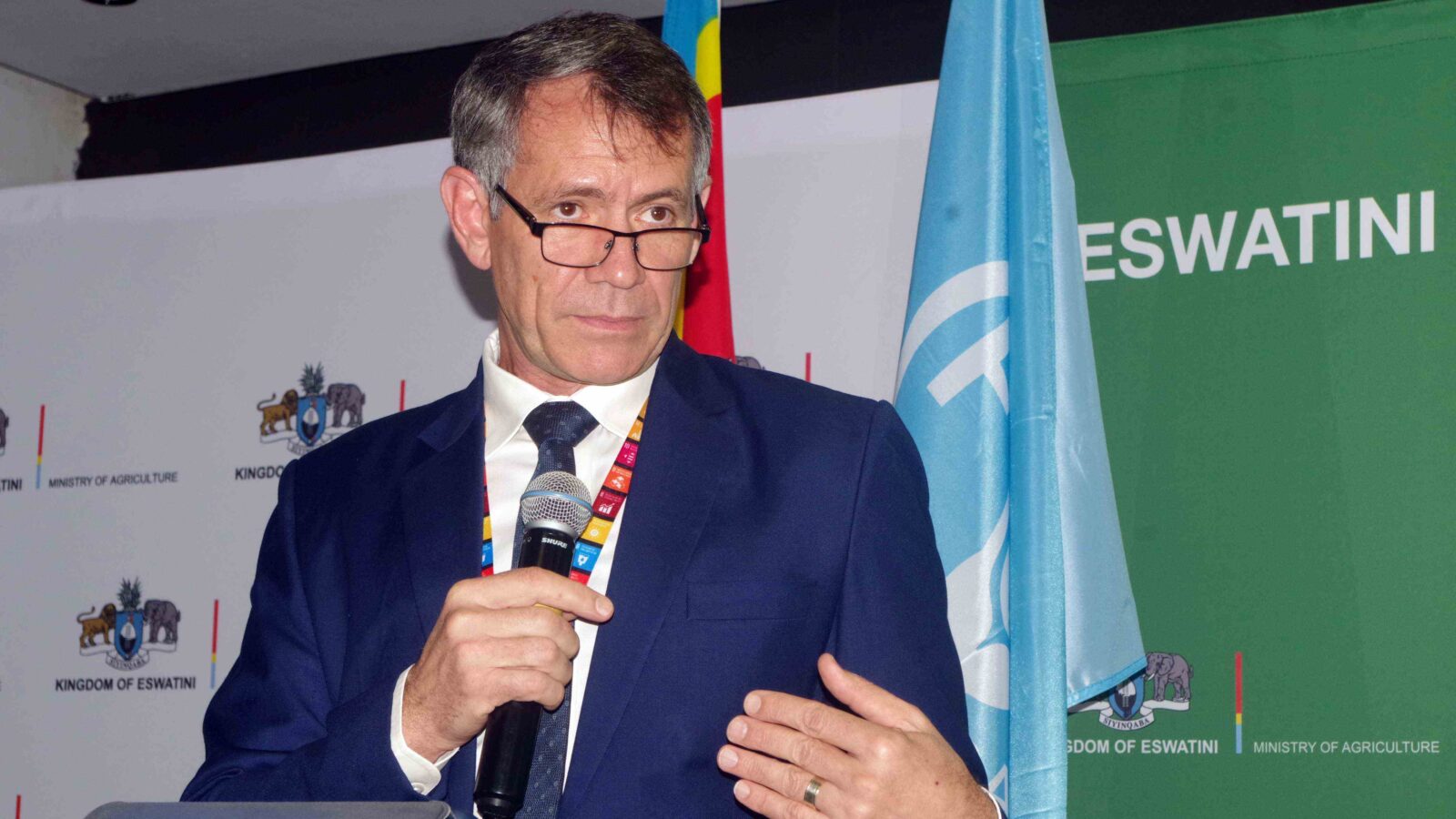
This week will mark the beginning of nationwide consultations on the national budget, as initiated by the Ministry of Finance.
This exercise is meant to gather the public’s input and ideas on the 2026/27 budget and will begin with regional consultations.
Manzini will be host to the first of these consultations this Wednesday, September 10, 2025.
After the Manzini Region, the consultation will move on to Shiselweni the following day and Hhohho on September 12.
People of the Lubombo Region will get their chance on September 17, 2025.
Finance Minister Neal Rijkenberg says this platform is one of the ways by which his ministry fulfils its commitment to take the budgeting process to the people, as suggested at the last People’s Parliament (Sibaya) in 2023.
He says last year, the ministry had high-level consultations and decided that this time around, they would take the process directly to the people by going to the communities. This will be done through working together with community development teams, constituency councillors (bucopho), regional administrators (RAs) and headmen.
Even though the current phase of the consultations will largely be about sensitisation, which means giving the people an idea of what the national budget is all about, ideas will also be welcomed. The idea of a sensitisation phase is noble because it will work more live civic education, where emaSwati are educated on how the national budget is formulated.
The public has also been encouraged to make submissions via the ministry’s email address: finance@gov.sz.
Rijkenberg hopes that the budget-from-the-people process will, over time, lead to the national budget being more reflective of the needs of emaSwati.
That is actually my point of departure this Sunday – the aspirations of the ordinary man and woman on the street when it comes to budgeting.
It is interesting that Minister Rijkenberg himself alludes to the fact that this idea came from Sibaya. If the 2023 Sibaya submissions are anything to go by, the minister should expect well thought-out ideas borne out of the various communities’ experiences and needs as they go about their daily lives in the kingdom.
EmaSwati know what they want and are never coy to speak up and speak out.
They will use the platform provided by the ministry to the fullest.
Maybe let us take a look back at what government itself has prioritised, specifically for the current financial year, 2025/26.
According to a budget outlook document released by the ministry’s Budget and Economic Affairs Department in February this year, government’s main aim was to attain a real Gross Domestic Product (GDP) growth rate of 8.3 per cent, maintain inflation within the three to six per cent target band in the medium-term and attain the target of three-month imports cover on international reserves.
It was also government’s plan to increase domestic revenue to at least 17 per cent of GDP and maintain the fiscal deficit to below 3.0 per cent of GDP.
These were all technical issues that may be understood by financial fundis but look like hieroglyphics to the ordinary citizen.
However, in the same document, with the theme, ‘Transformation for Growth,’ the ministry also outlined certain priority areas in plain language.
I will highlight just a few.
It was stated that the aim was to improve education through infrastructure, teacher recruitment and institutionalising AS and A-level as a school-leaving certificate. There were also plans to increase the budget allocation for the school feeding programme and convert more temporary teachers into permanent and pensionable staff.
The rehabilitation of storm-damaged schools was also mentioned, as was the construction of four secondary schools in Maphingwane, Ngwenyameni, New Thulwane and Lavumisa.
It was also in government’s plans to increase the amount of money allocated for scholarships, to cater for an expected increase in the intake of students at colleges and universities.
On health, targets for the 2025/26 financial year included transformation of the Central Medical Stores (CMS) into a semi-autonomous entity, a process that has already begun.
The intention is to ensure that medical drugs and supplies are bought timeously, at the right price and are tracked from source to the patient.
The reader will recall that this was one of the issues brought up by most speakers at Sibaya two years ago.
The reason was no mystery: EmaSwati have endured more than a decade of empty shelves at hospital dispensaries, a situation that has led to death of hundreds of patients – deaths that could have been prevented.
Government also promised to buy more ambulances to add to the existing fleet, to ensure the swift transfer of patients to healthcare facilities.
That said, social grants paid to the elderly were also a popular issue during Sibaya.
In the current financial year’s budget, government promised to increase them by 20 per cent. This has already been done, taking the amount received by each beneficiary up to E600.
While many people still believe this falls short, it was an improvement that saw the grants rising by at least E100 per month.
The irony is that the ministry’s officials who will be getting submissions from the public should expect to get suggestions on the very same items listed above.
They should also be ready to receive numerous complaints about the state of the country’s roads, especially in the rural areas.
This is a challenge government has been trying to overcome, with the construction of Probase roads in various communities around the country and laying of concrete surfaces on others.
While some communities are grateful for this programme, many others are still waiting for the day when government graders and excavators will roll into their areas. In the last budget speech, Rijkenberg announced that E636.12 million had been allocated for the construction of roads, with E200 million of that amount meant for the surfacing of rural roads.
With the promised Roads Authority headed by Gideon Mhlongo already in place, emaSwati will expect fewer words and more action in this regard.
At the end of the day, the exciting thing is that these public consultations on the budget present a platform for the nation to engage in dialogue with public officials.
The test will be on implementation of the ideas that will be gathered.














Leave a comment