

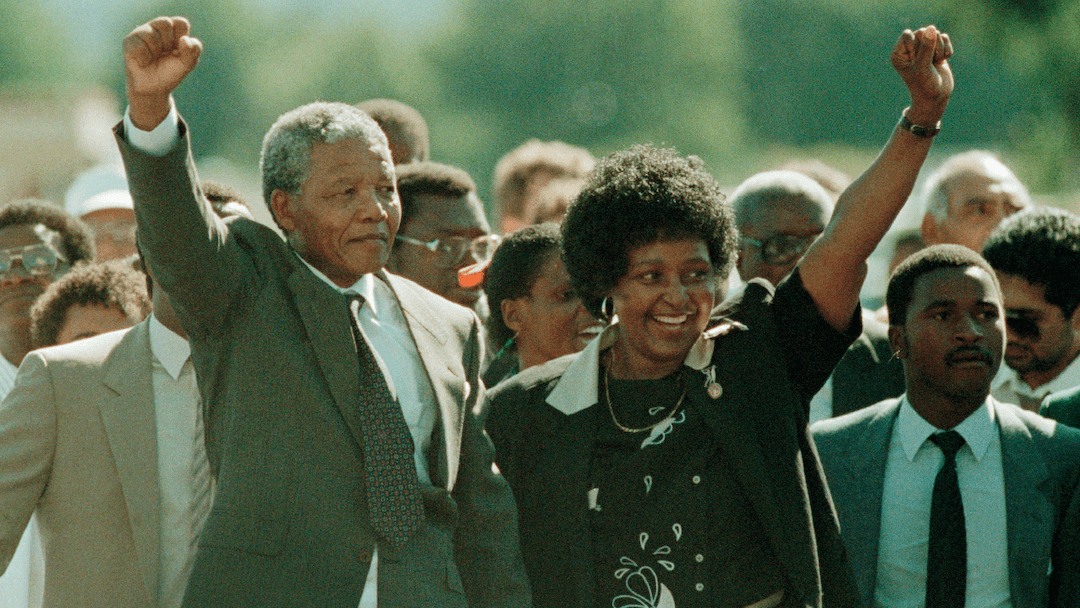
The South African economy is in a deep and escalating crisis. This collapse is not an accident of poor governance alone, nor merely the result of global market pressures. It is, to an extent, by design, a product of decades of manipulation by entrenched white monopoly capitalists (WMC); who have retained control of South Africa’s economic levers from behind the scenes since before 1994.
For three decades, after the release of Nelson Mandela, South Africa’s democracy has been carefully stage-managed to protect the interests of big business, mining conglomerates and financial monopolies that have long been white-dominated. Their strategy has been to weaken the political power of black liberation movements, keep economic power concentrated in white corporate hands and ultimately prepare the return of white-led political dominance through the Democratic Alliance (DA).
Democracy as strategy of containment
From the outset, multiparty democracy was promoted not as a path to majority rule, but as a method of diluting it. WMC knew that blacks could never unite and would, thus, fund the division. The ANC, at the dawn of democracy, posed the biggest threat: With its two-thirds majority in the 1990s, it could have rewritten the constitution to enable radical land redistribution and economic transformation.
The counter-strategy was subtle yet devastating: Create incentives for ANC leaders to prioritise personal wealth over collective struggle; ensuring loyalty to capital, rather than to the Freedom Charter. Patronage, corruption and business ‘empowerment’ deals were tools to neutralise radicalism. Those who resisted or challenged this direction, like Terra Lekota, Julius Malema and later Jacob Zuma, eventually splintered away, forming new parties such as COPE, the EFF and later Jacob Zuma’s uMkhonto weSizwe Party (MKP). Each new breakaway fragmented the Black vote; ensuring the ANC steadily lost its dominance.
Jacob Zuma himself, ironically, explained this in 2017: The aim was not just to strip the ANC of its two-thirds majority, but to reduce it below 50 per cent. That milestone was finally reached in 2024, largely due to Zuma’s own MKP. Rather than reunite with other black-led formations, like EFF and MKP, the ANC turned to the DA, signalling the triumph of phase one of the WMC project: Restoring white influence in government through coalition.
Economic sabotage through energy
If politics was one front of the strategy, energy was the other. No industrial economy can function without affordable and reliable electricity; and WMC understood this well. The collapse of Eskom and the rolling crisis of load shedding were not simply the results of mismanagement, but of deliberate obstruction and capture.
Jacob Zuma’s push for nuclear energy, sourced through Russia and the East, was ridiculed and blocked; not on technical grounds, but because it threatened Western corporate interests. His efforts to secure a coal supply through the Gupta family were demonised as ‘State capture’. Yet, when white-owned companies profit through inflated contracts, bailouts and privatisation, it is sanitised as ‘business’.
By plunging the country into darkness, WMC achieved two things: It discredited black leadership as incompetent and it opened the door for privatisation of the power sector. Today, electricity is partially privatised, more expensive and less accessible to industry – accelerating the closure of smelters, steel plants and mines. ArcelorMittal’s planned shutdown of long steel operations, COSATU’s warnings about profiteering executives and the collapse of smelters that once sustained Eswatini’s Maloma Colliery’s coal exports are all symptoms of this deeper sabotage. Industries are dying not because South Africa lacks resources, but because energy has been weaponised.
The international dimension: BRICS, the Jewish Lobby, Western pressure
South Africa’s geopolitical realignment, under Zuma, further antagonised WMC and its global allies. By joining BRICS and drawing closer to Russia and China, South Africa threatened Western financial dominance in the region. The tipping point came when Pretoria directly challenged Israel at the International Court of Justice (ICJ).
The global Jewish lobby, particularly influential in the US, moved swiftly to punish South Africa, branding it hypocritical and even accusing it of genocide against the Afrikaans. This is not a matter of principle but of control: Western powers, backed by their corporate networks, will not tolerate South Africa slipping from their orbit into the hands of BRICS.
Who really rules South Africa?
It is tempting to blame the ANC alone for corruption, incompetence and policy failure. These are real and serious problems. However, beneath the surface lies a deeper truth: South Africa’s democratic institutions and economic levers were never fully handed over to the Black majority.
Banks, mines and major industries remain in the grip of WMC. Media narratives are shaped to demonise leaders who resist Western alignment. Policy failures are magnified when they discredit black governance, while white-led business scandals are quietly buried.
The collapse of the economy, the manufactured energy crisis and the political fragmentation of the black vote all serve one purpose: to prove that black South Africans cannot govern, paving the way for a white ‘saviour’ narrative under the DA.
Conclusion: Blunt truths
The South African economy is not merely collapsing under the weight of ANC incompetence – it is being collapsed, deliberately.
White monopoly capitalists have played a long game: Divide the black vote, undermine radical transformation, weaponise the energy sector and manipulate global politics.
The tragedy is that many within the ANC and its breakaway formations became willing participants in this strategy, choosing personal wealth over collective liberation. As the economy burns and industries close, the question is not whether WMC is winning; they already won. Why do you think South Africa never changed its colonial name to Azania? The real question is whether South Africans will recognise this manipulation in time to reclaim both political and economic sovereignty.
The collapse of the South African economy is not a natural disaster; it is the continuation of economic apartheid by other means. WMC has mastered the art of ruling from behind the scenes: Fragmenting the black vote, capturing the ANC elite, manipulating energy and shaping global narratives.
The tragedy is that millions of South Africans live in poverty, unemployment and despair while the same corporations that profited under apartheid continue to dominate. Unless the country confronts WMC head-on, the promise of 1994 will remain a dream.
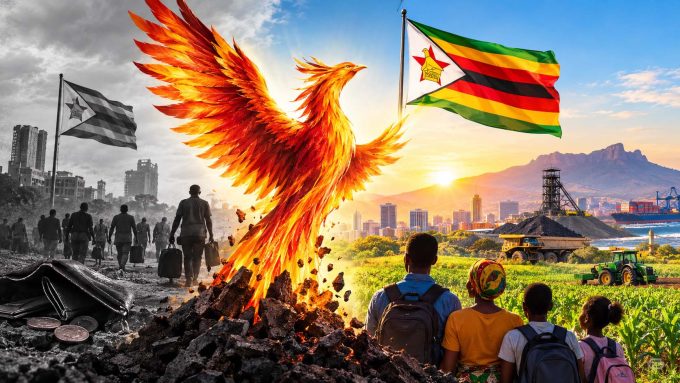
South Africa stands at a crossroads: Either it accepts permanent subordination, under white monopoly capital, dressed up as liberal democracy or it reclaims the radical economic transformation that was always at the heart of the liberation struggle. Like in Zimbabwe, life for ordinary South Africans will not be easy, worse than what it is today, but the promise of true economic freedom will be assured. The stakes could not be higher.
Comment septembereswatini@gmail.com
















Leave a comment