

MBABANE – The recent easing of interest rates in Eswatini has set off a fresh wave of competition among banks, with commercial lenders now reopening their credit taps after years of caution.
The recent easing of interest rates has helped revive lending appetite among commercial banks, opening the door to renewed competition, especially in the home-finance market, a space long dominated by the Swaziland Building Society (SBS).
After a period of caution following the COVID-19 shock, banks are once again loosening their taps, offering new mortgage and consumer finance products aimed at low- and middle-income earners.
SBS has historically been the principal provider of affordable mortgages in Eswatini; for decades, the society’s products and savings-linked housing solutions made it the default lender for many prospective homeowners. That dominance is now being challenged as commercial banks move into the territory with targeted offerings.
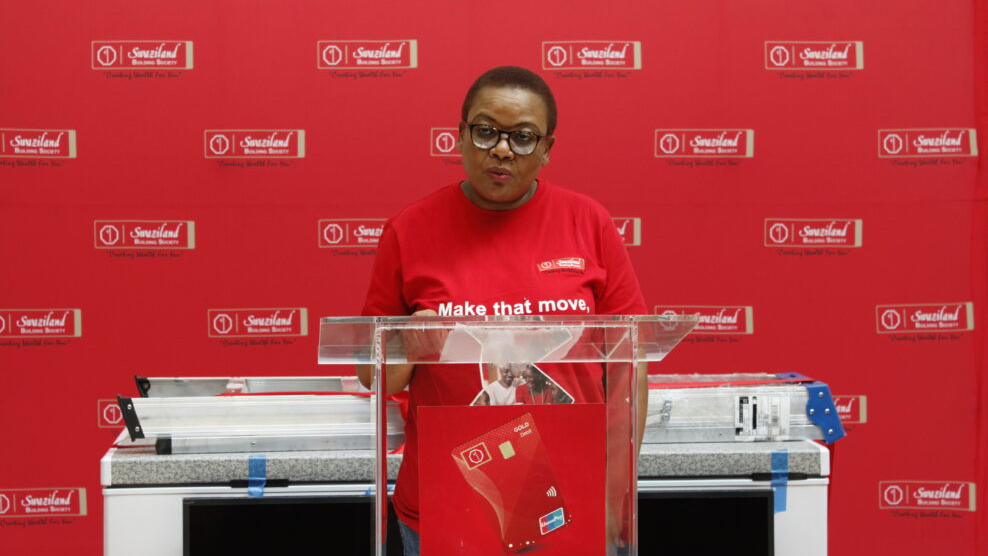
In an interview with the Times Business Desk, SBS Managing Director Mbali Sibanyoni welcomed the increase in competition and explained how SBS is responding.
“SBS views competition as a positive and healthy force in the market. It drives innovation, encourages efficiency and ultimately benefits customers by providing greater choice and better value. Competition sharpens the pencil, sharpening our focus and pushing us to continually improve our products and services delivery,” she said.
The reduction in interest rates has been beneficial for customers, as it increases disposable income and improves affordability. It makes it easier for more people to enter the property market, addressing housing as a basic necessity.
“In addition, the savings realised allow our customers to channel funds into other financial needs and long-term investments, thereby strengthening overall financial well-being and fostering a stronger savings culture,” she added.
Sibanyoni stressed that, as a building society, they will continue to protect affordability and evolve their product suite and service delivery so that its historical mandate — expanding access to home ownership for emaSwati – is preserved as the market changes.
The Central Bank of Eswatini (CBE) reduced the repo (policy) rate from 7.0 per cent to 6.75 per cent in May 2025 and has maintained that level since, a move closely aligned with the easing cycle in South Africa intended to support lending, while preserving the Rand–Lilangeni peg.
The immediate effect was to lower borrowing costs and to give banks more room to price credit competitively. That helped nudge lenders back from the defensive posture many adopted after the outbreak of COVID-19, when banks became scarce to extend credit and tightened underwriting standards. Now, with policy easing and improved macro indicators, banks are once again expanding mortgage and consumer finance offers.
Responding to the changed environment, FNB Eswatini recently introduced an enhanced Sicalo Home Loan targeted at emaSwati earning between E3 000 and E8 000 per month — a deliberate attempt to widen mortgage access to lower-income cohorts.
The bank is also rolling out WesBank Joint Spousal Finance, designed to allow couples to combine incomes when applying for vehicle or property finance. These products signal an intentional push by commercial Banks into segments historically served by SBS.
Full article available in our publication.




















Leave a comment