

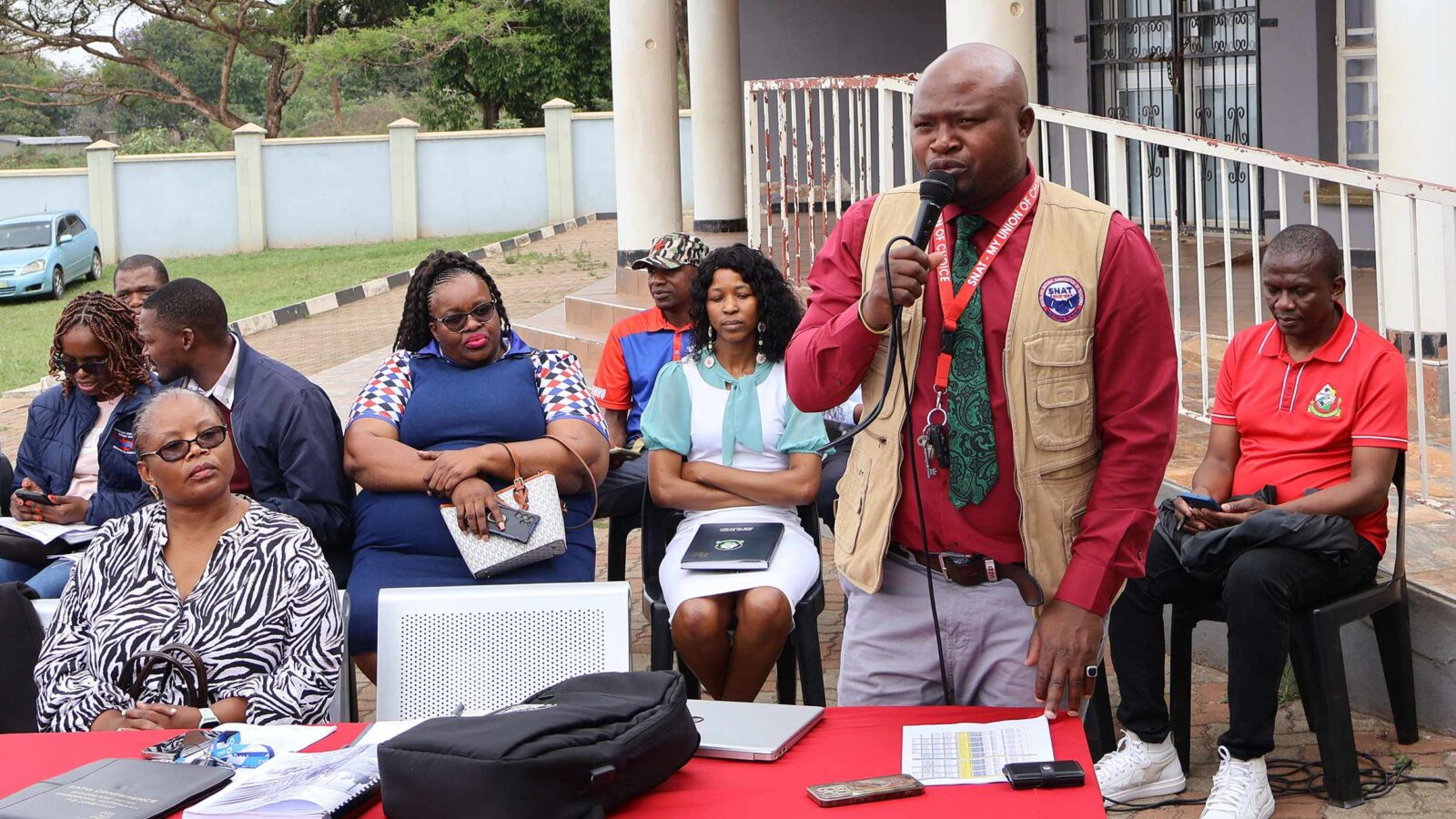
Hundreds of civil servants gathered outside the Prime Minister, Russell Mmiso Dlamini’s Office in Mbabane on Wednesday to deliver a petition. They are demanding that the full E1.7 billion salary review, as recommended by consultants, be paid this month.
After nine years without a proper pay adjustment, their frustration is evident; prices have soared and their wages have not kept pace.
Government, however, has moved from an initial offer of E500 million to E1.29 billion, covering 64 per cent of the consultant’s Scenario III plan. They propose paying the rest by July 2026, alongside full travel allowances, 50 per cent housing allowances now, a three per cent one-off boost and an extra E2 000 monthly for the lowest-paid workers.
Workers reject this phased approach, with the Swaziland National Association of Teachers (SNAT) Secretary General, Lot Vilakati, warning of go-slows and marches if their full demands aren’t met. This situation necessitates a calmer approach and transparent communication.
A good deal is on the negotiations table. However, smart thinking is needed to ensure it reaches every civil servant’s dinner table.
Without compromise, both sides risk disaster; government might struggle to pay salaries or cut jobs to fund the raises, while workers could face delays or reduced benefits. Finding a balanced way forward that serves everyone is recommended here.
The talks at the Joint Negotiation Forum (JNF) offer hope. Mthunzi Shabangu, Principal Secretary in the Ministry of Public Service, commends the cooperative spirit in the room, where both sides agree a review is long overdue. SNAT President, Mbongwa Dlamini, has shared how government’s revised offer includes support for workers living in tents and shacks in remote areas, a nod to their real hardships. Some workers appreciate the focus on low earners, like the E2 000 housing top-up, but others feel the plan unfairly favours higher-paid staff. The leadership’s promise to consult members before deciding is a step in the right direction. That same openness should guide how the pay rise is rolled out, prioritising those who need it most, while carefully planning the rest to match the country’s finances.
Eswatini’s economy, however, leaves little room for options. The International Monetary Fund (IMF) projects GDP growth will rise to 4.3 per cent in 2025, up from 2.8 per cent in 2024, with inflation steadying around four per cent last year. The Central Bank of Eswatini (CBE) expects inflation to hover at 3.66 per cent in 2025, down to 2.6 per cent in August. These figures sound promising, but they hide serious challenges.
Over half of government revenue comes from Southern African Customs Union (SACU) receipts, which are wildly unpredictable. After climbing 11.15 per cent to E13.06 billion in 2024/25, SACU funds are set to plummet 20.4 per cent to E10.4 billion next year – a E2.66 billion drop that could cripple budgets. Eswatini has not built new income sources, like stronger exports or industries, leaving us vulnerable.
Beyond our borders, South Africa’s struggling economy adds pressure. Its mining sector shed 35 000 jobs in early 2025, part of a broader loss of 291 000 non-farm jobs. This hits Eswatini hard, as fewer jobs there mean less money sent home to families here, plus higher import costs. New United States tariffs make things even tougher, raising prices for goods we need as a high importer of goods from our neighbours. Even with some trade benefits under AGOA, exports could shrink by eight per cent by 2029.
At home, unemployment is a stubborn problem. The 2023 Labour Force Survey shows 35.4 per cent overall, with youth unemployment at a staggering 58 per cent. Meanwhile, hospitals face a dire drugs shortage. Addressing this crisis necessitates a substantial allocation of funds.
Strikes or unrest would only worsen these woes. The petition calls for fair pay, an end to casual jobs, a E3 500 minimum wage and the seven per cent cost-of-living adjustment given to the armed forces. It cannot be argued that everyone shops at the same stores, facing the same high prices. But will pushing for full payment now not break the budget, forcing job cuts or delayed salaries? This is where good advice needs to be sought by the unions.
The way forward lies in the JNF’s collaborative spirit. The consultant’s Scenario III is a starting point, not a rigid rule. Adjust it to fit what can be afforded. This would ensure steady progress: Workers get fairer pay overtime, government keeps services running and no one faces layoffs or missed salaries. Marches make noise, but dialogue builds solutions. Let us work to create an economy that can sustain these raises, not just for today, but for years to come.


















Leave a comment