

MBABANE – An economist says big South African business closures will reduce economic activity in Eswatini and other Southern African Customs Union (SACU) member States.
South Africa in July had a spike in liquidations with 155 more business closures, taking the total to 908 for the year so far. There has also been a departure of big international business firms, while others downsized production; 1 000 entities were reportedly closed since the beginning of the year.
The departure of these international firms affects Eswatini. The country’s exports to South Africa were E2.09 billion, while imports from South Africa were E2.46 billion, depicting heavy reliance on the neighbouring country for trade.
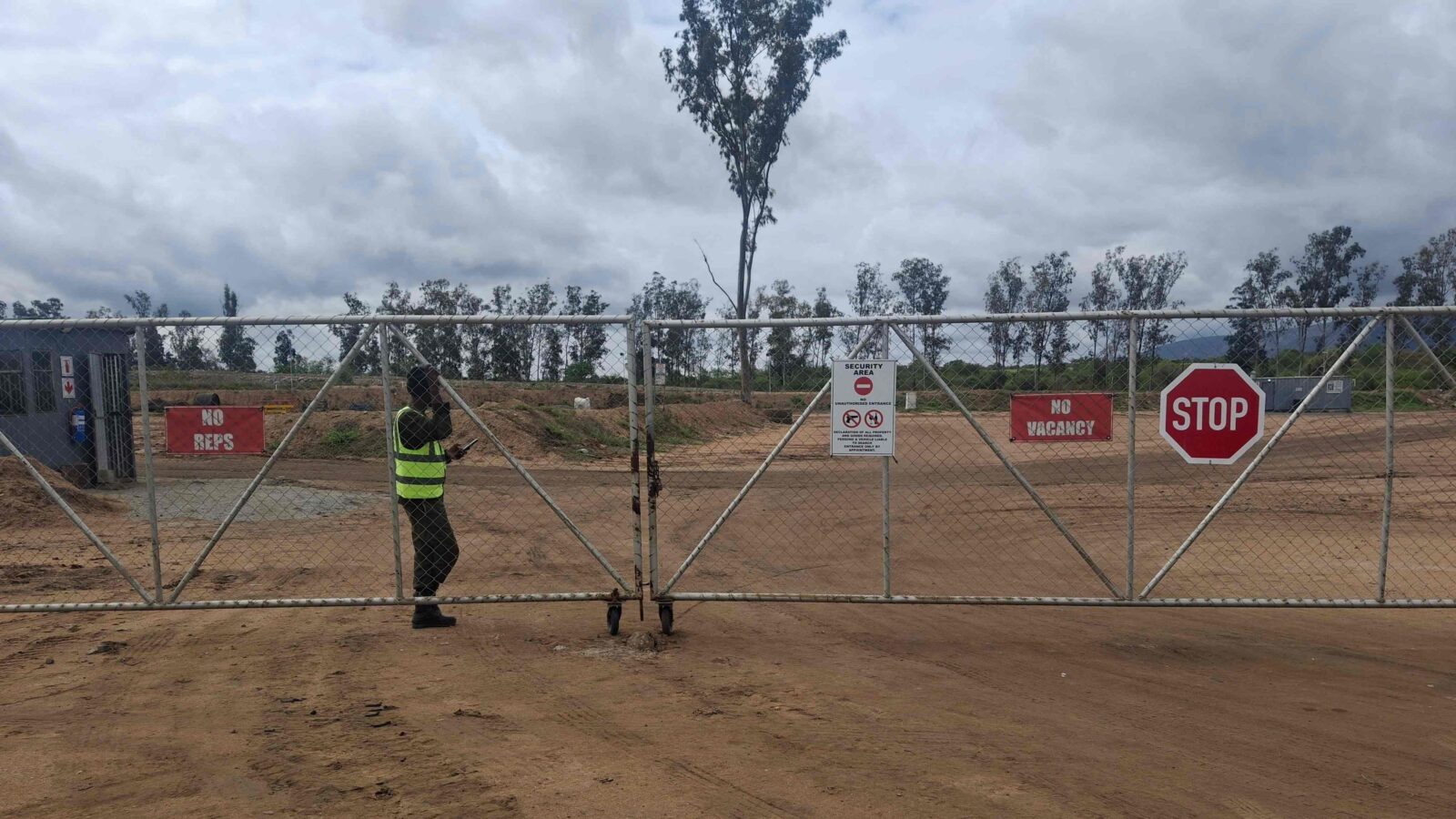
As such, Maloma Colliery Limited has been forced to reduce its production and retrench 360 employees after its biggest customer scaled down operations.
Maloma Colliery Limited’s clients are smelters needing anthracite coal for two main purposes: Providing heat and acting as a reducing agent. The anthracite coal is burnt to generate high temperatures needed to melt the ore and provides the carbon monoxide that strips oxygen from the iron ore, leaving usable iron.
Also, Mhlume Anthracite Coal Mine, operated by Eswatini Anthracite (a subsidiary of Sub-Saharan Energy (Pty) Ltd under New Frontier Coal Investments (Pty) Ltd) and retrenched 86 employees, as confirmed by Labour Commissioner, Kingdom Mamba. Notably, coal has long been the backbone of Eswatini’s mining sector. The country is renowned for producing some of the world’s finest anthracitic coal, second only to that found in Siberia, Russia. Eswatini Anthracite was awarded a 25-year mining lease to mine anthracite underground at Mhlume.
Statistics South Africa data shows July marked the worst month for liquidations, representing a 16.5 per cent increase from the same time last year.
Business closures were up 19.2 per cent from June and increased by 12.4 per cent in the three months ended July 2025 compared with the three months ended July 2024. This was an increase of 1.8 per cent in the number of liquidations recorded in the first seven months of 2025 compared with the first seven months of 2024.
The hardest hit businesses were in the financing, insurance and services sector, along with those in the trade, catering and accommodations sector. there was also an uptick in closures in the community, social and personal services sector.
Business rescue and insolvency expert, Fluxmans Attorneys’ Craig Blumenthal, said the distinction between voluntary and compulsory liquidations is important when analysing the data.
“Voluntary liquidations are not necessarily reflective of a business’ insolvency, but could represent active business processes, where structures like special purpose vehicles or subsidiaries are liquidated to transact. Compulsory liquidations, on the other hand, are typically court-ordered and usually reflect solvency issues.”
The vast majority of liquidations in South Africa were voluntary, with around 88 per cent of total liquidations in 2025 being in this category. In July, 141 of the 155 liquidations were voluntary. However, the 14 compulsory liquidations recorded in the month were also up from June.
Notably, the number of compulsory liquidations in the year-to-date is also 6.7 per cent higher than the same time in 2024, which could indicate more businesses in distress in general this year. Blumenthal said increasing compulsory liquidations are an indicator of economic downturn.
Full article available in our publication.
















Leave a comment