

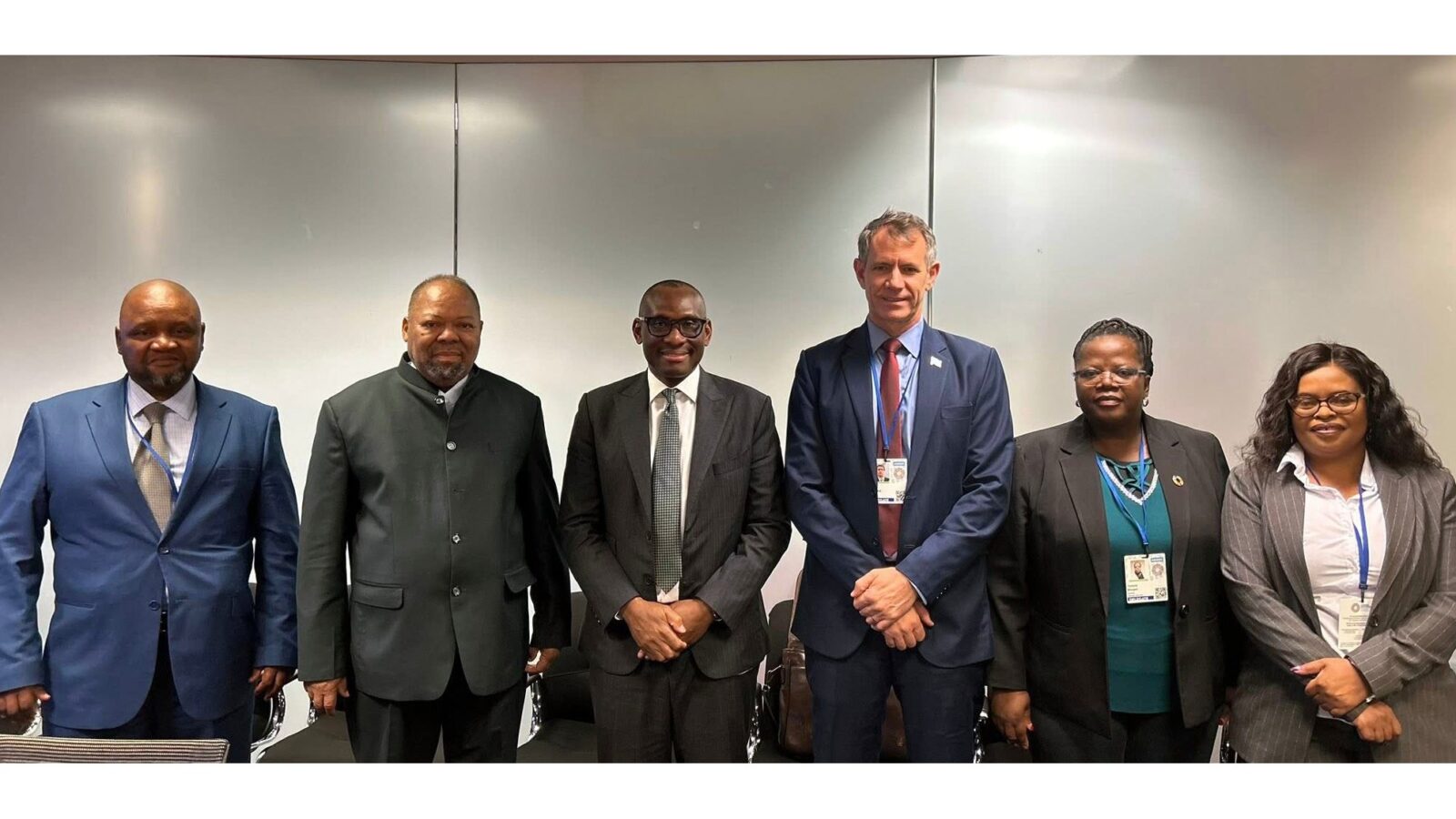
MBABANE – Minister for Finance Neal Rijkenberg has urged the world’s leading financial institutions to take bold action and implement fundamental reforms to the global financial architecture.
The minister said Africa’s voice and interests must no longer be marginalised in international economic governance.
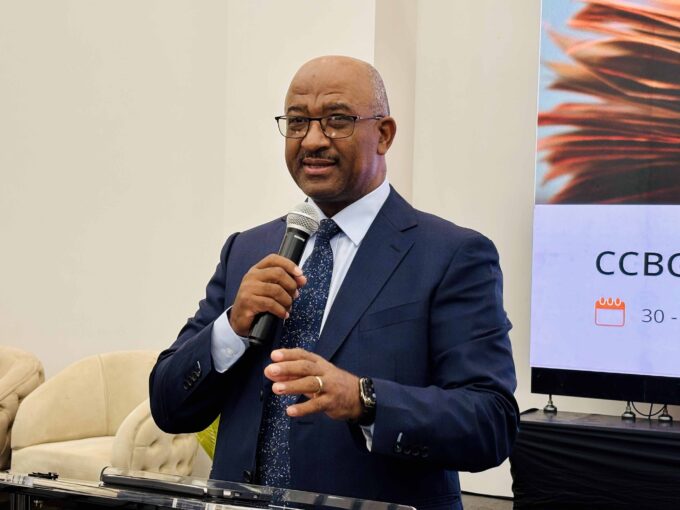
Speaking in his capacity as Chairperson of the Bureau of the African Union (AU) Specialised Technical Committee (STC) on Finance, Monetary Affairs, Economic Planning, and Integration, Minister Rijkenberg delivered the continent’s strong message.
He delivered the message during meetings convened by the United Nations Economic Commission for Africa (UNECA) on the sidelines of the World Bank Group and International Monetary Fund (IMF) Annual Meetings held in New York, USA.
The gathering brought together ministers for Finance and Economic Planning from across the African continent to deliberate on Africa’s unified reform priorities ahead of key global engagements, including the IMF–World Bank African Caucus Meetings, the G20 Finance Ministers and Central Bank Governors’ Meeting and the G20 Leaders’ Summit.
“Our message to the G20, IMF and World Bank is unequivocal: fix the Common Framework, embrace innovative tools and amplify Africa’s voice and representation,” said Rijkenberg.
“We must strengthen Africa’s economic sovereignty and ensure that the international financial architecture is responsive to our needs.”
Rijkenberg said Africa’s reform campaign represents a decisive moment for the continent. The eighth session of the AU STC, which he chaired earlier this year, produced the Common African Position on Debt, described as a ‘declaration of agency and unity’ that seeks to break the cycle of indebtedness and place Africa firmly on a path to sustainable, self-financed development.
He commended AU member states for consolidating this historic position, which he said: “Signals a strategic shift in Africa’s, approach to its economic challenges.”
The Common African Position on Debt advocates for transparency, equitable treatment and time-bound debt resolution mechanisms, while also encouraging responsible borrowing and the development of local capital markets.
“Let us work together and continue our advocacy for the reforms that Africa needs,” Rijkenberg told the meeting. “From sovereign credit rating to domestic resource mobilisation and curbing illicit financial flows; from an ‘African Borrowers’ Club’ to deepening regional integration — our call is clear: Africa is taking decisive continental action.”
Rijkenberg said the current moment represents a turning point for Africa’s economic governance.
The reforms proposed under the Common African Position are not merely aspirational, he said, but a concrete framework for reshaping the continent’s relationship with the global financial system.
“This is Africa’s opportunity to take its destiny into its own hands,” he declared. “We must act collectively and with purpose. Our unified voice is our greatest strength.”
*…
Shifting from Aid to investment
MBABANE – UNECA emphasises that Africa must now pivot from an aid-dependent model to one driven by investment, regional integration and private-sector dynamism.
Between 2019 and 2023, 46 per cent of intra-African exports were in manufactured goods, compared with only 24 per cent of the continent’s total global exports – evidence that the African Continental Free Trade Area (AfCFTA) can serve as a springboard for industrialisation, higher-wage employment and productivity growth.
However, despite possessing 60 per cent of the world’s solar energy potential, Africa attracts less than 3 per cent of global renewable-energy investment.
Addressing this imbalance requires not only global reforms, but also stronger domestic policies to build an enabling environment for private capital, UNECA’s report notes.
*Full article available in our publication.










Leave a comment