

MBABANE – Eswatini’s economy is projected to grow by 4.3 per cent in 2025, according to the latest World Economic Outlook (WEO) released by the International Monetary Fund (IMF).
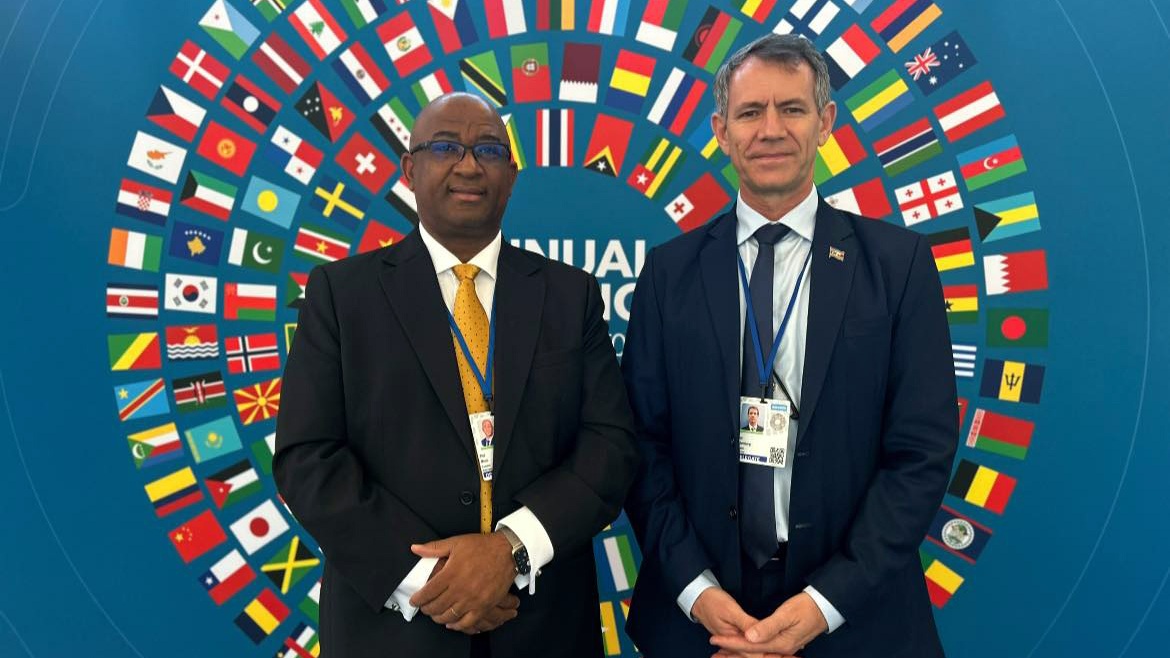
The report was released during the ongoing World Bank–IMF Annual Meetings, where Eswatini’s delegation is led by Minister for Finance Neal Rijkenberg and Minister for Economic Planning and Development Dr Thambo Gina.
The IMF’s flagship report, themed “Global Economy in Flux, Prospects Remain Dim,” notes that Eswatini continues to perform strongly despite a slowdown in global growth.
The kingdom’s projected 4.3 per cent expansion for 2025 surpasses the Sub-Saharan Africa average of 4.1 per cent and far outpaces South Africa’s 1.1 per cent forecast.
According to the fund, Eswatini’s economy grew by 3.8 per cent in 2023 and 4.1 per cent in 2024, with medium-term growth expected to stabilise around 4.4 per cent by 2030.
The performance reflects ongoing recovery in manufacturing, agriculture and services, underpinned by improved public investment and private sector resilience.
Across the region, the IMF observes mixed fortunes. While growth in most Southern African countries remains moderate, Eswatini stands out for its consistent expansion and relative macroeconomic stability.
Sub-Saharan Africa’s overall growth is forecast at 4.1 per cent in 2025 and 4.4 per cent in 2026, with economies such as Nigeria, Tanzania and Côte d’Ivoire also maintaining steady momentum. However, the fund warns that structural weaknesses and the expiry of the African Growth and Opportunity Act (AGOA) in September 2025 may weigh on export-dependent economies such as Eswatini, Lesotho and Madagascar.
The end of AGOA, which provided duty-free access to US markets, could constrain Eswatini’s textile exports—a key source of jobs and foreign exchange. The IMF cautions that ‘rising protectionism and trade reorientation could reshape export flows, pressuring smaller, open economies that rely on external demand’.
On a positive note, inflation across Sub-Saharan Africa is easing. Regional consumer price growth is expected to fall from 20.3 per cent in 2024 to 13.1 per cent in 2025, driven by lower fuel and food prices and improved supply chains.
For Eswatini, where inflation has hovered around 6 per cent in recent months, the decline across the region offers breathing space for households and businesses.
*…
Eswatini’s regional linkages support growth
MBABANE – Eswatini’s economic fortunes remain deeply linked to the Southern African region through the Southern African Customs Union (SACU) and the Common Monetary Area (CMA).
SACU revenues, which form a major share of government income, are expected to remain firm in the near term, cushioning fiscal operations and supporting public investment.
The IMF attributes Eswatini’s resilience to ongoing fiscal reforms, improved tax collection and a gradual diversification of exports. Continued investment in agriculture, energy and infrastructure projects—including irrigation schemes and renewable energy development—are expected to sustain domestic demand.
“The country’s diversification agenda, supported by sound macroeconomic management, positions it well to navigate a shifting global landscape,” the report notes.
Despite Eswatini’s strong showing, the IMF cautions that global and domestic risks persist. Prolonged policy uncertainty could undermine private investment, while escalating trade restrictions might disrupt supply chains and weaken productivity growth.
The fund also highlights the risk of financial market corrections linked to overvalued tech stocks and AI-related sectors. “An abrupt repricing of technology assets could spill over into broader markets, affecting investor sentiment,” the report warns.
For small economies such as Eswatini, higher global interest rates and limited fiscal space heighten vulnerability to external shocks. The IMF urges governments to prioritise ‘credible, predictable, and sustainable fiscal actions’ that protect social spending, while preserving macroeconomic stability.
The IMF further raises concern about a sustained drop in official development assistance (ODA). Global aid flows fell by 9 per cent in 2024, and a similar decline is expected this year. The fund warns that the contraction in external support will place additional pressure on low-income and fragile economies.
*…
Saudi Fund eyes investment in MNWAP
MBABANE – Eswatini’s ambitious Mkhondvo–Ngwavuma Water Augmentation Programme (MNWAP) has attracted international attention.
The Saudi Fund for Development has expressed interest in financing the multibillion-Emalangeni initiative.
This development emerged during a bilateral meeting held on the sidelines of the ongoing World Bank and International Monetary Fund (IMF) Annual Meetings, where Minister for Finance Neal Rijkenberg, accompanied by Principal Secretary Vusie Dlamini and Department of Debt Management Director Armstrong Dlamini, engaged with representatives of the Saudi Fund.
According to the Ministry of Finance, discussions centred on potential avenues for collaboration in funding and accelerating the project’s implementation.
The meeting formed part of the delegation’s broader efforts to secure strategic partnerships to support Eswatini’s development priorities.
MNWAP is designed to transform livelihoods in the Shiselweni and Lubombo regions through enhanced access to clean water, expanded irrigation infrastructure and improved agricultural productivity.
Once operational, the projects are expected to significantly improve water security for households and commercial agriculture, enabling smallholder farmers to cultivate high-value crops throughout the year.
*Full article available in our publication.
















Leave a comment