

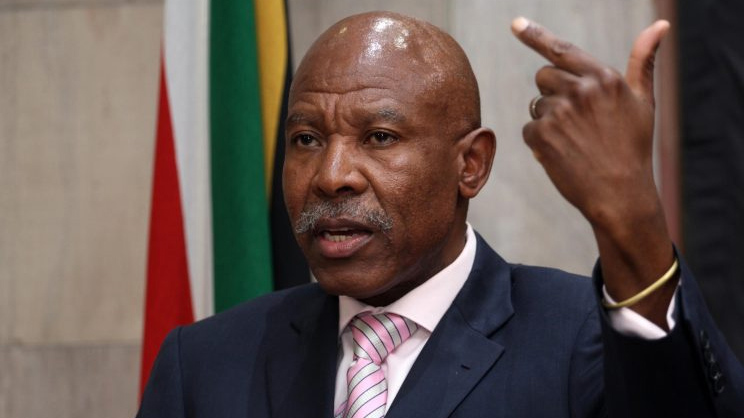
MBABANE – Eswatini has kept its interest rate unchanged at 6.75 per cent for the third consecutive time —maintaining parity with South Africa’s repo rate.
On Thursday, the South African Reserve Bank (SARB) announced a 25 basis point cut, leading to its repo rate to stand at 6.75 per cent which is now similar to that of Eswatini.
The Central Bank of Eswatini (CBE) Governor Dr Phil Mnisi announced the decision during the Monetary Policy Consultative Committee (MPCC) meeting held on Friday, emphasising that the current monetary stance continues to support domestic economic recovery and preserves the crucial parity between the Lilangeni and the South African Rand.
This rate has remained constant since the CBE reduced it from 7.00 per cent in May, and the bank notes that the stance continues to balance price stability, economic performance and financial stability.
According to economists, when the Central Bank keeps the interest rate unchanged, it simply means the cost of borrowing money stays the same. This affects everything from personal loans and mortgages to business financing.
If you already have a loan linked to the prime rate, your monthly instalments will not suddenly increase.
For savers, it also means the interest earned on savings or fixed deposits will not change. In short, the financial conditions that determine how expensive or affordable credit is remain stable.
This is important because interest rates influence the everyday cost of living. Higher rates generally make loans more expensive and can slow down spending in the economy, while lower rates make borrowing cheaper and can encourage investment and consumption. When rates remain steady—as they have now for the third consecutive month—it provides predictability. This helps households budget better, supports businesses in planning ahead and contributes to keeping inflation and the value of the Lilangeni stable.
The decision by the CBE is also consistent with calls from the International Monetary Fund (IMF), whose executive directors recently encouraged Eswatini to narrow the interest rate differential with South Africa to mitigate capital outflows and reinforce confidence in the country’s pegged exchange rate regime.
In its latest country report on Eswatini, the IMF Executive Board welcomed the CBE’s approach to keeping its interest rate aligned with that of South Africa. The global lender noted that narrowing the differential helps stem potential capital flight and strengthens the credibility of the currency peg.
Looking forward, IMF directors encouraged Eswatini to carefully calibrate its policy rate in line with movements by the SARB to maintain macro-financial stability. They further recommended accelerating the modernisation of the country’s monetary policy framework while reinforcing the Central Bank’s independence.
The IMF also encouraged the limitation of Central Bank cash advances to government, highlighting that such measures would help protect foreign reserves and safeguard monetary policy integrity.
While commending Eswatini’s improving short-term outlook, the IMF cautioned that the country continues to face serious economic and social challenges.
The global lender highlighted the need to maintain prudent macroeconomic policies and accelerate structural reforms to sustain growth.
*…
…inflation remains contained
MBABANE – Inflation remains contained, recording 2.9 per cent in October from 2.8 per cent in September, with the CBE revising its 2025 inflation forecast downward to 3.20 per cent.
The CBE is citing stable global oil prices, improved food inflation and favourable exchange rate assumptions as the cause for the stable inflation rate.
The bank, however, noted upward revisions for the medium-term period through 2026 and 2027.
Credit to the private sector is recovering as well. Private sector credit grew 2.1 per cent month-on-month in September, reaching E21.7 billion, the highest on record.
*Full article available in our publication


















Leave a comment