

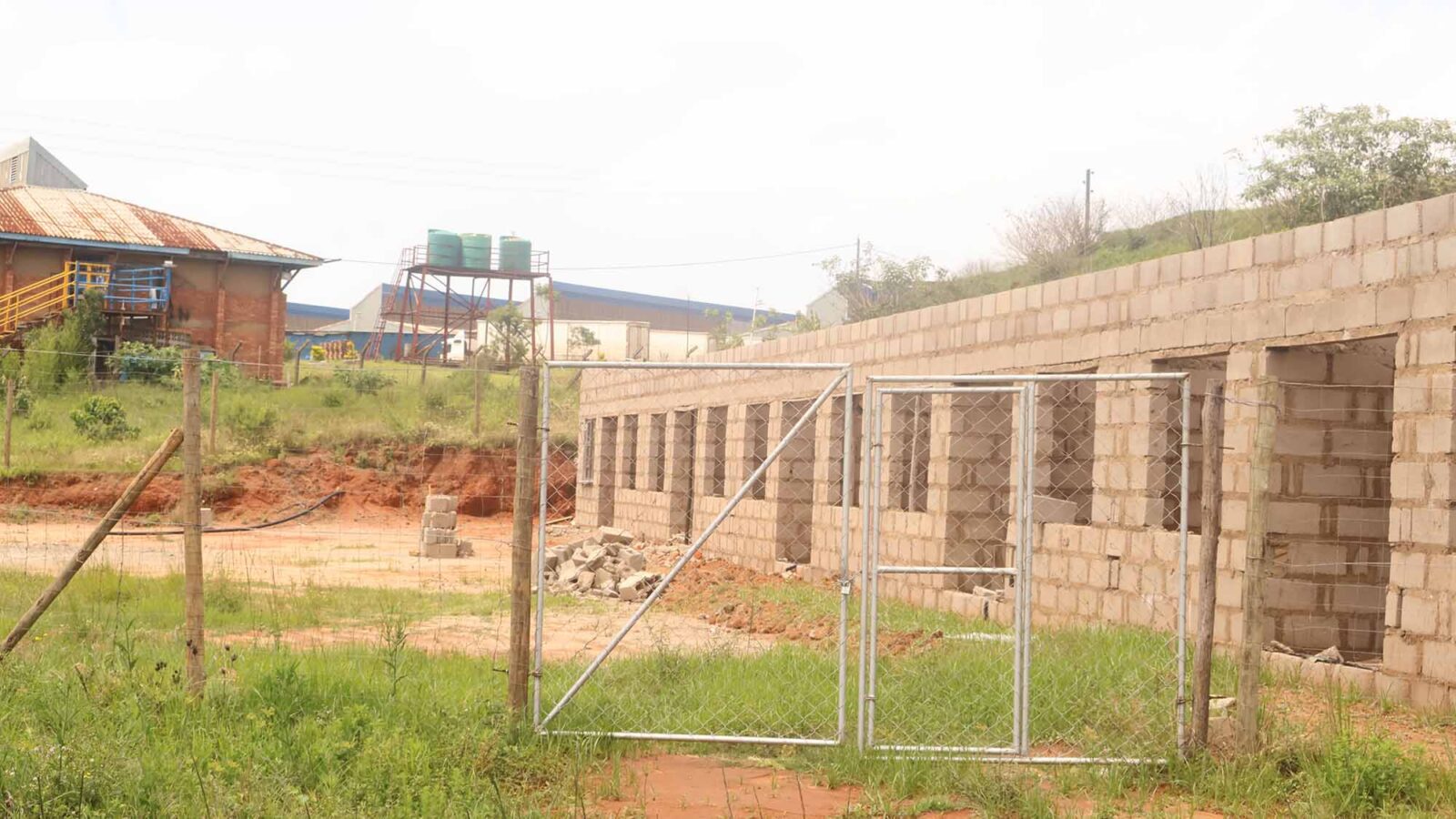
NHLANGANO – The illegal construction of structures across the country is crippling the economy, costing taxpayers millions and blocking factory development that could create thousands of jobs.
This rapid rise of unplanned, makeshift dwellings is evident across the country and at Magindaneni Farm it has come to depict how a few benefit from this act at the expense of the larger populace.
Illegal construction of dwellings is said to be creating national crisis in development, crime and public health. This creates congestion at Magindane, among other areas; it is costing the taxpayer through diverted government resources and loss of revenue.
The situation is acute at Magindaneni Farm 1151, which was reserved for the construction of two factory shells to boost the creation of employment. However, the illegal structures, which have crept up on the farm, have deprived non-academic residents of securing future employment opportunities in this designated industrial area.
This is because government has undertaken an initiative through the Manqoba Khumalo-led Ministry of Commerce, Industry and Trade to construct factory shells which are then leased to textile firms, among many sectors, in an effort to create employment in the country.
An economist said the unauthorised settlements deprived government of the ripple effects of employment, including collecting revenue in the form of value-added-tax (VAT), Company tax and pay-as-you-earn (PAYE) that could be generated.
He said the revenue could start from the construction phase of the factory shells which would in turn benefit the construction industry, public transport sector and also improve the fuel levy as more vehicles would be travelling to this destination.
He said when the factory shells are completed, government generates revenue through their leasing, out as the tenants pay rent to the Eswatini Investment and Promotion Authority (EIPA).
He said the subsequent development is through the recruitment of personnel to work in the factory shells which also functions as empowerment for the informal economy, as vendors sell their wares and thus improving money circulation.
On the other hand, he said to remove these homesteads that have encroached on the farm, government is forced to pay money as compensation despite that these structures are usually constructed illegally.
In some communities, besides from Magindaneni Farm, land earmarked for future industrial expansion, schools, or public facilities is now occupied by these informal structures. Chiefs and councils fear that reversing these encroachments will be politically sensitive and economically costly.
As such, it is said such structures lack proper planning such that health officials warn that such settlements pose a growing sanitation crisis as they are built close together with poor ventilation.
At Magindane Farm, there are one-room flats known as titimela which rely on improvised pit latrines, some of which overflow during the rainy season.
Waste disposal is irregular and stagnant water is common in backyards.
In a previous comment, Sidumo Lukhele, the Health Promotion Officer in the Ministry of Health said the biggest sanitation challenge is the lack of hygiene.
He noted that the one-room houses often have a shortage of lavatories and water sources, leading to tenants sharing them.
*…
Accused deny selling plots
NHLANGANO – Individuals accused of selling plots of land at the disputed farm have responded, denying any involvement in the illegal sales.
Among those accused is *Clint, who denied taking any money, stating he only referred people interested in plots to the KaMzizi Chiefdom. Clint, who built his house on the farm in 2000, claimed that as a child of the late Prince Gidane, he did not pay kukhonta. He blamed the former bandlancane (inner council) for the sales; stressing most of them have now passed away. He insisted that the older residents are the ones selling their fields to the new people. Clint agreed with the regional administrator’s (RA) statement, calling it a painful truth.
He added: “We need to apologise and ask for mercy. We should also respect the Regional Administrator and not fight him.”
A member of the former bandlancane strongly denied the claims. “They are setting me up, I know nothing. I am currently not in the bandlancane and even when I was, I never sold land to anyone,” he said.
*…
Regional administrator vows to take legal action
NHLANGANO – Regional Administrator Themba Nhlanganiso Masuku says the area is a controlled area, where all activity requires official authorisation.
Masuku confirmed the area was declared a controlled area in 2001 and is administered by the gazetted Magindaneni Local Authority. “Any activity that should take place on this farm can only be authorised by this designated authority,” he said. He emphasised that no outside body, government ministry, group, or individual can carry out operations on Farm 1151 without the designated authority’s involvement.
Masuku asserted that Magindaneni is Title Deed Land under the local authority and is not Eswatini Nation Land. He added that the neighbouring chiefdoms are fully aware of the nature of Magindaneni. The RA confirmed that the authority has no evidence on file of receiving any request to instal infrastructure of any kind on the controlled area.
*…
Confusion leads to fraud case
NHLANGANO – The ongoing land controversy at Magindaneni Farm has led to at least one reported case of significant financial fraud, as thieves exploit the confusion surrounding the illegal land deals.
A 73-year-old man, Musa Khethukuthula Masondo of Maseyisini, was recently granted E5 000 bail after appearing in the Shiselweni Magistrates Court.
Masondo faces a charge of theft by false pretences for allegedly defrauding a plot buyer of E71 500.
*…
EEC clarifies role in Magindaneni connections
NHLANGANO – The Eswatini Electricity Company (EEC) has clarified its role in providing connections at the disputed Magindaneni Farm, stating it must connect customers who meet the necessary requirements.
EEC Marketing and Corporate Communications Manager Khaya Mavuso said the public utility is guided by the Electricity Act of 2007, which obliges the company to connect customers whose applications meet all regulatory and technical criteria.
He emphasised that where there are land ownership disputes, these must be resolved through the rightful authorities, including traditional structures, local authorities, or the courts.
Mavuso confirmed that the connections made within Magindaneni Farm form part of the government’s rural electrification programme.
Under this programme, he said the Ministry of Natural Resources and Energy is responsible for funding, identifying, screening and approving beneficiaries.
“EEC serves only as the implementing agent, providing infrastructure and connections based on the approved lists received from the minisrty. EEC does not select beneficiaries nor interfere in land administrative matters for such rural electrification programme,” he said.
Mavuso said EEC has not received any correspondence or directive from any authority instructing the company to halt new electricity connections in the area.
*Full article available in our publication


















Leave a comment