

MBABANE – Eswatini’s merchandise trade performance improved markedly in October 2025, with exports surging by almost one-fifth year-on-year and the country sustaining a comfortable trade surplus.
According to the latest monthly merchandise trade statistics from the Eswatini Revenue Service (ERS), exports rose 19.46 per cent to E3.39 billion, up from E2.84 billion in October 2024.
Imports also grew, though at a much slower pace of 1.43 per cent, reaching E2.90 billion. This widened the monthly trade surplus to E483.7 million, reversing the deficit recorded a year earlier.
The October performance reflects a rebound in export activity following a softer September, driven mainly by stronger sales into Africa – particularly the Southern African Customs Union (SACU). The data shows that October was one of the most robust months for merchandise trade in the 2025/26 fiscal year to date.
Africa continues to dominate as Eswatini’s largest export destination, accounting for E4.54 billion in exports across markets (including intra-SACU flows). Exports to Africa grew by 20.57 per cent, supported by higher shipments of processed foods, beverages, wood products and chemical industry goods.
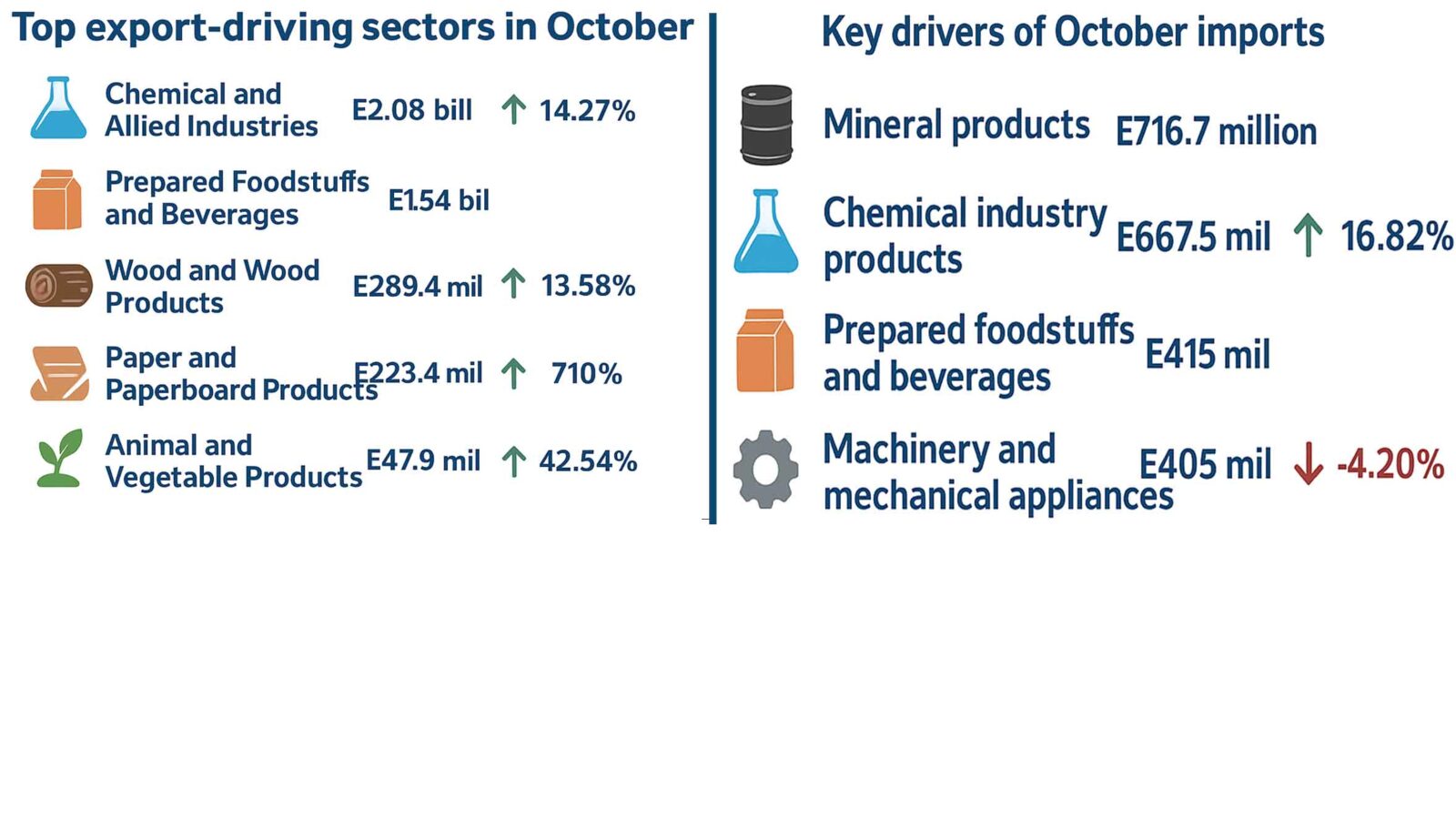
Within SACU specifically, exports rose sharply to E3.39 billion, up from E2.83 billion in October 2024. This 19.46 per cent rise is attributed to continued strong performance in:
Prepared foodstuffs, beverages and tobacco (E961.8 million)
Chemical and allied industry products (E1.24 billion)
Wood and paper products (E275.3 million and E222.9 million respectively)
These categories reflect the depth of Eswatini’s agro-processing and manufacturing base, which remains central to the country’s industrial output.
A notable shift during the month was seen in exports to North America, which skyrocketed from E7.37 million in October 2024 to E244.66 million – a dramatic 3 220.91 per cent increase. This reflects episodic shipments of specialised goods and could signal the opening of new niche markets.
Meanwhile, exports to Europe declined steeply by 86 per cent, falling to E103.3 million from E755.23 million last year. This is largely associated with reduced mineral exports and lower demand for some manufactured items in European markets.
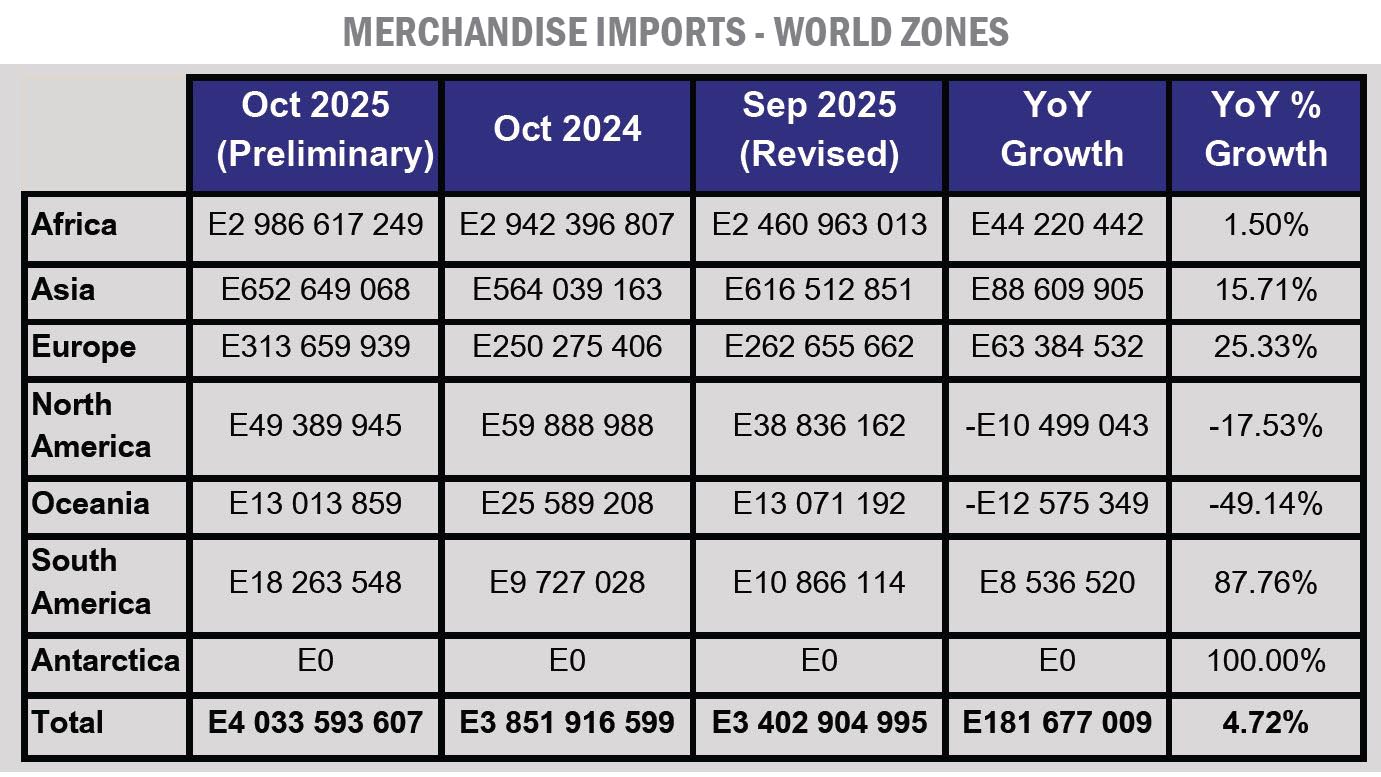
Eswatini’s import bill for October reached E2.90 billion, slightly higher than the E2.86 billion recorded last year. The marginal increase of 1.43 per cent indicates stable domestic consumption and industrial demand.
*…
Regional trade still critical to Eswatini
MBABANE – Southern African Customs Union (SACU) continues to be Eswatini’s dominant trade bloc, especially on exports.
The October figures show that over 90 per cent of the country’s exports flowed into SACU markets, led by South Africa. This strong dependence underscores both the importance and vulnerability of Eswatini’s trade position.
On the import side, SACU supplied E2.9 billion of goods in October alone, highlighting the regional interlinkages in transport, manufacturing, retail and energy.
The monthly surplus of E483.7 million highlights improving export competitiveness and stable domestic demand. Compared to October 2024’s deficit, the country’s external sector has demonstrated resilience, supported by:
- Improved manufacturing output
- Strong regional market demand
- Recovery in agricultural-based exports
- Reduced pressure from volatile global prices
The surplus for the cumulative fiscal year further strengthens Eswatini’s external position, helping support reserve levels and strengthening trade-related government revenue.
Looking ahead, the outlook for Eswatini’s trade remains cautiously positive. Manufacturing and agro-processing continue to perform strongly, while diversification into regional and international markets appears to be improving.
*Full article available in our publication





















Leave a comment