

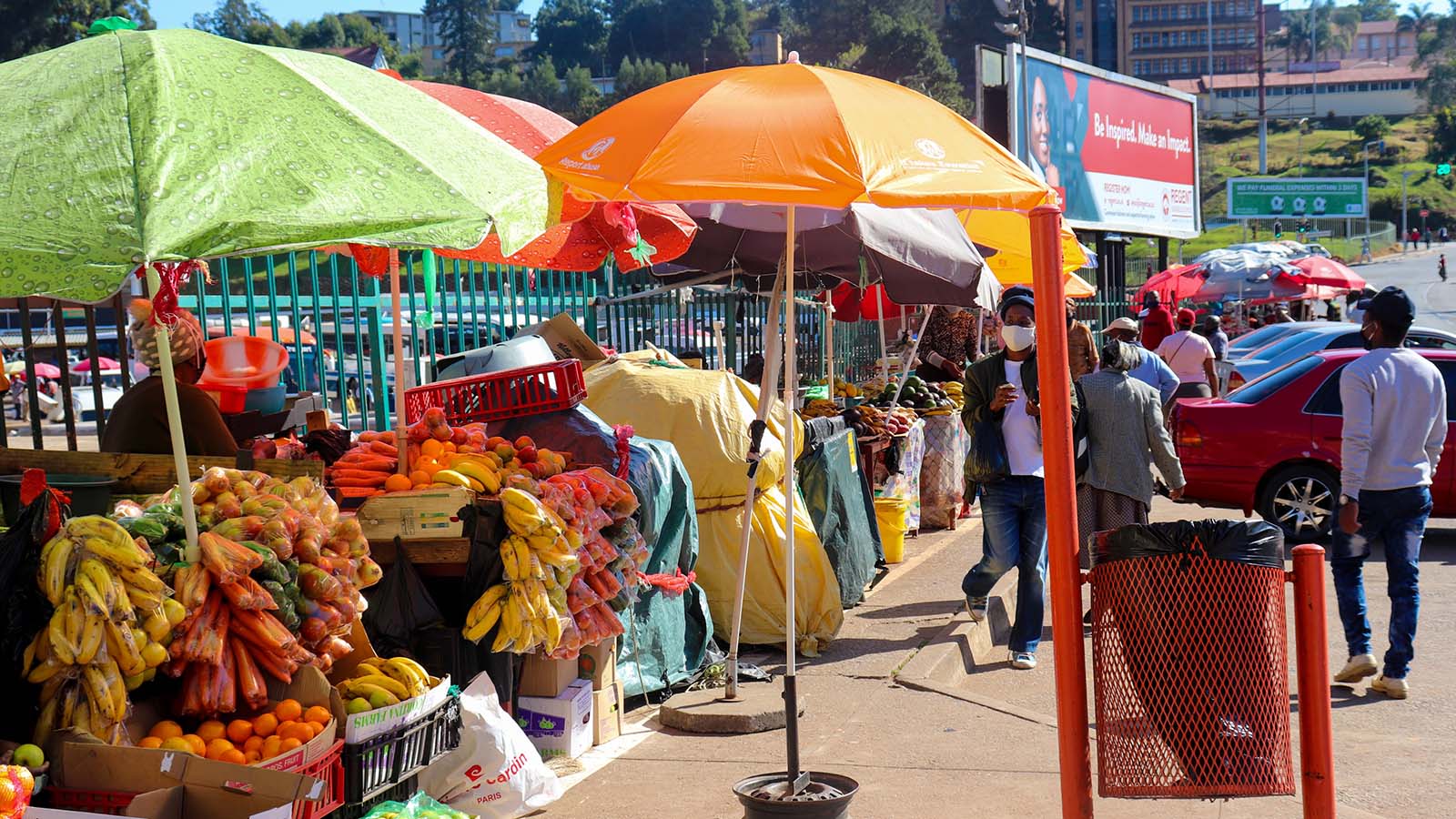
MBABANE – As the festive season peaks across the country, concerns have emerged over the treatment of informal traders by municipalities and privately contracted security companies.
The Swaziland Association for Research and Economic Development (SARFED) has raised the alarm over reported harassment of informal micro-traders during this critical trading period, warning that such actions risk undermining livelihoods and broader economic stability.
SARFED Senior Policy Advisor, George Choongwa revealed that Eswatini remains one of the fastest- growing economies in sub-Saharan Africa, recording an average annual gross domestic product (GDP) growth of between four and five per cent.
The economy has shown resilience and projected to remain robust into 2026, supported largely by private sector activity and growing interest in both domestic and foreign direct investment.
Despite this positive outlook, Choongwa revealed that structural challenges persist, particularly in the labour market. Unemployment remains high, averaging 34.5 per cent between 2020 and 2025, with youth unemployment estimated at about 52.4 per cent.
Young people account for roughly 30 per cent of the population and nearly half of the labour force, yet the economy generates only about 1 000 new jobs annually against approximately 25 000 new labour market entrants.
In this context, the informal sector continues to play a critical role in income generation and survival for thousands of households. Many emaSwati, particularly the youth, turn to informal trade as an alternative means of earning a living amid limited formal employment opportunities.
Speaking at a World Bank-supported project, Minister for Economic Planning and Development Dr Thabo Gina stressed the need for transformative approaches to job creation, especially for young people.
“The support from the World Bank is a catalyst for transformative change, particularly for our youth, unlocking opportunities in skills development, entrepreneurship and employment,” Dr Gina said.
“Through these initiatives, we are empowering the next generation of emaSwati to drive innovation, economic growth and sustainable progress for years to come.”
SARFED notes that these remarks reflect the importance of coordinated institutional support for informal economic activity as part of broader public initiatives aimed at sustainable livelihoods, particularly for young people.
The organisation warns that restricting or suppressing informal trade can have serious social and economic consequences. Research shows that economies that fail to accommodate the informal sector often experience increased social unrest, rising crime, corruption and tax evasion.
Informal trade, while requiring regulation, should not be subjected to harsh or hostile enforcement measures.
*Full article available in our publication
















Leave a comment