

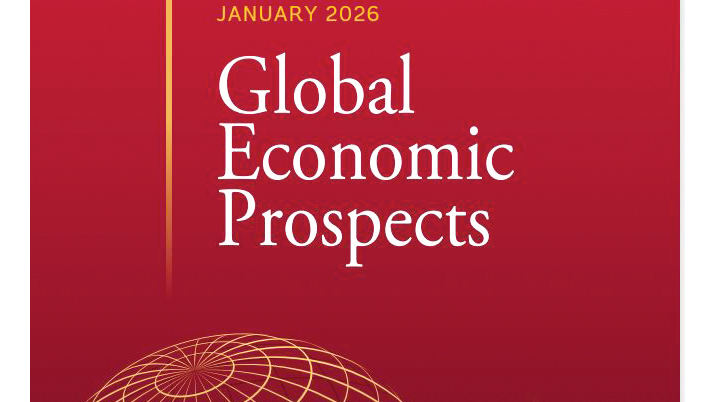
MBABANE – The global economy is proving more resilient than anticipated despite persistent trade tensions and policy uncertainty, according to the World Bank’s Global Economic Prospects: January 2026 report.
Stronger-than-expected growth in several major economies, easing inflationary pressures and improving financial conditions have helped stabilise the international economic outlook for the year ahead.
While global growth remains uneven across regions, the report suggests that the risk of a sharp slowdown has eased. For countries such as Eswatini, which are closely integrated into regional and global markets, this resilience offers cautious optimism, particularly through steadier trade flows, improved investor confidence and more stable macroeconomic conditions.
However, the World Bank cautions that the recovery remains fragile, especially for Sub-Saharan Africa. Structural challenges such as high public debt, climate vulnerability, weak productivity growth and limited fiscal space continue to constrain long-term development.
For small open economies like Eswatini, global stability alone will not be enough to guarantee sustained growth without strong domestic reforms.
Globally, economic activity is being supported by moderating inflation, easing financial conditions and stronger-than-expected consumer spending in some advanced economies. These factors have helped stabilise global demand, benefitting trade-dependent countries.
*…
World Bank encourages deeper integration through AfCFTA
MBABANE – Regional trade remains a major opportunity for Eswatini.
The World Bank encourages deeper integration through initiatives such as the African Continental Free Trade Area (AfCFTA), which aims to expand intra-African trade and reduce barriers.
As a member of SACU and the Southern African Development Community (SADC), Eswatini can benefit from improved cross-border trade, harmonised regulations and better transport corridors.
Expanding regional and continental trade can help diversify exports, reduce reliance on a narrow range of products and strengthen economic resilience.
The report also highlights the growing importance of digital transformation in boosting productivity.
Access to digital tools, financial technology and e-commerce platforms can help small businesses reach new markets and improve efficiency.
For Eswatini, expanding digital infrastructure and digital skills can support entrepreneurship, improve service delivery and integrate the economy more deeply into regional and global value chains.
Overall, the World Bank’s January 2026 outlook presents a cautiously positive global picture, with economic resilience holding firm despite ongoing risks.
However, the pace of recovery remains uneven and many developing economies still face significant structural challenges.
*…
Private sector remains key driver of sustainable growth
MBABANE – The World Bank identifies private sector investment as a key driver of sustainable growth.
Across Africa, business activity remains constrained by regulatory barriers, infrastructure gaps and limited access to finance.
For Eswatini, strengthening the business environment is essential to attract domestic and foreign investment. Sectors such as agro-processing, manufacturing, renewable energy and tourism offer strong growth potential if supported by reliable infrastructure and policy certainty.
The report stresses that reducing red tape, improving governance and ensuring policy consistency can help unlock private capital and stimulate job creation.
Infrastructure remains a major constraint on productivity in many developing economies.
The World Bank highlights the importance of reliable electricity, efficient transport networks and strong digital connectivity in supporting economic growth.
In Eswatini, improved power supply and road networks are essential for supporting industrial activity and regional trade.
Investments in digital infrastructure can also expand access to financial services, support small businesses and enable participation in the digital economy.
*Full article available on Pressreader*



















Leave a comment