


MANANGA – The Eswatini Revenue Service (ERS) has intensified its call for a coordinated national and international response to illicit trade.
The organisation has warned that the practice poses a serious threat to livelihoods, public health and the environment, beyond undermining compliant businesses.
Speaking during the commemoration of International Customs Day 2026 at the Mananga Border on Monday, ERS Executive Manager for Customs and Excise, Precious Chauya, said illicit trade continues to erode the integrity of supply chains, while exposing society to unsafe and harmful products driven by profit motives rather than long-term societal well-being.
The International Customs Day was commemorated under the theme ‘Customs Protecting Society through Vigilance and Commitment.’
“We are cognisant of the negative impact arising from illicit trade as it goes beyond bringing unfair competition to compliant trade operators, but it threatens the livelihood of society and even affects the environment,” Chauya said.
She explained that the effects of illicit trade are far-reaching, touching consumers, businesses and ecosystems alike, and weakening trust in regulatory and border control systems. Chauya stressed that while enforcement remains critical, the scale and complexity of illicit trade require stronger collaboration among regulatory agencies and stakeholders across borders.
Chauya said the 2026 International Customs Day was deliberately being used as a programme launch to reaffirm ERS’s commitment to protecting society through collective action.
“We, therefore, want to use today as a programme launch as we reaffirm that together with our partners at the borders and in collaboration with all national as well as international stakeholders, we will strengthen the work we do to protect society,” she said.
According to Chauya, this renewed drive will be anchored in robust and coordinated processes that optimise synergies among regulatory authorities, ensuring that policies and procedures are effective, responsive and aligned.
She warned that the threats confronting Customs authorities are not hypothetical, but real and persistent, driven by individuals and networks that prioritise short-term profits over the long-term impact of their actions on human lives.
*…
… customs authorities’ mandate expanded
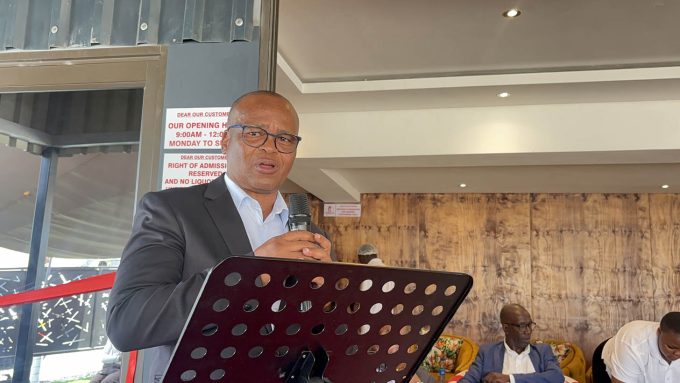
MANANGA – ERS Commissioner General Brightwell Nkambule delivered the keynote address, placing Eswatini’s anti-illicit trade drive within the broader global Customs agenda.
Nkambule said while Customs authorities have traditionally been associated with the collection of duties and taxes, their mandate has expanded significantly in response to growing global trade risks.
“While revenue collection remains important, Customs today must perform two critical functions at the same time: Facilitate legitimate trade efficiently and protect society by preventing harmful, illegal or non-compliant goods from entering or leaving the country,” Nkambule said.
He stressed that legitimate trade is defined by compliance with national laws and standards designed to protect citizens, the economy and the environment, making Customs a central pillar in national security and societal protection.
Nkambule outlined ERS’ strategic focus, noting that the balance between trade facilitation and enforcement was not theoretical, but embedded in practical systems and measurable outcomes.
One of the key interventions has been the use of smarter digital systems to strengthen border controls. Several partner regulatory agencies are now utilising the Customs clearance system to manage import permits, helping to prevent the release of goods that require compliance with health, safety and quality standards.
*Full article available on Pressreader*





















Leave a comment