

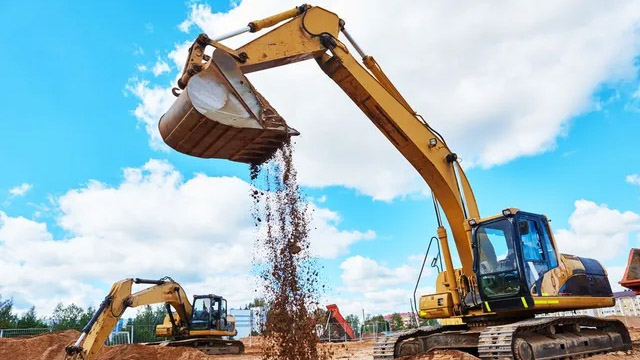
MBABANE – The local construction industry recorded a measured recovery during the 2024/25 financial year.
This was underpinned by renewed infrastructure momentum, growing civil works activity and sustained parastatal investment, even as employment pressures, declining building approvals and rising costs continued to weigh on the sector.
According to the Construction Industry Council (CIC) Construction Industry Performance Report 2024/25 released on January 22, 2026, the sector’s performance reflected a year of consolidation rather than expansion, marked by stabilising output, shifting project composition and persistent labour vulnerabilities.
After several years of subdued performance, construction output improved in 2024, growing by 3.4 per cent, closely tracking the overall economic growth of 3.6 per cent.
This marked a notable turnaround from the near-stagnation recorded between 2021 and 2023, when construction growth averaged below 1 per cent.
Data from the Central Statistics Office shows that while construction activity values rose steadily in current prices, real output in constant prices grew at a slower pace, highlighting the impact of inflationary pressures on materials, logistics and labour costs.
*…
MBABANE – At face value, the total value of registered construction projects fell sharply by 42 per cent, from E4.9 billion in 2023/24 to E2.85 billion in 2024/25.
However, the Construction Industry Council (CIC) cautions that this decline is largely statistical rather than structural.
The previous year’s figures were heavily skewed by the E2.6 billion Mpakeni Dam, the single largest project registered in recent years. When this project is excluded, the adjusted value of registered works in 2024/25 actually reflects continued growth in underlying construction investment, particularly across civil infrastructure and private sector developments
General civil works emerged as the dominant growth segment, expanding by 86 per cent year-on-year and accounting for 64 per cent of total project value.
This surge reflects increased investment in water infrastructure, hydropower, roadworks and industrial utilities, with parastatals such as the Eswatini Water Services Corporation (EWSC) and Middle Lusutfu Hydropower featuring prominently.
In contrast, general building works declined by 21 per cent, while electrical and mechanical works also contracted, highlighting uneven performance across sub-sectors.
Despite this, specialist building and electrical works posted strong gains, signalling a gradual shift towards more technically focused projects and higher value-added construction activities.
Parastatal entities continued to dominate construction investment, accounting for 69 per cent of total registered project value, unchanged from the previous year. Major contributors included water utilities, power generation entities and state-linked development agencies.
*…
Industrial demand drives growth in approvals for building construction
MBABANE – Building approvals declined sharply by 60 per cent year-on-year, falling to approximately E615.5 million, representing a decrease of E884m compared to 2023.
The contribution of the residential market declined from 31 per cent in 2023 to 29.5 per cent in 2024, as demand for housing was affected by higher lending rates and rising inflation.
The industrial market’s share also fell, with approvals dropping by 33 per cent year-on-year to E230 million, despite previously accounting for 65 per cent of the market in 2023 and now making up 73 per cent in 2024.
The CIC reported that approvals for other buildings decreased by 32 per cent, contributing about 5 per cent of total approvals – around E33 million for the year. Overall, construction activity declined across all building categories between 2023 and 2024, reflecting a general slowdown in the sector.
*Full article available on Pressreader*



















Leave a comment