

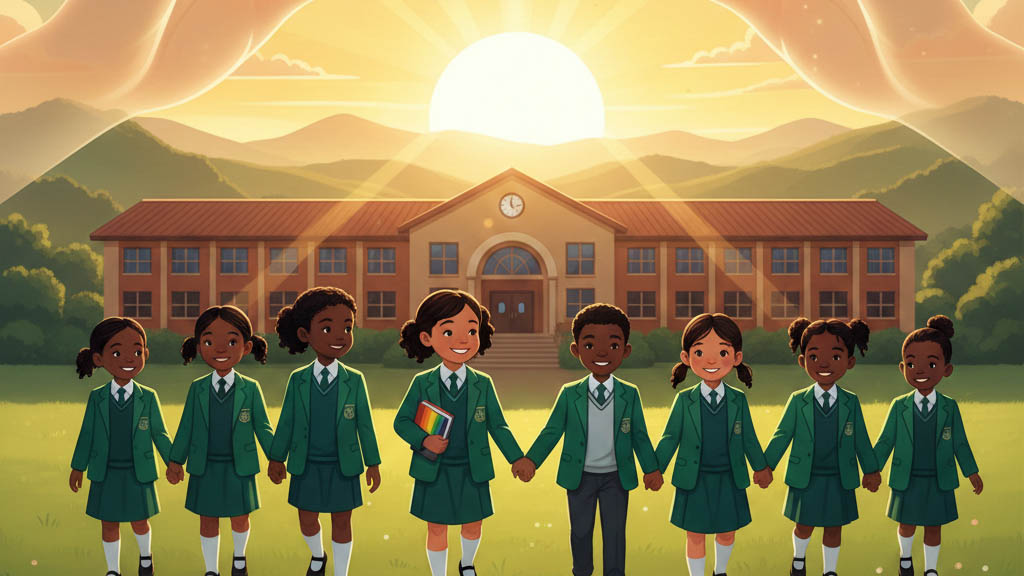
Schools are meant to be places of safety, learning and growth for every child. They are spaces where young people should feel protected, valued and encouraged to reach their full potential. Recent public remarks by Eswatini’s Minister for Education and Training, Owen Nxumalo, however, have raised serious concerns about whether our education system is living up to these principles. The minister stated that learners who engage in homosexual relationships would be expelled from school immediately and invoked the Bible to justify this position. These utterances have ignited widespread debate, not only about morality and belief, but about the fundamental purpose of education and the rights of children.
Education is a constitutional right in Eswatini, guaranteed to all learners without discrimination. Schools are public institutions that serve children from diverse backgrounds, beliefs and lived experiences. When senior government officials threaten exclusion based on sexual orientation or perceived identity, the message sent to learners is one of fear rather than guidance, punishment rather than protection. The reality is that learners who are perceived to be lesbian, gay, bisexual, transgender or questioning already face disproportionate levels of bullying, isolation and mental distress in schools. Research across the world consistently shows that hostile school environments contribute to anxiety, depression, poor academic performance, and increased dropout rates. Expulsion does not correct behaviour or instil values; it pushes children out of the education system and into deeper vulnerability, often with lifelong consequences.
While Eswatini is a deeply religious country and many citizens draw moral guidance from the Bible, public education must remain inclusive and grounded in the rights and dignity of all learners. The Bible itself is interpreted in many ways, even among Christians. Using selective scripture to justify exclusion overlooks these broader teachings and risks turning schools into sites of moral policing rather than learning.
It is also important to recognise that schools already have codes of conduct that regulate behaviour for all learners, regardless of sexual orientation. Singling out one group of learners for expulsion based on identity or presumed behaviour undermines the principle of equality before the law and opens the door to arbitrary and harmful practices.
Public officials carry a responsibility to uphold constitutional values and to protect children’s best interests. Statements that appear to endorse discrimination contradict Eswatini’s commitments under regional and international human rights instruments, including those who protect the right to education, freedom from discrimination, and the welfare of the child. Schools should be spaces where learners are taught critical thinking, respect and coexistence in diversity, skills essential for a peaceful and cohesive society.
Ensuring that schools are safe and inclusive does not mean imposing particular beliefs or lifestyles on anyone. It means recognising that every child deserves access to education without fear of humiliation, exclusion, or violence. It means equipping teachers with the skills to manage diversity sensitively, addressing bullying in all its forms, and creating environments where learners can focus on learning rather than survival.
As a nation, Eswatini must reflect carefully on the messages being sent to its young people. True leadership in education lies in protecting all learners, even when it is uncomfortable or politically unpopular to do so.
If schools are to prepare learners for life beyond the classroom, they must model fairness, empathy, and respect for human dignity. An education system that excludes some children can never truly succeed. Safe, inclusive schools are not a threat to values; they are the foundation of a just and humane society.














Leave a comment