

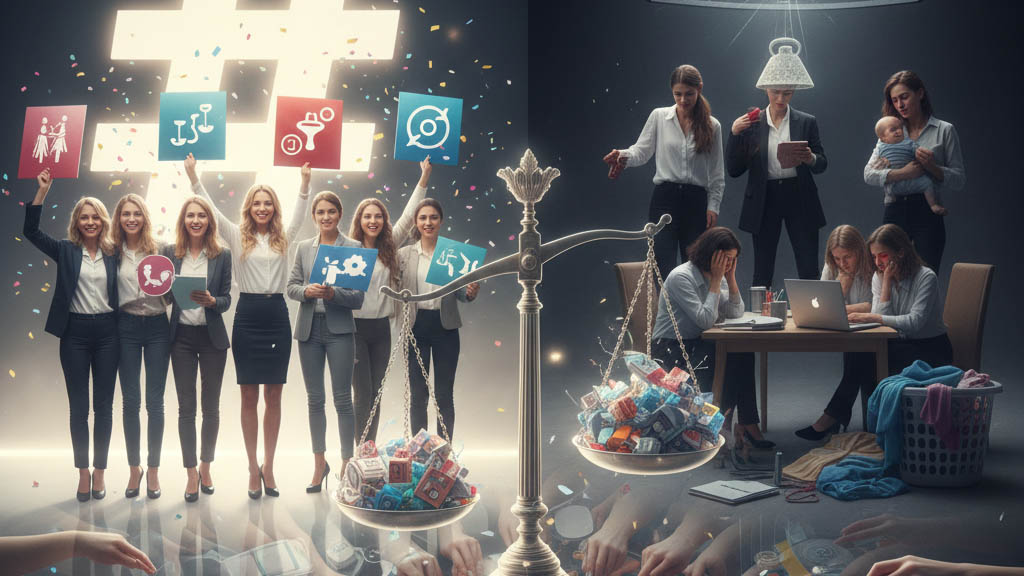
Equality has never been more fashionable. We hashtag it, panel it, fund it and post about it. We speak fluently about gender justice, inclusion and empowerment. Yet, beneath the polished language and public commitments lies an old, stubborn truth; women are still doing most of the work that keeps families, movements, institutions and societies functioning. This work is rarely visible. It is not always paid. It is almost never celebrated, but without it, very little would hold together.
Women continue to shoulder the bulk of unpaid care work, namely cooking, cleaning, caregiving and emotional labour, even as they participate fully in the formal economy. We praise women for ‘doing it all,’ without asking why they are expected to. The idea that equality has arrived coexists comfortably with the reality that women are still managing households, sustaining relationships, caring for children and elders, and absorbing emotional fallout when systems fail.
The contradiction is glaring. Equality is trending, but responsibility remains deeply gendered. This pattern extends far beyond the home. In workplaces, women are often the glue, mentoring colleagues, smoothing conflict, remembering birthdays, organising team morale and holding institutional memory. These tasks are rarely reflected in job descriptions or performance reviews, yet organisations would struggle without them. Emotional labour is treated as a natural extension of womanhood rather than a skill worthy of recognition or compensation.
In civil society and activism, the same story repeats itself. Women are the backbone of movements, organising meetings, following up action points, providing care to communities, managing crises and ensuring continuity. When funding is delayed, women ‘make a plan.’ When leadership collapses, women step in. When burnout hits, women are told to rest, briefly and then return to holding everything together. We celebrate women’s resilience without interrogating the systems that demand it.
This quiet expectation that women will always compensate for gaps, in policy, in leadership, and resources, is one of the most insidious barriers to true equality. It allows institutions to appear progressive while relying on women’s unpaid or underpaid labour to survive. It shifts responsibility away from structures and onto individuals, framing exhaustion as a personal weakness rather than a predictable outcome of inequality.
Even in feminist spaces, this dynamic persists. Women are expected to educate patiently, to include generously, to explain repeatedly, to remain composed. Anger is policed. Fatigue is minimised. Boundaries are interpreted as selfishness. The work of sustaining movements, emotionally and logistically, falls disproportionately on women, especially those who are marginalised by class, sexuality, disability or geography. Equality, it seems, often means women gain access to public spaces without being released from private burdens.
The cost of this imbalance is profound. Women experience higher rates of burnout, stress-related illness and economic precarity.
Talented women leave leadership roles not because they lack commitment, but because the price of participation is unsustainable. Communities lose knowledge and continuity when women are stretched beyond capacity and quietly step back. Yet still, we rarely ask the most important question: Who benefits from women doing it all?True equality is not about visibility alone. It is not achieved by representation without redistribution or empowerment rhetoric without structural change. Equality requires a fundamental rethinking of how labour, especially care and emotional labour, is valued, shared and supported.
It means recognising that resilience should not be a survival strategy. It means designing workplaces, movements and policies that do not rely on women’s unpaid sacrifice. It means holding institutions accountable instead of applauding women for compensating when systems fail. Until then, equality will remain something we talk about loudly while practicing something else entirely. If equality is truly the goal, then the work must be shared, not just celebrated when women carry it.














Leave a comment