

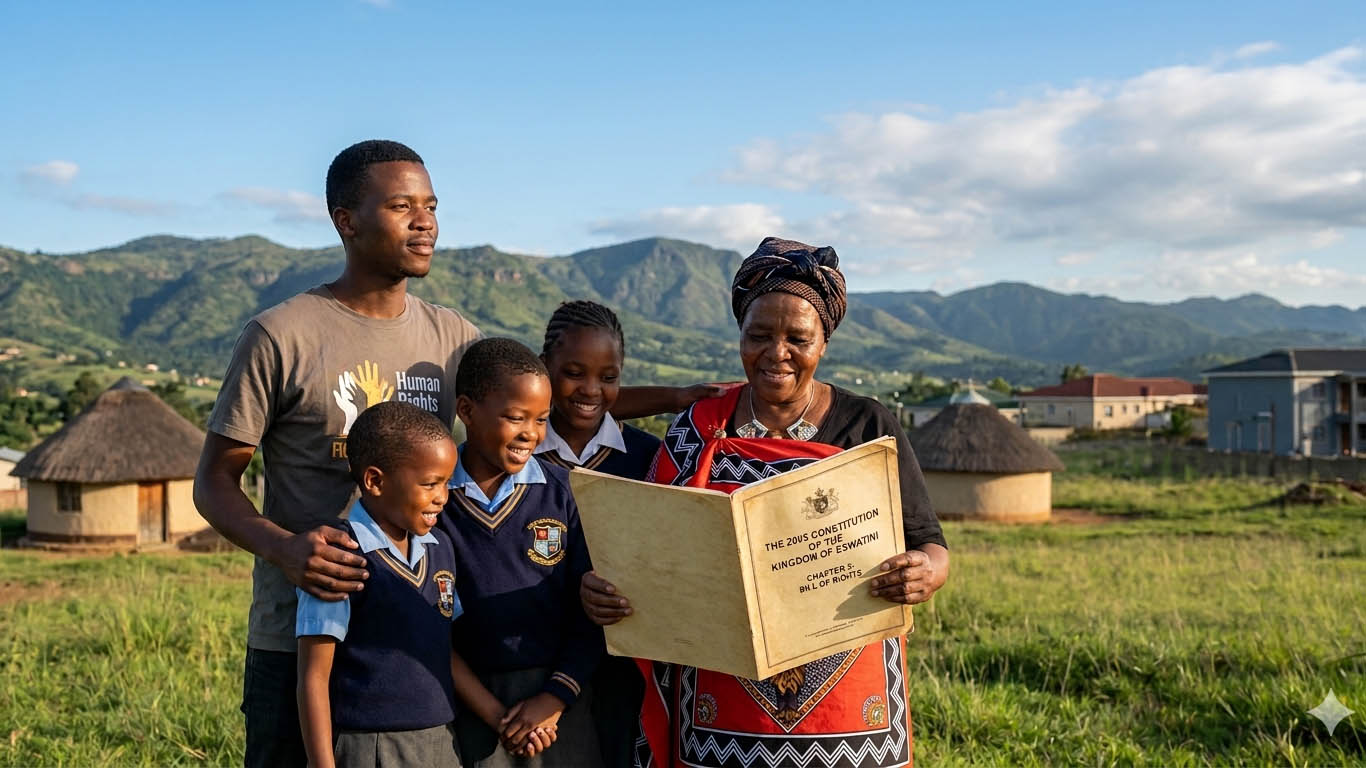
This Saturday marks Human Rights Day in South Africa, as we commemorate the day with them, maybe it is time to reflect as a country on how fundamental freedoms are experienced in daily life. As Eswatini moves towards its 58th year of independence since 1968, this September, this day serves as a reminder of how far we have come in securing dignity and equality. Fortunately, these values are enshrined in the 2005 Constitution of the Kingdom of Eswatini with the intention of protecting emaSwati, a very thoughtful initiative.
The Bill of Rights in the Constitution declares the fundamental rights and freedoms of the individual with the aim of promoting stability and peace in the country.
Human rights are often discussed in formal settings, yet their true meaning is found in simple, everyday realities. For example, it is the right of a child to receive good quality education, and a patient has a right to be treated in a perfectly running health institution. The Bill of Rights, embodied in Chapter 3, includes: Protection of the right to life, protection from inhuman or degrading treatment, protection of freedom of expression and the rights of a child, women, workers and persons with disabilities.
Human rights should not be exercised at the expense of others; they focus on dignity, equality, and justice even in the communities we live in. This day should not only be about ‘celebration,’ but also a time to ask ourselves whether the rights enshrined under the Constitution are fully experienced by every individual.
It is worth noting that respecting human rights is not only the responsibility of government or institutions, but it also includes how individuals treat one another. An individual is entitled to rights; nonetheless, the pursuit of one’s right should never be the reason for another’s rights to lessen.
Human rights are essential in ensuring justice and equality are maintained.
They help government to govern better, as they encourage transparency and accountability, should rights be violated by those in power. Power holders are constantly reminded by the Constitution that their authority exists to serve the people, not overlook them.
When people feel that their rights are respected, they are more likely to trust institutions. These rights are more than legal principles on paper; they are moral guidance for governance.
When communities trust that their voices can be heard without fear, which is freedom of expression, and that their basic needs are not ignored, they feel a sense of belonging, thus building a stable nation. Who needs an unstable nation? Not only will it cause destruction, but it will also limit development.
It is important for those in power to protect and respect individual rights.
The war between Russia and Ukraine raised serious concerns about human rights; when conflicts erupt, individual lives are at a higher risk. A country should prioritise citizens’ safety and basic needs to maintain peace.
Such commemorations are a reminder that human rights should be exercised every day. However, in some situations, people are not aware of their rights.
This day is a great opportunity for educating, conducting dialogues, and helping citizens become more aware of their freedoms and responsibilities.
The government has a responsibility to ensure that the people understand their rights, hence the provision of the 2005 Constitution. Our education system should also educate students on the value of preserving dignity and respect. In that way, learners will understand their freedoms and their duty towards others.
As Human Rights Day is commemorated this Saturday, it is more than a moment for recognition; it is a call for action. Human rights are not luxuries reserved for special occasions; they are the heartbeat of a just and caring society. They remind us that every individual deserves dignity, every voice deserves to be heard, and every life deserves protection.
Happy Human Rights Day in advance!
For comments: mkhabelanamhla@gmail.com















Leave a comment