

The country’s human trafficking record has been brought to the fore once again.
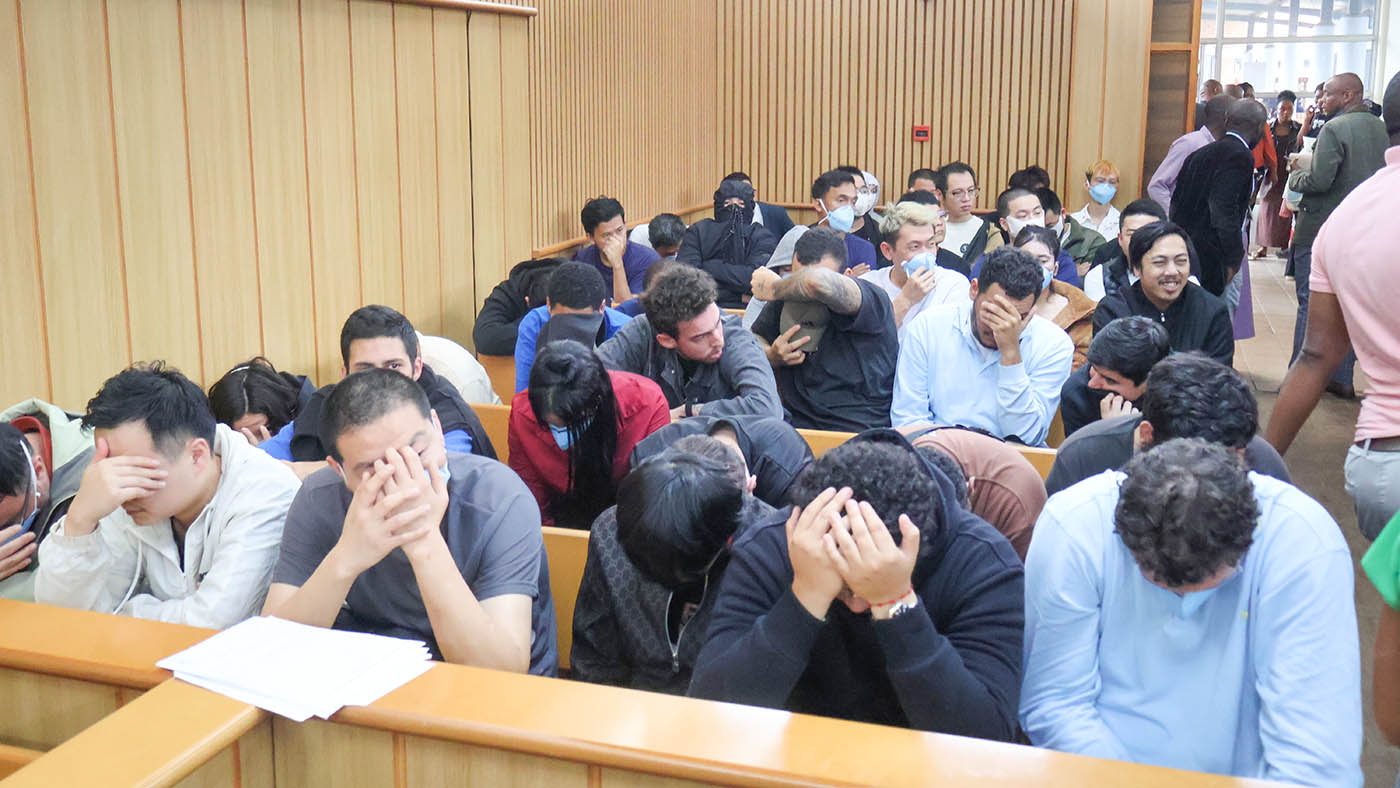
This follows the discovery of almost 100 foreign nationals, mostly of Asian origin, suspected to be involved in an illegal online gambling syndicate operating from a hotel.
The question emerging from this development is whether the perpetrators of this crime are aware of the greater consequences of their actions for the country and thousands of its innocent citizens who could face job losses.
We must remember that Eswatini is one of the countries that have ratified the UN Protocol to Prevent, Suppress and Punish Trafficking in Persons.
Apart from the UN, we are also assessed annually by the United States, which produces a Trafficking in Persons (TIP) Report by the US Department of State’s Office to Monitor and Combat Trafficking in Persons.
It evaluates how governments worldwide are addressing human trafficking, based on the standards set out in the US Trafficking Victims Protection Act (TVPA) of 2000 (as amended over the years).
The Secretary of State is required to submit an annual report to Congress that assesses foreign governments’ efforts to combat severe forms of trafficking in individuals (essentially modern slavery, including forced labour and sex trafficking). This includes ranking them on tiers based on whether they meet (or are making significant efforts towards) the TVPA’s minimum standards.
How we rank influences how the USA deals with countries that score very low in this regard. This issue matters to us as a beneficiary of the African Growth and Opportunity Act (AGOA), which has given the textile industry favourable tariffs to export to the US market and serves as a lifeline for more than 6 000 emaSwati.
We also receive aid from America.
Even though it has recently been substantially reduced, just the other day, the PM was taken on a tour of a E52 million high-tech waste disposal and oxygen production plant funded through the USA’s Global Fund, in partnership with the Eswatini Government.
According to the 2025 TIP report, Eswatini is ranked on Tier 2, which means we are making efforts, but we are far from safe.
The report indicates we have increased investigations and victim identification. However, a significant shortcoming is that we have recorded no new prosecutions or convictions for two years, which the report highlights as a glaring weakness. Is this the loophole that the foreign nationals are using to land here? Most probably.
When we compare ourselves to our neighbours, the picture is mixed. South Africa, the economic powerhouse that draws many of our migrants, has been downgraded to the Tier 2 Watch List.
Mozambique, a key source and transit country, seems to also be struggling with low prosecutions. Notably, according to the report, the entire region shares the same vulnerabilities, such as porous borders, high unemployment and corruption.
The recent spate of arrests is welcome and it should serve as a wake-up call for us all that emaSwati are teaming up with international individuals who may be more sophisticated in crime, considering that in the latest arrests, the suspects come from as far afield as Mainland China, Brazil and Cambodia.
Other foreign nationals are being identified in illegal mining through the so-called zama zamas.
The Ministry of Home Affairs has come out to state that they are looking inward by launching investigations dating back 20 years into the conduct of its officers.
This move is a bold and necessary step. The ministry needs to be frank about rooting out the ‘corrupt individuals’ within the ministry who are selling out the country’s sovereignty and placing thousands of jobs at risk.
However, while tracing the rot within the civil service is crucial, it is only one piece of a much larger puzzle. These are not petty criminals slipping through the border unseen. They are organised networks that require accommodation, equipment and local fixers to operate.
This calls for a far more coordinated approach. The Royal Eswatini Police Service cannot be expected to carry this burden alone. It must involve every law enforcement agency working together with tourism officials and the hospitality industry and communities.
If hotels and guesthouses are being converted into ‘mock police stations’ and operational hubs for online scams, then the hospitality sector must be trained to recognise the warning signs and report them immediately.
Furthermore, the role of community policing forums cannot be overstated.
The Ministry of Home Affairs admitted that the recent breakthrough was thanks to a tip-off from patriotic members of the public. This proves that ordinary emaSwati are the eyes and ears of the nation.
The media also has a critical role to play in raising public awareness.
We must consistently educate people about what ‘pig-butchering’ looks like, how these scams work and what suspicious activity in rural areas, like what the makeshift mining stations established by zama zamas, might entail.
It would be irresponsible, however, to frame this issue solely through the lens of xenophobia. While we are right to be concerned about foreign nationals breaking our laws, we must also acknowledge the reality that many emaSwati find themselves in similar predicaments beyond our borders.
There are sons and daughters of this kingdom in neighbouring South Africa and further overseas who have been trafficked and forced into criminal activities.
The problem of human trafficking is a two-way street and our empathy must extend to all victims. Most importantly, we all need to understand and avert the broader implications of this form of crime.
An informed public is our first line of defence.















Leave a comment