

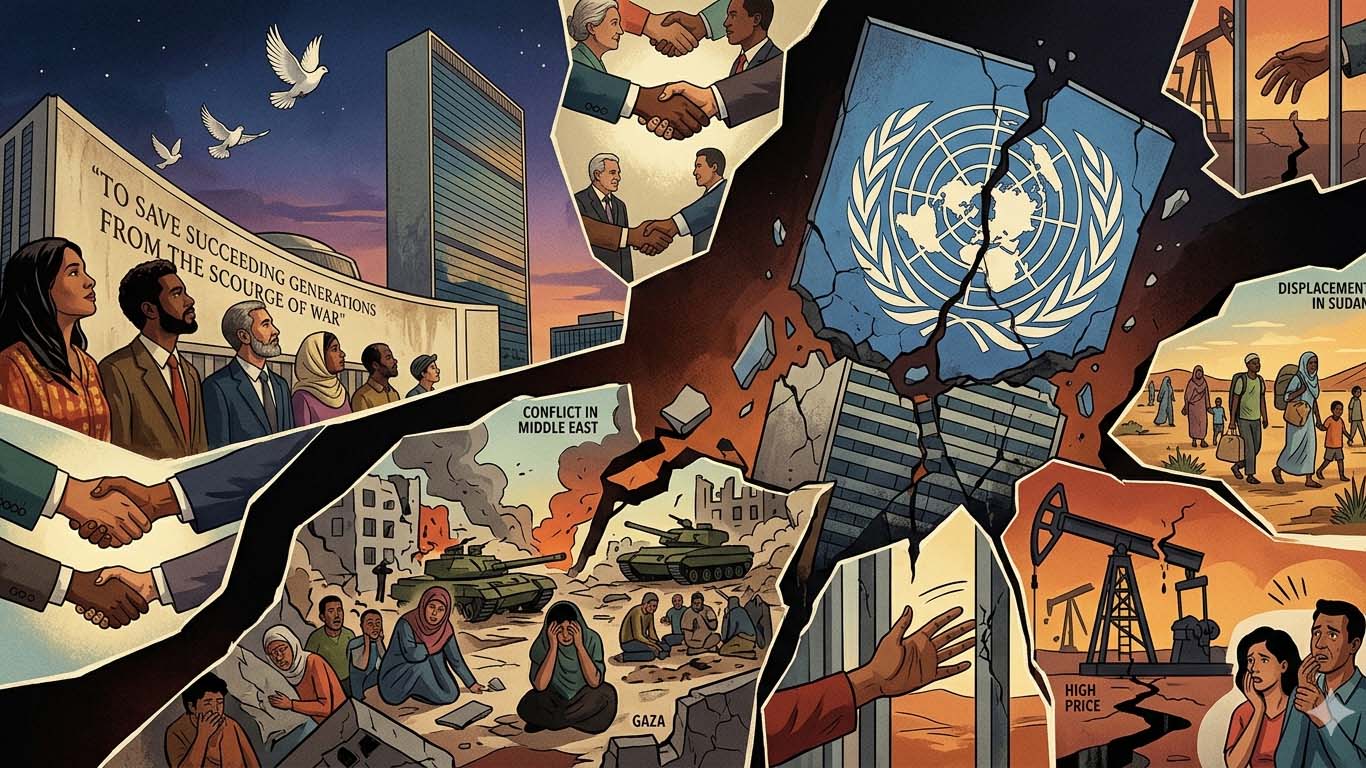
I never thought that the era of wars would ever revisit humanity. However, the reality is that the global order and rules-based era seem to be vanishing before our very eyes. The recent war in Iran waged by the United States of America and Israel has come as a shock, as the United States and Iran were engaged in various rounds of negotiations. This, of course, followed a 12-day war, where the American President announced that Iran’s Nuclear Programme had been obliterated. We all know that the war has triggered a regional conflict as Iran vowed to attack the United States bases in the Middle East.
This attack, unfortunately, has affected civilians and some critical infrastructure. It is unfortunate that this war is now affecting oil prices globally, which will affect consumers in developing and developed countries. Four years ago, a war in Ukraine erupted when Russia announced a special mission.
There was hope that the war would end soon, but four years later, peace remains elusive.
What is encouraging is that the United States of America is facilitating negotiations between the warring countries. We have witnessed a devastating war in Gaza where over 70 000 people are reported to have lost their lives while Gaza City was razed to the ground. While the ceasefire is in place, violations of the ceasefire are a cause of concern.
Let us not forget the raging war in Sudan between government and paramilitary forces that have killed and maimed thousands while displacing millions. What is depressing is that there is no hope that the carnage will stop soon. It is also worrying that South Sudan might also be sliding into a civil war as well. Al Jazeera reported: “Thousands of civilians have fled an opposition stronghold in eastern South Sudan after the army ordered evacuations to clear the way for a military offensive, the latest sign that the country’s fragile peace is unravelling, as fears of a return to all-out civil war haunt the world’s youngest nation.
“The town of Akobo, near the Ethiopian border, was almost completely emptied by Sunday after the South Sudan People’s Defense Forces issued an ultimatum on Friday demanding that civilians, aid workers and United Nations peacekeepers leave ahead of a planned assault.”
The United States of America brokered peace in East DRC between the DRC Government forces and M23 Rebel group, where Rwanda is accused of supporting them. The peace process also seems to be crumbling. Sadly, the African institutions like the African Union are not able to address the conflicts in the continent. The call for the silencing of guns seems to have fallen on deaf ears.
The idea of the United Nations (UN) was born during World War II. The name ‘United Nations’ was coined by United States’ (US) President Franklin D. Roosevelt. The term was first used in the Declaration by United Nations on January 1, 1942, when representatives of 26 nations pledged that their governments would fight together against the Axis powers. The leaders of countries which had worked together to end the war felt a strong need for an institution that would help bring peace and stop future wars.
They realised that this was possible only if all nations came together to create a global organisation. The UN was to be that organisation.
In 1945, the United Nations Charter was adopted and in its preamble, it says “We the peoples of the United Nations determined: To save the succeeding generations from the scourge of war, which twice in our lifetime has brought untold sorrow to mankind and to reaffirm faith in the fundamental human rights, in the dignity and worth of the human person.
In the equal rights of men and women and of nations large and small and to establish conditions under which justice and respect for the obligations arising from treaties and other sources of international law can be maintained and to promote social progress and better standards of life in larger freedom and for these ends to practice tolerance and live together in peace with one another as good neighbours, and to unite our strength to maintain international peace and security and to ensure, by the acceptance of principles and the institution of methods, that armed force shall not be used, save in the common interest and to employ international machinery for the promotion of the economic and social advancement of all peoples.
The United Nations was a commitment by that generation of leaders that never again would humanity be subjected to wars that leave a trail of human toll. With the current conflicts that have engulfed the globe, the lingering question is whether this noble institution will survive the unprecedented crisis.
Let our leaders save the UN.















Leave a comment