

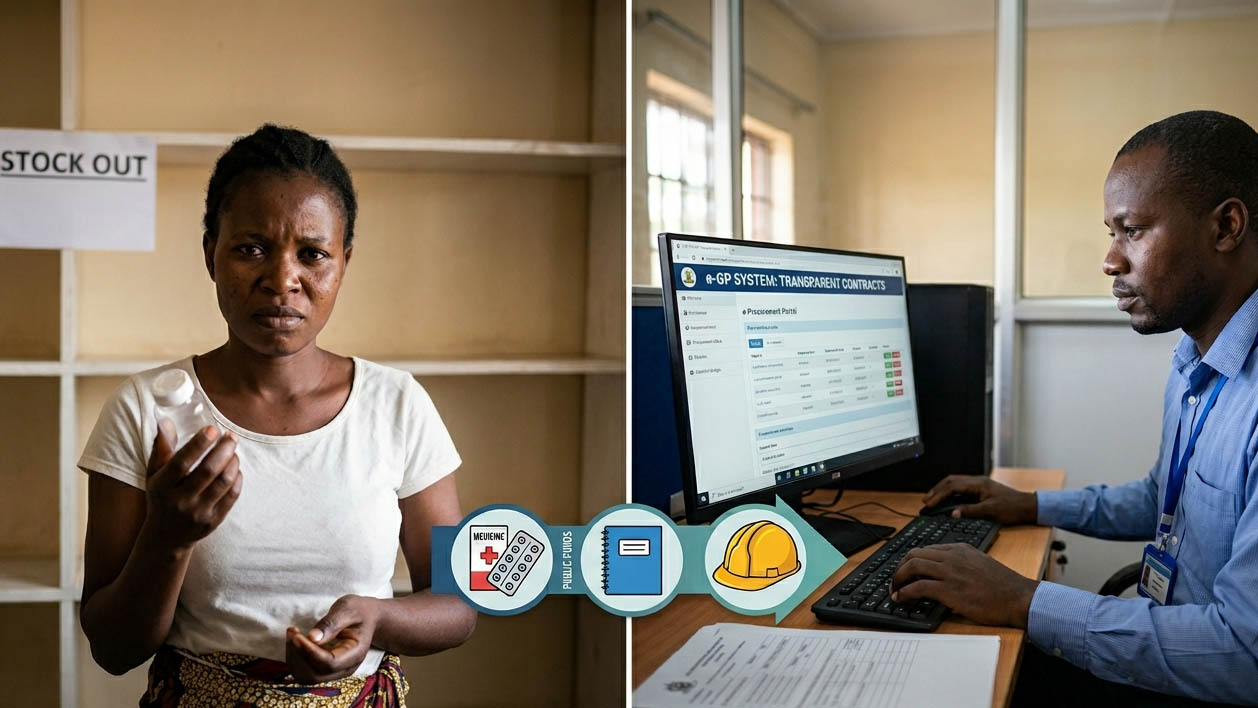
Public procurement sits at the centre of service delivery, shaping how States acquire medicines, build infrastructure and supply essential goods. Across Africa, when procurement systems fail, the consequences are swift and felt.
In Nigeria, for instance, years of controversy around power sector contracts laid bare how opaque procurement processes can gutter public funds, without delivering reliable electricity. In South Africa, COVID-19 emergency procurement scandals revealed inflated contracts and politically connected beneficiaries.
In Kenya, irregularities at the national medical supplies agency raised questions about accountability in life-saving supply chains. These are not isolated governance lapses; they are cautionary red flags. In Eswatini, delays in reforming procurement systems are no longer a technical concern. They are a lived reality.
Procurement determines whether clinics receive medicines on time, whether schools are supplied with learning materials and whether public funds translate into tangible services. When systems falter, the impact is immediate and visible. In Eswatini, those failures are becoming harder to ignore, particularly in the health sector, where shortages have sharpened public scrutiny, in recent years.
Recent medicine stockouts in public facilities have drawn attention to weaknesses in procurement processes. Reports have linked these shortages to alleged flouting of established procedures, where guidelines are inconsistently applied or bypassed altogether. This is not a minor administrative lapse. It delays sourcing, disrupts distribution chains and, ultimately, interrupts treatment. Patients are left waiting, facilities are left under-resourced and the system absorbs this. In simple terms, procurement failure translates directly into empty shelves and deferred care.
Still, the consequences rarely extend over and above the breakdown in service delivery itself. There have not been many instances where individuals implicated in procurement irregularities face custodial sentences. Without firm enforcement, rules could easily become procedural formalities, and not the binding standards they are meant to be.
The continental pattern reinforces this concern. South Africa’s pandemic-era procurement scandals showed how emergency conditions can be exploited when oversight is weak. Contracts for personal protective equipment were awarded at inflated prices, diverting funds meant for urgent health responses. President Cyril Ramaphosa once stated that ‘too many tenders are issued to companies without the competence to deliver. This wastes public funds, encourages corruption and does not advance real economic empowerment.’
In Kenya, audits and Parliamentary inquiries into medical procurement depicted discrepancies in the acquisition and distribution of supplies, raising persistent concerns about value for money and governance. Nigeria’s long-running power procurement controversies further add weight to the Ramaphosa’s views and show how large-scale contracts, when poorly managed, can consume vast resources, without delivering expected outcomes. In our mountainous kingdom, the proposed electronic Government Procurement (e-GP) system, when proposed, showed recognition of these hazards. Digital procurement platforms can reduce human discretion, standardise processes and create auditable trails that improve transparency. However, progress has been slow. Each year of delay allows existing inefficiencies to persist, along with the conditions that enable them.
Procurement inefficiency is not just an administrative inconvenience; it carries direct financial consequences. Feeble contract management can result in incomplete projects or substandard delivery, compounding losses. For a small economy with finite resources, these inefficiencies place avoidable pressure on public finances, diverting funds from critical sectors such as health, education and infrastructure.
The private sector also feels the impact. Transparent and predictable procurement systems encourage wider participation in public tenders, increasing competition and improving value for money. When systems are perceived as opaque or inconsistent, businesses are discouraged from bidding. This narrows the supplier base, reduces competition and ultimately affects both pricing and quality. A weak procurement environment does not only fail the public sector; it stifles economic participation.
Capacity constraints further complicate the picture. Effective procurement depends on skilled personnel who understand regulatory frameworks and apply them consistently. Rules must be applied, and breaches must carry consequences.
Public awareness is shifting though, somewhat. Drug shortages, delayed infrastructure projects and inconsistent service delivery are no longer viewed as isolated incidents. They are increasingly understood as symptoms of frightening systemic flaws. Procurement, once confined to technical discussions, is now part of broader public discourse, because its effects are tangible and immediate.
There is also scope for regional learning. Through platforms such as the Southern African Development Community, countries share frameworks and experiences aimed at strengthening governance. Aligning procurement practices with regional standards could improve consistency and open opportunities for collaboration.
In Eswatini, the link between is already clear. Medicine shortages attributed to procedural violations provide a blunt depiction of how system failures translate into real-world consequences. These are not abstract governance issues. They are measured in delayed treatment, increased costs and constrained public services.
As discussions around the e-GP system and broader reforms continue, urgency matters. Delayed implementation is not neutral; it prolongs inefficiency. Period. Procurement efficiency is not a back-office function. It is a central pillar of governance, determining how effectively public resources are converted into services that citizens rely on every day.



















Leave a comment