

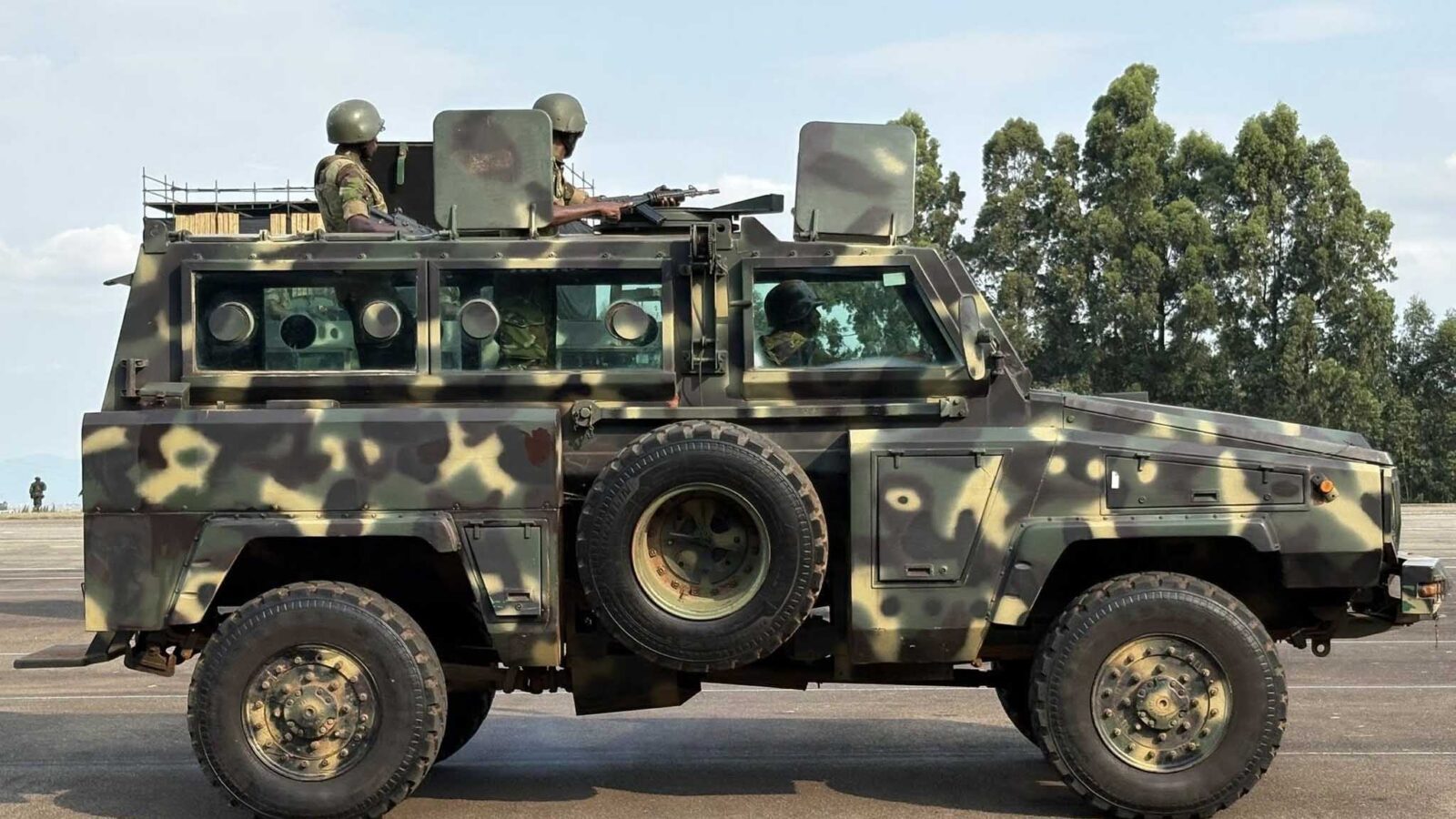
Under the sharp April sun at Nokwane, the rhythmic sound of boots striking the ground echoed across the parade grounds. Soldiers moved in near-perfect synchrony, their presence both commanding and symbolic which is an embodiment of discipline, power, national pride. On Friday, the Umbutfo Eswatini Defence Force (UEDF) marked its 53rd Army Day, which is a national military celebration honouring the country’s armed forces and their role in safeguarding the kingdom. Members of the royal family, Cabinet ministers, government officials and members of the public attended the event. In the midst, His Majesty King Mswati III promoted seven senior officers of the UEDF. This day tells a story of strength, order and unity. For some, it is a day of honour and patriotism and for others, it is a moment to reflect on power, in the sense that they question who holds it, how it is displayed and what it means for ordinary citizens. The army exists to protect the country’s independence and territorial integrity.
His Majesty King Mswati III’s leadership in the Umbutfo Eswatini Defence Force is seen as both steady and strategic. The army has remained structured, visible and firmly embedded within the country’s institutions. The army continues to recruit and train emaSwati, providing employment and instilling discipline. The force should also act beyond celebrating and should understand that its strength lies in the level of trust it commands in the communities. The citizens believe that in times of uncertainty, the army can restore stability and protect lives, hence the trust becomes personal and felt.
EmaSwati need the assurance that the army will be able to protect and keep them safe. They firmly believe that ‘if something goes wrong, they will surely come’ and they won’t let things get out of hand. It shifts the army’s viewership from a ‘force’ to a safety net.
Growing up, I learnt to associate the sight of a soldier with safety. At public or national events like World AIDS Commemoration Day, which I once attended as a child, the presence of the UEDF was quite noticeable. From a uniform, a firm posture to carrying pistols at the side, that image carried quite assurance, ‘nothing bad will happen here’. Honestly, it was not something I was taught in words, but it was something I absorbed by the way people also behaved when soldiers or police were around- more orderly and cautious.
Although with the police, the case is slightly different. In everyday life, we deal with police officers; they direct traffic, respond to calls and handle routine incidents. Such that, when people see a police officer, they don’t shun away. Therefore, their presence is familiar rather than that of the UEDF. If people are more used to the police, what does it mean when soldiers become visible? Does it strengthen the feeling of security or does it signal that a situation requires a higher level of control? Nonetheless, the UEDF holds a form of authority that is both visible and powerful in the eyes of the public.
They should also note that the authority comes with responsibility. When authority is exercised with professionalism, restraint and fairness, it becomes a foundation for confidence rather than intimidation. The army can take its strong public image and turn it into something deeper than presence; it can become a force that actively strengthens community relations. Public trust is not automatic but rather maintained and every interaction between soldiers and civilians contributes to how the institutions are perceived.
The expectation that the army should maintain the safety of society at all times reflects deep trust many people place in UEDF and this expectation comes with protection. The citizens want to know that when situations become dangerous or unpredictable, there is a structured force that can respond quickly, decisively and effectively.
Those entrusted with power should use it to protect life, not endanger it. It is easy to speak about safety in abstract terms until it touches home, family or a young life cut short. Imagine a young woman who once felt safe, simply seeing a soldier in uniform at public events, someone she associated with order, protection and discipline. Yet, in a deeply tragic turn, she loses her trust because of a fatal incident involving someone she knew personally. Families are left questioning not only the individual’s actions, but also about responsibility, accountability and how trust in authority is maintained when those in uniform are involved in harm. The role of an army carries weight because for many citizens, the uniform does not just represent authority, it represents trust. The Eswatini army should continue strengthening its relationship with the public. Power is effective when it is exercised with discipline and awareness of its impact on the citizens. For comments: mkhabelanamhla@gmail.com
















Leave a comment