

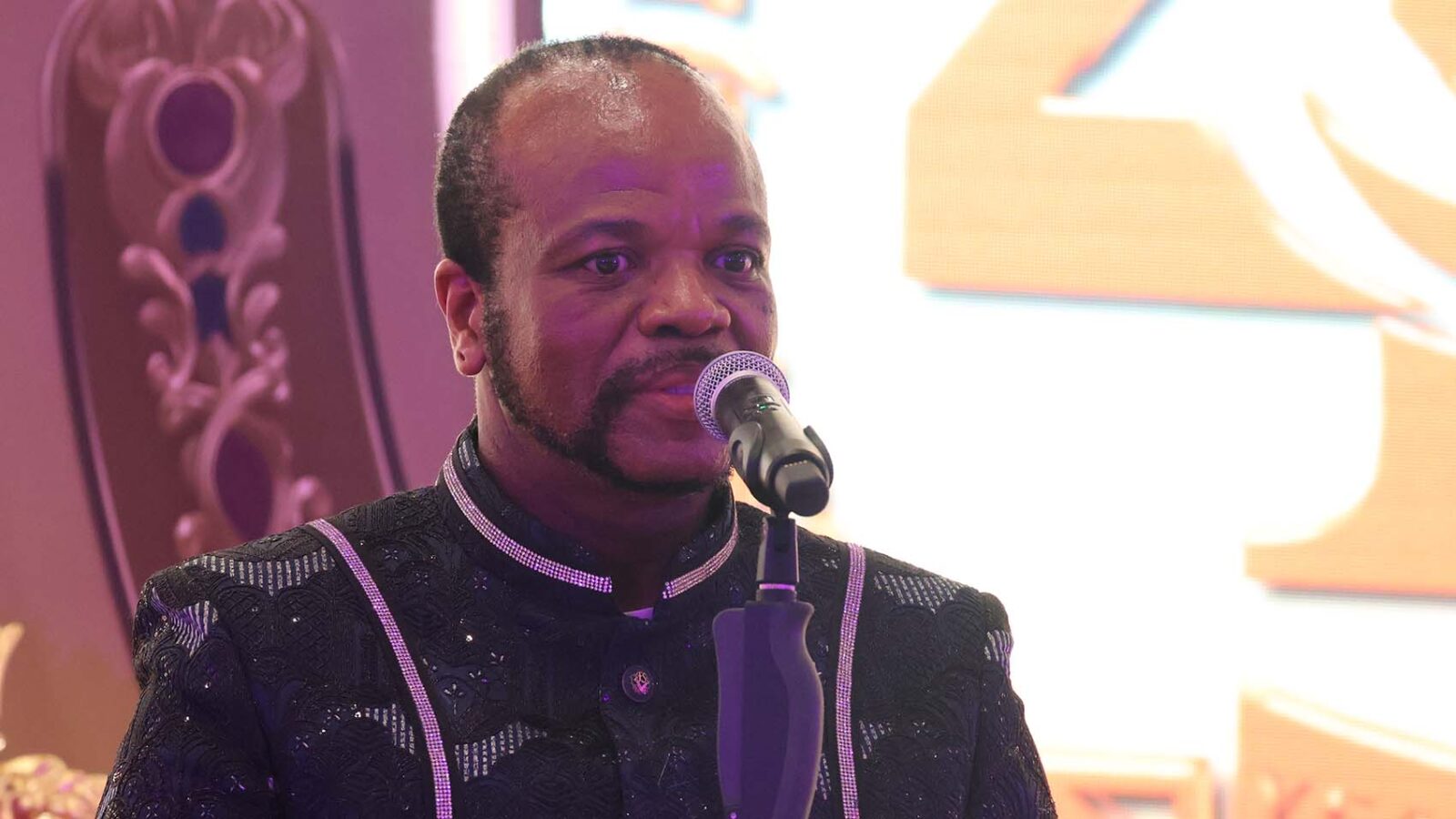
In a political era often defined by distance between rulers and the ruled, His Majesty King Mswati III’s recent declaration, ‘I will not rule alone’, lands with both symbolic weight and practical consequence. Delivered during the momentous double celebration of his 58th birthday and 40 years on the Throne, the statement is not merely ceremonial rhetoric; it is a deliberate reassertion of governance as a shared national enterprise.
At its core, the King’s message reflects a profound understanding of leadership as a reciprocal relationship. By affirming that ‘a King does not rule alone, but with his people’, His Majesty magnifies a truth that is often overlooked in both monarchies and republics alike: Legitimacy is not sustained by authority alone, but by trust, participation and collective ownership of a nation’s destiny. This is particularly significant within the context of Eswatini’s political system. As Africa’s last absolute monarchy, where executive authority is constitutionally concentrated in the King, such a statement signals a conscious pivot, not away from tradition but towards a more consultative exercise of it. Rather than diminishing the monarchy, this approach strengthens it by aligning royal authority with the aspirations and lived realities of emaSwati. Historically, the monarchy has never been intended to function in isolation. The very structure of governance – rooted in the dual leadership of the Ingwenyama and the Indlovukazi, alongside advisory councils and community-based systems, reflects a philosophy of shared stewardship. His Majesty’s words, therefore, are not a departure from tradition, but a return to its most authentic form: A monarchy that listens and evolves with its people. The wisdom in this declaration becomes even clearer when viewed through the lens of national development. Modern governance demands responsiveness, adaptability and inclusion. Economic growth, social cohesion and political stability are no longer achievable through top-down directives alone. They require collaboration between government, citizens, private sector actors and civil society. By explicitly inviting this partnership, the King positions Eswatini to better navigate the complexities of the 21st Century.
Indeed, His Majesty’s emphasis on trust as ‘the greatest gift a leader can receive’ is a subtle but powerful reminder that development is not imposed; it is co-created. When citizens feel seen, heard and included, they are more likely to invest in national goals, whether through entrepreneurship, community initiatives or civic participation. In this sense, the King’s statement is not just philosophical; it is economically strategic.
However, the true test of this vision lies not in the statement itself, but in its implementation. If ‘I will not rule alone’ is to become the defining ethos of the next chapter of His Majesty’s reign, it must be embraced not only by the Monarch, but by every arm of government, particularly Cabinet.
Cabinet ministers and public officials must interpret this declaration as both an invitation and a directive. It calls for a renewed sense of accountability, a deeper engagement with citizens and a visible commitment to service delivery. It demands that governance be characterised not by distance but by accessibility; not by formality alone, but by tangible impact.
In this regard, the Cabinet must go beyond passive allegiance and actively demonstrate enthusiasm for this inclusive vision. Policies must be crafted with consultation in mind. Development programmes must reflect the voices of communities. Public institutions must operate with transparency and responsiveness. Only then can the King’s words translate into lived reality.
There is also a generational dimension to consider. As Eswatini looks towards the next 40 years of His Majesty’s reign, the country stands at the intersection of tradition and modernity. A youthful population, increasing digital connectivity and evolving global dynamics require a governance model that is both rooted and progressive.
The King’s declaration provides precisely that bridge, a reaffirmation of cultural identity alongside an openness to collective progress.
Critically, this moment offers an opportunity to reshape perceptions. In a world where absolute monarchies are often misunderstood or criticised, His Majesty’s statement challenges prevailing narratives by demonstrating that authority and inclusivity are not mutually exclusive. Rather, when properly balanced, they can reinforce one another.
Ultimately, ‘I will not rule alone’ is more than a statement; it is a vision. It is a call to unity, a framework for governance and a pledge for the future. It recognises that the strength of a kingdom lies not only in its leadership but in the bond between the leader and the led. As emaSwati reflect on four decades of His Majesty’s rule, they are also being invited to co-author the next chapter. Also, as the King extends his hand in partnership, it is incumbent upon Cabinet, government and citizens alike to grasp it firmly and faithfully.
If embraced in both spirit and practice, this simple yet profound declaration may well become the cornerstone of a more inclusive, dynamic and prosperous Eswatini. One where the King does not rule alone, but reigns together with his people.














Leave a comment