

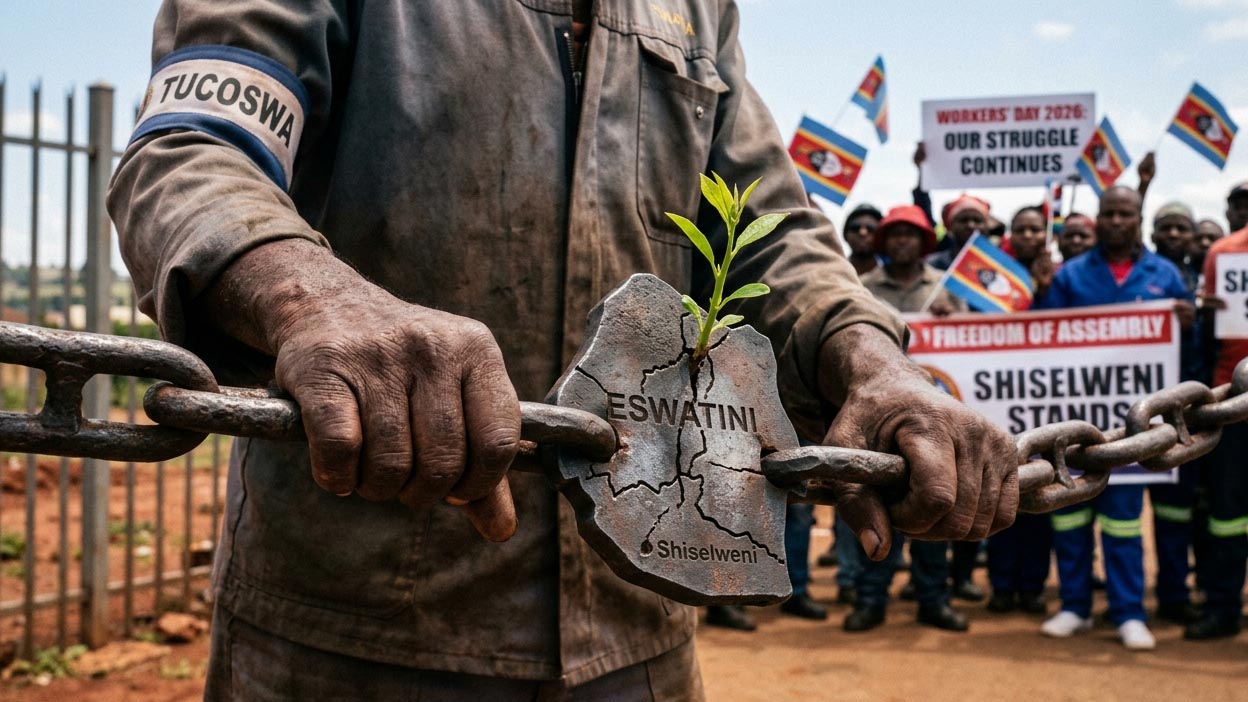
We all recall that the recognition of Workers’ Day in Eswatini was the result of unrelenting advocacy by the Swaziland Federation of Trade Unions. This federation mobilised workers and civil society, nationally and globally, to put pressure on government to recognise International Workers’ Day. In fact, this campaign was embedded in the famous 27 demands. Government grudgingly recognised May 1 as Workers’ Day.
It is a pity that the Workers’ Day seems to evoke tensions between government and the Trade Union Movement. Yet, this day should ideally be a day of reflection for the workers, the business and government. I recall that the prime minister attempted to honour Workers’ Day at the Prince of Wales Sports Ground ended in chaotic scenes, which was indeed unfortunate. This was indeed a missed opportunity for workers and government to develop a common understanding.
What is May Workers’ Day?
The first International Labour Day was celebrated on May 1, 1889. It all began in the late 19th century when 400 000 workers across the USA organised a peaceful strike in Chicago on May 1, 1886. They were protesting to demand an eight-hour workday. Unfortunately, the strike turned violent, and several unarmed workers were killed by the police. It came to be known as the Haymarket Affair and was a turning point in the struggle for workers’ rights. It was also a catalyst for change, as socialist parties and trade unions in the USA rallied workers to peacefully protest for the eight-hour workday. This protest became a global symbol of workers’ rights and May 1 came to be known as International Labour Day, or even International Workers’ Day sometimes. The impact of these protests was seen when public workers in the USA finally secured eight-hour workdays as a legal right in 1892. It was a monumental victory for the labour movement.
Importance of International Labour Day
International Labour Day is celebrated worldwide to recognise and appreciate the hard work and contributions of employees. It is also a way to remind everyone about the rights of workers and fair treatment in the workplace. Unions around the world use May Day to raise awareness about the important issues they face in the workplace, demand fair wages and present ideas to improve the lives of workers. Even today, years after the historic struggle of workers in 1886, there is still inequality among workers across various industries and countries. That is why May Day is an important day for workers to raise their voices and demand better working conditions and fair wages. It is a way for them to remind everyone that they deserve to be treated with respect and dignity in the workplace.
2026 Workers’ Day challenges
It was indeed unfortunate that Eswatini workers were denied the opportunity to commemorate the day on which they were expected to reflect on their struggles for better wages, the right to protest and many social ills impacting workers. There is no justification, no matter the procedural and legal issues that were cited by the Shiselweni administrator, for blocking workers. TUCOSWA is the biggest federation; hence, the majority of workers were denied the opportunity to commemorate May Day in 2026. It is regrettable that this action has once again dragged the country’s image through the mud.
Need to continue to fight for freedoms guaranteed in the country’s Constitution
I would like to note that the TUCOSWA incident is a clear reminder that the fight for freedom is a continuous, collective and essential endeavour, as rights are not guaranteed and require constant defence against oppression, tyranny and inequality. Resistance and active participation—such as civil disobedience, are crucial for upholding democracy, protecting human rights and enabling progress.
Why should civil society continue with the struggle for freedom?
There is a need to defend democracy because personal freedom is tied to safeguarding democracy, which requires constant participation rather than apathy. It is unfortunate that democracy around the world is threatened. However, with active citizens, democracy can be defended. The fight for human rights is a global, long-term journey, as evidenced by movements for civil rights, dignity and equality worldwide. Hence, there is a need for Eswatini’s civil society to link its struggles globally. Also to be noted is that human rights are God-given. They are inalienable, are indivisible and their protection is necessary to hold those in power accountable.
Activism rooted in non-violent action remains a powerful tool for challenging injustice and forcing positive social change. Citizens’ action should never be abandoned. As noted by various leaders and activists around the world, ‘the fight for freedom and social justice is never truly over or won’, and that standing for human rights is ‘standing on the right side of history’.
















Leave a comment