

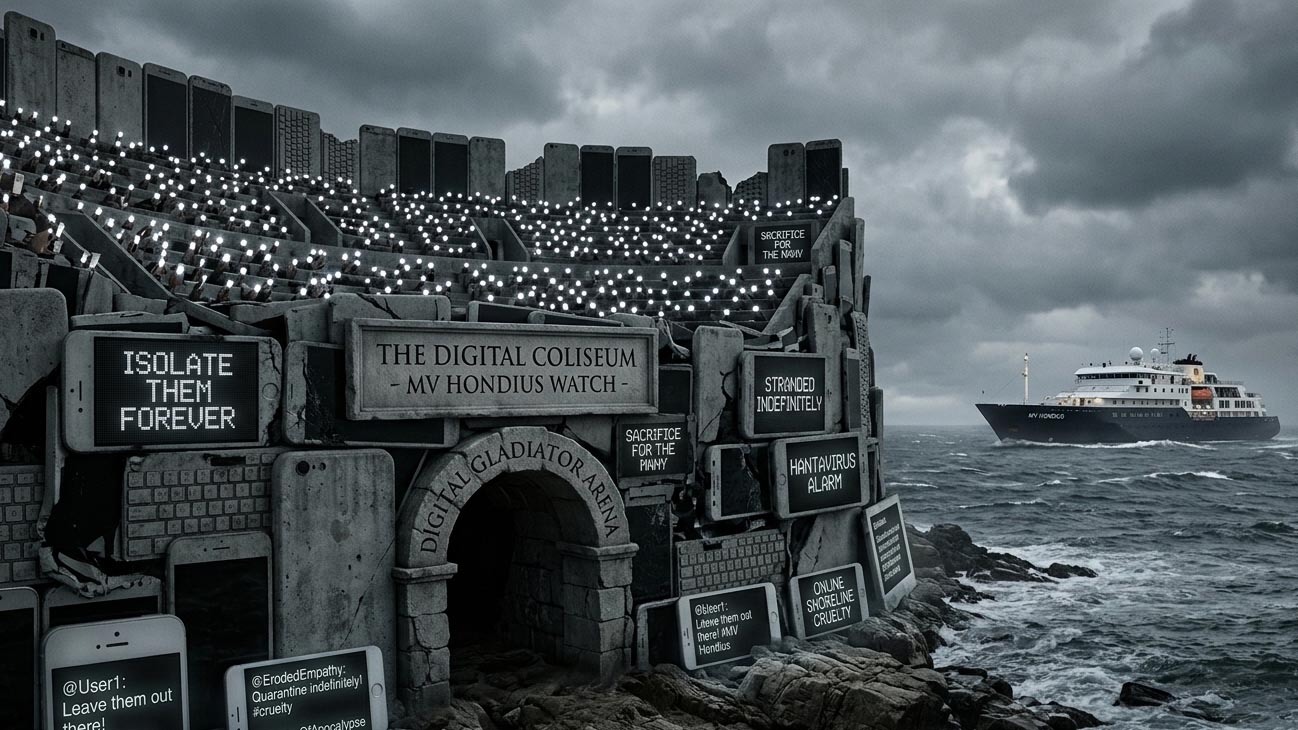
The recent global reaction to the hantavirus outbreak aboard the cruise ship MV Hondius has revealed something deeply unsettling about modern society. Beyond the understandable concern over a dangerous infectious disease, the online discourse surrounding the incident has exposed a growing erosion of empathy. In some corners of social media, people openly suggested that passengers aboard the ship should simply remain stranded indefinitely, while others chillingly implied that sacrificing those on board would somehow protect the wider population. What should have been a moment for compassion instead became, for many, a digital gladiator arena where panic and cruelty competed for attention.
That reaction says far more about humanity’s psychological scars after COVID-19 than it does about hantavirus itself. The outbreak, which reportedly resulted in several deaths and infections aboard the ship, understandably drew international concern. Yet global health authorities, including the World Health Organization have repeatedly emphasised that hantavirus is ‘not another COVID’ and that the public health risk remains low. Medical experts explain that hantavirus spreads very differently from coronavirus. Most strains are primarily transmitted through exposure to rodent urine, droppings or saliva and sustained human-to-human transmission is exceptionally rare. In other words, this is not a disease likely to sweep across the globe through casual supermarket encounters or someone sneezing dramatically near the avocados.
And yet, within hours of headlines emerging, social media transformed into a theatre of apocalypse. Some users treated the ship like a floating horror film. Others demanded permanent isolation measures before authorities had even completed medical assessments. The internet, once again, became an amplifier of fear rather than facts.
Part of this reaction is understandable. COVID-19 traumatised the world. Millions died, economies collapsed and ordinary social interaction became associated with danger. People remember the early uncertainty of 2020 – empty shelves, lockdowns, conspiracy theories and daily death tolls. So when the public hears words like ‘virus outbreak aboard cruise ship’, collective anxiety immediately awakens like an overcaffeinated smoke alarm.
The psychological damage of the pandemic cannot be understated. However, trauma becomes dangerous when it transforms into permanent hysteria.
The problem with panic is that it often creates secondary crises larger than the original threat. Fear spreads faster than viruses because it requires no incubation period. One alarming TikTok video, one dramatic headline, or one poorly informed influencer declaring ‘this is the next pandemic’ can trigger waves of irrational behaviour. Ironically, humanity’s response to outbreaks sometimes risks becoming more destabilising than the outbreak itself.
This is not to downplay hantavirus. It is a serious illness with a frighteningly high fatality rate in some cases. Symptoms can begin with fever, fatigue, muscle aches and respiratory complications. But unlike highly airborne viruses such as COVID-19, hantavirus is far less efficient at spreading between humans. Experts have stressed that close-contact transmission in rare strains such as the Andes strain does not resemble the rapid community spread seen during the coronavirus pandemic. Containment, therefore, is possible. Rational public health measures work. Calm coordination works. Science works.
What does not work is treating infected people like disposable hazards. One of the saddest developments in recent years is how quickly online spaces dehumanise sick individuals. Instead of seeing frightened passengers trapped aboard a ship far from home, many people saw potential contamination statistics. We have become disturbingly comfortable discussing human beings as if they are inconvenient packages requiring disposal.
The internet’s emotional distance allows cruelty to masquerade as pragmatism.
History shows that outbreaks often expose society’s moral character as much as its medical preparedness. During previous global health scares – from HIV/AIDS to Mpox – fear frequently fuelled stigma, misinformation and toxic public discourse. Sadly, the hantavirus panic suggests we have not fully learnt the lessons we claim COVID-19 taught us.
Perhaps the greatest irony is that social media users calling for extreme reactions often claim they are ‘following the science’ while ignoring actual scientists calmly explaining that widespread panic is unnecessary.
Public health relies on trust, measured responses and empathy. It does not benefit from turning every outbreak into a Netflix disaster series narrated by people who suddenly earned epidemiology degrees after surviving lockdown sourdough baking.
Humour aside, this moment deserves reflection.
The world absolutely should remain vigilant about infectious diseases. Governments should respond swiftly. Health authorities should communicate transparently.
However, societies cannot afford to become emotionally incapable of distinguishing between caution and hysteria. When fear overrides empathy, we begin to lose something essential about our humanity. Viruses test healthcare systems. Panic tests civilisation itself. Sometimes, the greater threat is not the disease aboard the ship, but the cruelty waiting online at the shore.
















Leave a comment