

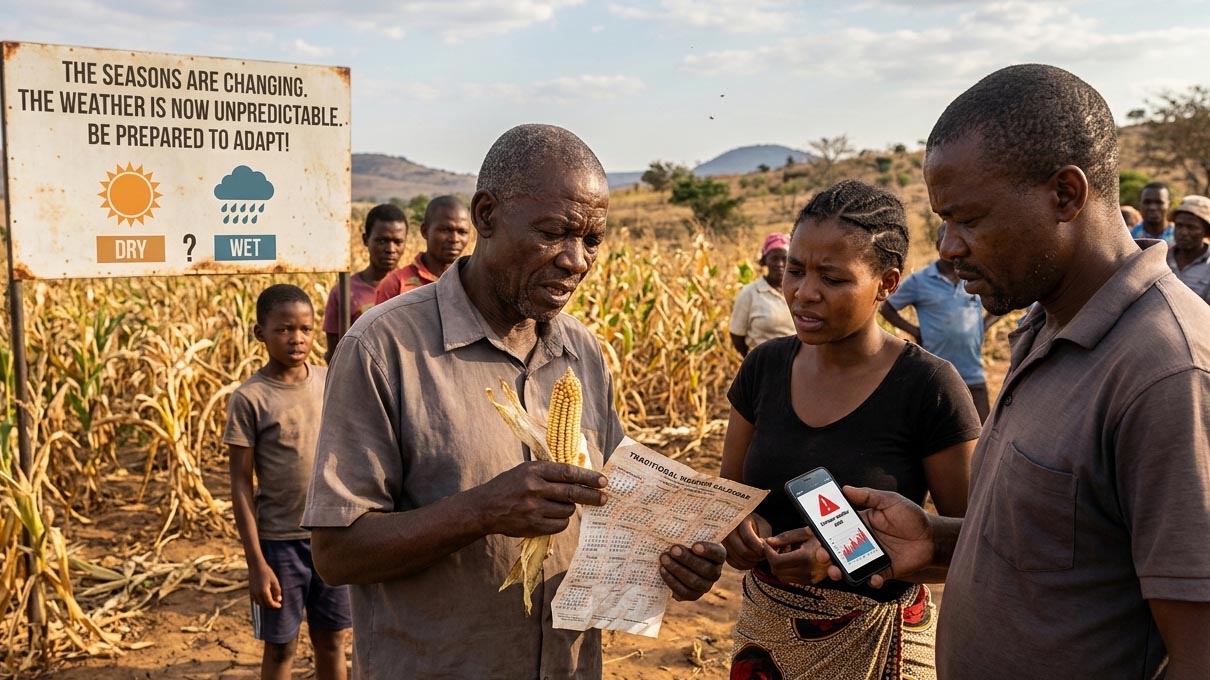
For generations, emaSwati have relied on the rhythm of the seasons. Farmers knew when to prepare their fields, when to plant maize and when to expect the first meaningful rains. The weather was never perfect, but it was predictable enough to sustain livelihoods and keep food on the table. Today, that certainty is disappearing.
Across Eswatini, unusual weather patterns are becoming increasingly common. Winter days that should be dry are occasionally interrupted by unexpected rainfall. Temperatures fluctuate in ways that leave both farmers and agricultural experts puzzled. While an isolated winter shower may seem harmless, these unusual patterns are often symptoms of a much larger problem, a climate system that is becoming increasingly unstable.
The warning signs are growing louder. Last week, Prime Minister Russell Dlamini cautioned that climate change is already disrupting the lives of emaSwati. He highlighted the kingdom’s heavy dependence on rain-fed agriculture, noting that around 80 per cent of farms rely almost entirely on rainfall. His warning was simple but profound: When rains fail, livelihoods fail. He further noted that repeated maize crop failures are already threatening household food supplies and undermining development gains. The National Disaster Risk Management Authority (NDRMA) has also urged the nation to prepare for a possible drought, despite current weather conditions appearing favourable. Their concern is linked to forecasts suggesting the possible return of El Niño conditions later this year.
For many emaSwati, the mention of El Niño evokes painful memories. Past El Niño events have brought severe droughts across Southern Africa, drying rivers, destroying crops and leaving millions vulnerable to hunger. In 2024 alone, Southern Africa experienced one of its worst droughts in years, with an estimated 68 million people affected as crops withered across the region. What makes the current threat even more concerning is that scientists believe climate change is amplifying the effects of El Niño. The World Meteorological Organization has warned that there is a very high probability of a strong El Niño developing during 2026, bringing increased risks of droughts, floods and extreme temperatures around the world. Experts caution that climate change is intensifying these weather disruptions and making their impacts more severe.
For Eswatini, the greatest danger may not be a single drought, but uncertainty itself.
Farming depends on timing. If winter rains become more frequent, farmers may misread seasonal signals. Some may plant too early, believing the rainy season has arrived. Others may delay planting because traditional indicators no longer align with actual weather conditions. The result could be reduced yields even before a drought materialises.
Agricultural experts have long warned that climate variability complicates decision-making for farmers. When the weather becomes unpredictable, even experienced producers struggle to determine the best planting dates, crop varieties and irrigation requirements.
This uncertainty is particularly dangerous for small-scale farmers who lack sophisticated forecasting tools and depend heavily on traditional knowledge passed down through generations.
The challenge is already visible. Recent reports indicate that affordability issues have limited farmers’ access to essential agricultural inputs such as fertilisers, herbicides and pesticides. Climate-related disruptions layered on top of these economic pressures create a dangerous combination for food production. Internationally, concerns are mounting that a strong El Niño could trigger significant food price increases. Reuters recently reported fears that weather-related crop disruptions could affect major staple crops and place additional strain on global food supplies. Wheat and rice prices have already shown signs of volatility as markets anticipate lower production in some regions. For Eswatini, this means food security is no longer simply an agricultural issue. It is an economic, health and national development issue. If local harvests decline while international food prices rise, ordinary households will face a double burden. Families already struggling with the high cost of living could find themselves spending an even greater portion of their income on food. Schools, hospitals and social programmes would also feel the strain. The peculiar winter weather currently being experienced across parts of the kingdom should, therefore, not be dismissed as an interesting anomaly. It should be viewed as a warning.Climate change is no longer a distant threat discussed at international conferences. It is arriving in our fields, our rivers and our homes. The question is not whether Eswatini will be affected, but whether the country is prepared to adapt before the next climate shock arrives.
Food security begins long before a drought declaration is made. It begins with recognising the warning signs, investing in climate-smart agriculture, strengthening irrigation systems and ensuring farmers have access to reliable weather information.
The seasons are changing. The time to prepare is now.


















Leave a comment