

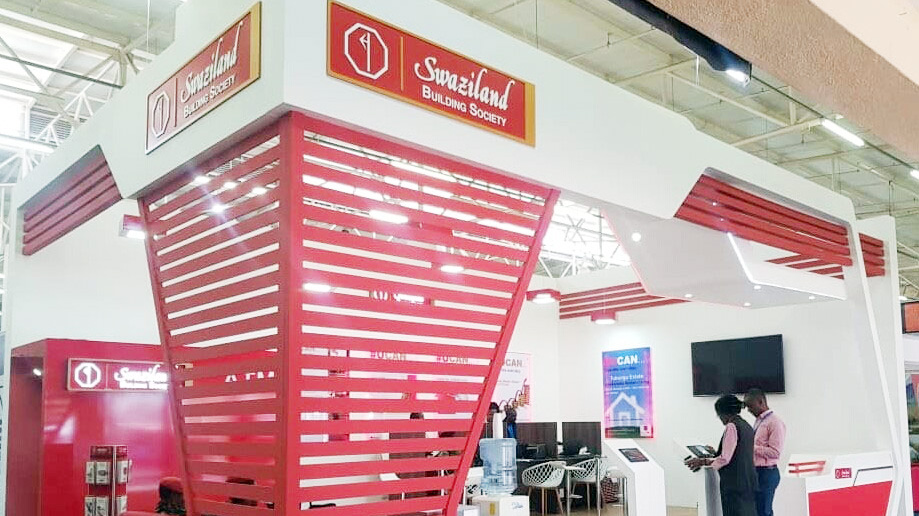
MBABANE – The Swaziland Building Society has entered its commercial banking era from a position of financial strength after growing its loan book.
The now SBS Bank Eswatini expanded its asset base and maintaining profitability during the nine months ended December 31, 2025.
The institution’s latest abridged financial statements show that its flagship Sipatji Loan Portfolio was the primary driver behind an 8 per cent increase in loans and advances, helping push total assets beyond E3.6 billion as the former Swaziland Building Society pushes one of the most significant transformations in its history.
Loans and advances to customers increased by eight per cent from E2.48 billion recorded at the end of March 2025 to E2.67 billion by December 2025.
The bank attributed the increase largely to the strong performance of the Sipatji Loan Portfolio, which has become one of the institution’s most important growth engines.
The financial results represent the last set of accounts prepared before the organisation officially transitioned from a building society into a commercial bank, marking the end of nearly six decades operating under its previous structure.
The transformation has positioned SBS Bank Eswatini to compete directly with the country’s established commercial banks, while leveraging the strong customer relationships and lending expertise it built over many years as a building society.
Beyond the financial performance, the reporting period marked one of the most important milestones in the institution’s history.
The Swaziland Building Society received a provisional banking licence from the Central Bank of Eswatini in October 2025, officially becoming a “bank in organisation” under the name SBS Bank Eswatini Limited.
The institution was subsequently incorporated as a company during December 2025, resulting in the deregistration of the Swaziland Building Society effective December 31, 2025.
As a result, the financial statements cover a shortened nine-month reporting period ending December 31 instead of the traditional twelve-month financial year ending March.
The conversion effectively concluded the legal existence of the Swaziland Building Society and paved the way for operations under the commercial banking model.
From January 1, 2026, SBS Bank Eswatini officially commenced operations as a commercial bank in organisation under its provisional banking licence.
The transition represents more than a simple name change.
Commercial banking status enables the institution to broaden its product offering, compete more directly within the financial services sector and position itself for future expansion.
The conversion into a commercial bank also required significant changes to the institution’s ownership structure. Following the reporting period, permanent shareholders began transitioning into ordinary shareholders based on elections made by individual members.
Management explained that, under International Accounting Standard 10 governing Events After the Reporting Period, these ownership changes constitute non-adjusting subsequent events. Consequently, they do not affect the historical financial statements for the period ended December 31, 2025.
Instead, the accounting effects of converting permanent shares into ordinary shares, or other elected equity instruments, will be recognised prospectively during the 2027 financial year.
This approach preserves the integrity of the historical financial information while ensuring compliance with international financial reporting standards.
… records healthy profitability
MBABANE – The institution remained profitable despite the shortened reporting period.
Operating profit before taxation reached E47 million.
After accounting for income tax expenses of E11.9 million, net profit attributable to the period amounted to E34.7 million for the Group.
At Society level, net profit totalled E34.0 million.
Management described the results as an impressive performance for a nine-month reporting period.
According to the financial commentary, the earnings reflect disciplined execution, continued stakeholder confidence and a forward-looking strategy that provides a solid platform for SBS Bank Eswatini’s next phase as a commercial bank.
The results also demonstrate that the institution entered commercial banking from a position of profitability rather than undertaking its transition while under financial strain.
Meanwhile, operating expenses totalled E214.2 million.
Staff costs represented the largest operating expense at approximately E98.2 million.
Depreciation, amortisation and other administrative expenses remained broadly consistent with the institution’s operational requirements during the transition period.
Although costs increased as SBS prepared for commercial banking operations, revenue growth continued supporting overall profitability.
Maintaining expense discipline will remain critical as the institution invests further in technology, regulatory compliance, expanded banking products and customer service capabilities expected of a fully-fledged commercial bank.
Managing credit quality remains essential
MBABANE – While lending expanded, management continued maintaining close oversight of credit quality.
Net impairment losses on loans and financial investments amounted to approximately E7.6 million during the reporting period.
Management stated that it continues strengthening early arrears management while implementing proactive intervention strategies aimed at rehabilitating financially distressed customers.
Rather than relying solely on debt recovery measures, the institution indicated that it is working with customers experiencing financial difficulties to improve repayment outcomes.
Such early intervention strategies have become increasingly important across the banking sector as financial institutions seek to minimise credit losses, while supporting customers facing temporary financial pressures.
The impairment charge remains manageable relative to the size of the overall loan portfolio.
Liquidity remains sound
MBABANE – The balance sheet also reflects comfortable liquidity.
Cash and cash equivalents stood at E104.5 million at the end of December 2025. Net cash generated from operating activities remained positive despite increased lending.
Meanwhile, investing activities generated positive net cash inflows, helping support the institution’s liquidity position. A sound liquidity profile will remain essential as SBS Bank Eswatini expands its commercial banking operations and potentially introduces additional products requiring stronger liquidity management frameworks.
Management also confirmed that SBS remained adequately capitalised throughout the reporting period.
Capital levels remained above minimum regulatory requirements and within targets established by the Board of Directors. Strong capitalisation provides an important buffer against unexpected losses while supporting future balance sheet growth.
It also strengthens confidence among regulators, depositors and investors as the institution establishes itself within the commercial banking sector.
… deposits also climb to E1.86bn
MBABANE – Customer confidence remained evident throughout the reporting period as deposits continued increasing.
Fixed and savings deposits rose from E1.77 billion to E1.86 billion. Overall client deposits increased by approximately five per cent, rising from E1.8 billion to E1.9 billion. The continued growth demonstrates that customers maintained confidence in the institution, despite its transition into a commercial bank. Deposit growth is particularly significant because it provides relatively stable and lower-cost funding for lending activities.
As deposits expand alongside loans, banks are generally better positioned to support future credit growth without excessive reliance on wholesale funding.
The growing deposit base also reflects SBS Bank Eswatini’s long-standing reputation among retail customers, particularly within the housing finance and personal banking segments.
Meanwhile, the bank’s total income amounted to E261 million for the nine months. Net interest income before impairment losses reached E179 million, highlighting that traditional lending activities continue generating the bulk of the institution’s earnings. Interest income totalled E249.8 million, while interest expenses amounted to E70.4 million, leaving a healthy interest margin that continues underpinning profitability. The figures indicate that core banking operations remain the institution’s principal source of earnings.
Beyond interest income, SBS generated nearly E89 million in fee and commission income, further diversifying revenue streams.
Other operating income also contributed additional earnings during the period. Together, these revenue sources demonstrate that the institution continues strengthening both interest and non-interest income as it prepares to compete within the commercial banking environment.



















Leave a comment