

I would like to first congratulate the ‘son of the soil’, Mr Dumisani Masilela, for leading the SACU Secretariat in Namibia.
He has indeed raised the country’s flag high and I have no doubt that he will succeed, waMasilela.
I would also like to express my appreciation to the heads of State and government for assuring us of their firm support for SACU, the oldest Customs Union, which, despite being a product of the apartheid system, has proven to be a critical economic stimulus for its member countries.
Furthermore, the minister for Finance assured the nation that SACU receipts should directly benefit the ordinary liSwati. Hence, we call for every Lilangeni to be fully accounted for.
Decay of the institution
Back to the topic of decay! I write this article feeling deeply angry at the Church of Jesus Christ.
I recall that at one point, Christ said: “I will build my church and the gates of hell will not prevail against it.” What, then, has befallen the body of Christ?
Recently, a pastor was accused of molesting children.
Now, we face a shocking incident where a pastor allegedly murdered four women at a church following sexual encounters with them.
I ask myself this vexing question: What is the true role of the Church in society? Several renowned men of God have articulated this purpose clearly:
William Temple (Former Archbishop of Canterbury): He argued that the Church’s role is to declare Christian principles and point out where the existing social order conflicts with them. It empowers individual Christians in their civic capacities to reshape society and advocate for justice.
Dr Martin Luther King Jr.: He viewed the Church as the moral conscience of society. He taught that the Church must actively fight against systemic evils like racism, poverty and injustice, rather than remaining silent on societal issues.
Prof. Yemi Osinbajo (Legal Scholar and Pastor): He describes the Church as the “pillar and foundation of truth”.
He emphasises that the Church builds nations by teaching and propagating fundamental biblical principles of integrity, hard work and justice.
Dr Myles Munroe: He taught that the Church’s purpose is to be a transformative force that brings the principles of the Kingdom of God, such as leadership, development and empowerment, into the broader community.
Rick Warren (Author and Pastor): He focuses on the local church’s role in actively meeting physical and psychosocial needs. Through his global initiatives, he champions the idea that the Church exists to alleviate poverty, heal the sick and support orphans.
Pope Francis: He underscores that the Church must be a ‘field hospital’. The institution’s social role is deeply tied to protecting human dignity, caring for the marginalised and promoting stewardship of creation.
Dr Desmond Tutu: He viewed the Church not as an insular institution, but as God’s active agent for justice, reconciliation and liberation.
Bishop Mandlenkosi Zwane (The first local Catholic Bishop of Manzini): He envisioned the Church as an active champion of holistic human development, human rights and social justice. He taught that faith must directly confront oppression, poverty and structural injustices, while working to restore dignity and provide tangible community support.
A worrying, loud silence from leadership
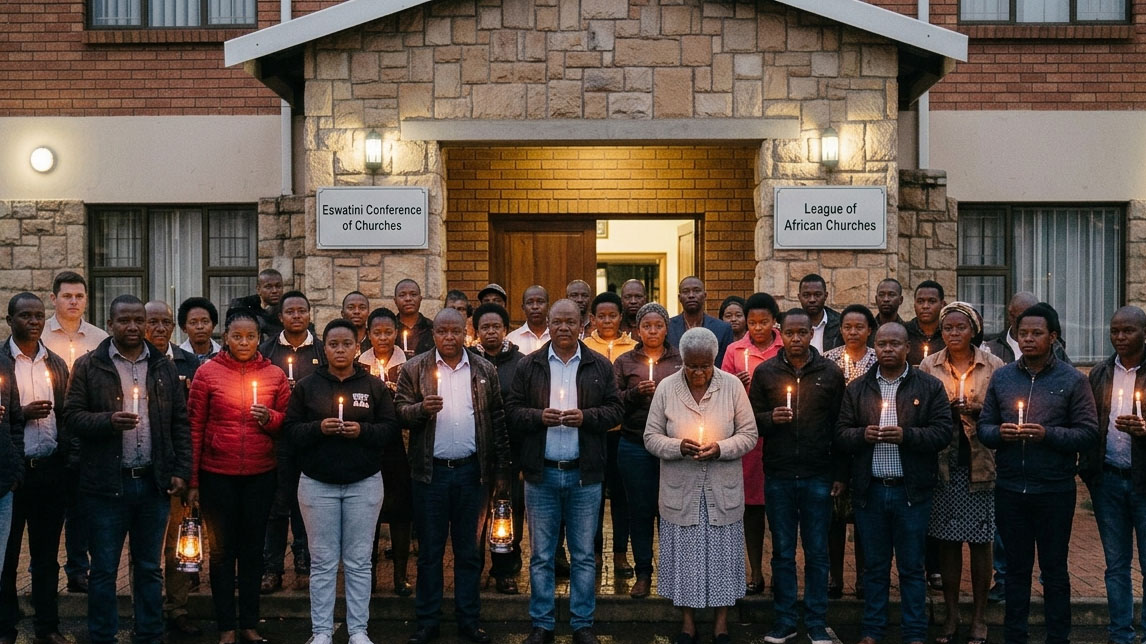
I want to express my deep frustration with the umbrella bodies, including the Eswatini Conference of Churches, the Council of Churches and the League of African Churches, among others, who took too long to address these internal crises with the sense of urgency they deserved.
What are the responsibilities of these umbrella bodies in guiding their various members?
These organisations have failed to act as the conscience of society, unlike Dr Martin Luther King Jr., Bishop Desmond Tutu and others who were martyred for standing for the truth.
They cannot remain silent when one of their own is alleged to have confessed to luring women to a place of worship, sexually assaulting them and then killing them in cold blood.
Is it time for government regulation?
There was widespread outrage when government previously announced its intention to regulate the Church. The umbrella bodies and some leading clergy strongly opposed the move, arguing instead in favour of self-regulation. Today, I would like to know: What concrete steps have these umbrella bodies taken to facilitate effective self-regulation for Churches in Eswatini?
Government has a primary responsibility to protect society. If the Church is no longer a place of sanctuary for the vulnerable, then government should not hesitate to move forward with its plans to regulate the institution.
If Church bodies continue to bury their heads in the sand, government must step in to act in the best interests of vulnerable congregants, who are currently being devoured by the very people meant to protect them.















Leave a comment