

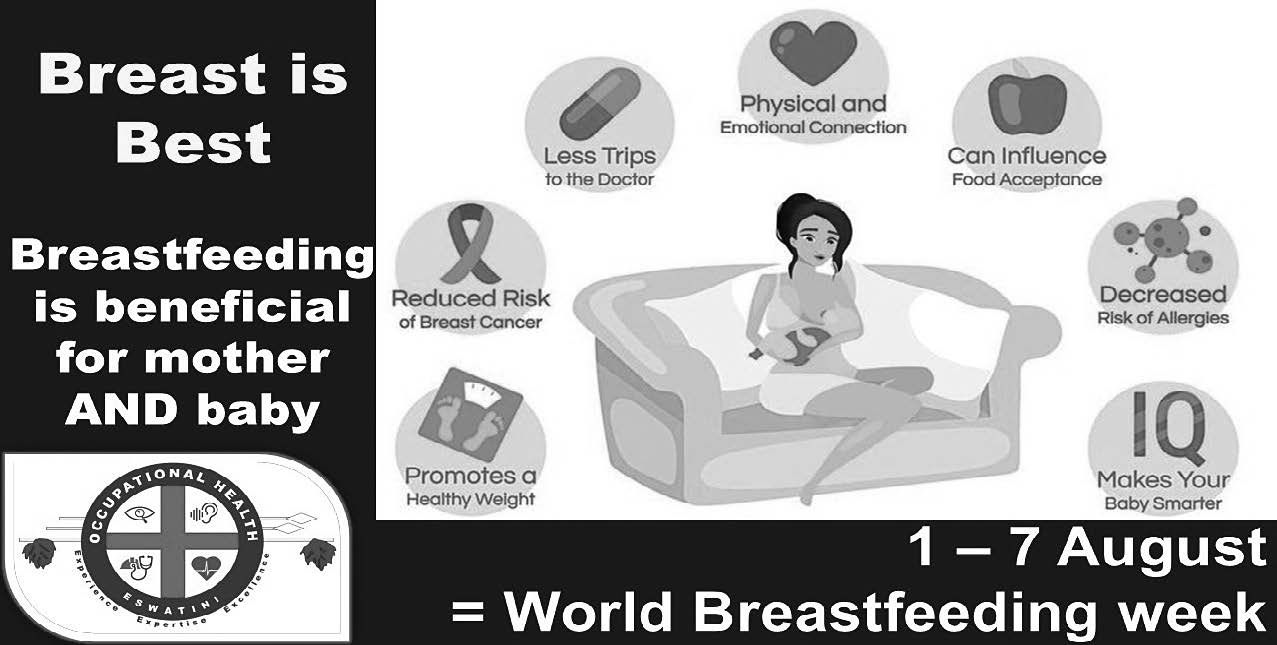
Breast milk is the best source of nutrition for most babies. As a baby grows, the mother’s breast milk will change to meet the baby’s nutritional needs.
The younger the baby, the less reserves he/she has, requiring smaller and more frequent feedings:
Birth – 6 months old: Exclusively breast- or formula feed (i.e. no mixed feeds, juice or water) as your baby’s digestive tract is unable to tolerate complex food.
NOTE: Alternating between breast and formula often cause diarrhoea and malabsorption. Feeding frequency often differ between babies, but generally newborns required 2-3-hourly feedings, while extends to 3–hourly for 2 month olds and 4-5-hourly by 6 months of age.
6 months – 1 year old: Continue breast feeding and gradually introduce food, starting with soft/purified food, then gradual increase food complexity every 2-3 months until normal food can be tolerated from 1 year onward.
Breastfeeding benefits for the baby:
w Ideal nutrition for infants. Breast milk has a nearly perfect mix of vitamins, protein and fat everything your baby needs to grow.
- Nutrients are in a form that’s easily digested.
- Boosts immune system with high quantities of mother’s antibodies.
- Lower risk of having asthma or allergies.
- Higher IQ scores in later childhood.
- Breastfeeding benefits the mother:
- Oxytocin hormone release stimulates uterine contractions which reduces uterine bleeding after birth.
- Strengthens the mother-child bond through, skin-to-skin touching and eye contact while breast feeding.
- Promotes weight loss by burning extra kilojoules
- Lower risk of breast and ovarian cancer and even osteoporosis.
- Saves time and money as you don’t have to buy and measure formula, sterilise nipples or warm bottles.
Is baby getting enough nutrition? Generally, a happy baby is a well-fed baby. The mother and child recommended follow-up clinic visits are not only intended for childhood vaccinations, but also to assist mothers in optimising the baby’s nutrition for optimal growth and development.
Proper feeding is heavily dependent on a baby’s ability to properly latch onto the areola (dark brown part of the breast) and not just the nipple. Breastfeeding is not a sucking process, but rather a squeezing process where the milk is expressed with the baby squeezing the areola between their upper palate and tongue. This is why the anatomy of a baby’s mouth is very important.
NOTE: Cracked or tender nipples often indicate inappropriate latching.
How do I feed a sick baby?
A blocked nose and fever often cause feeding difficulties. Use saline nasal drops to loosen secretions and clean a baby’s nose 10 minutes before every feed.
Fever should always be treated preventatively. Looser stools and eating pattern changes are also common when sick. Remember that all mothers start off inexperienced and unsure at first. But you need note do this alone as guidance from experienced mage’s, Dula’s and health care workers are readily available.
Follow the Times of Eswatini (Twitter) and dr.thys (Instagram) for more health hacks. Send queries to ohesmngr@gmail.com.



















Leave a comment