

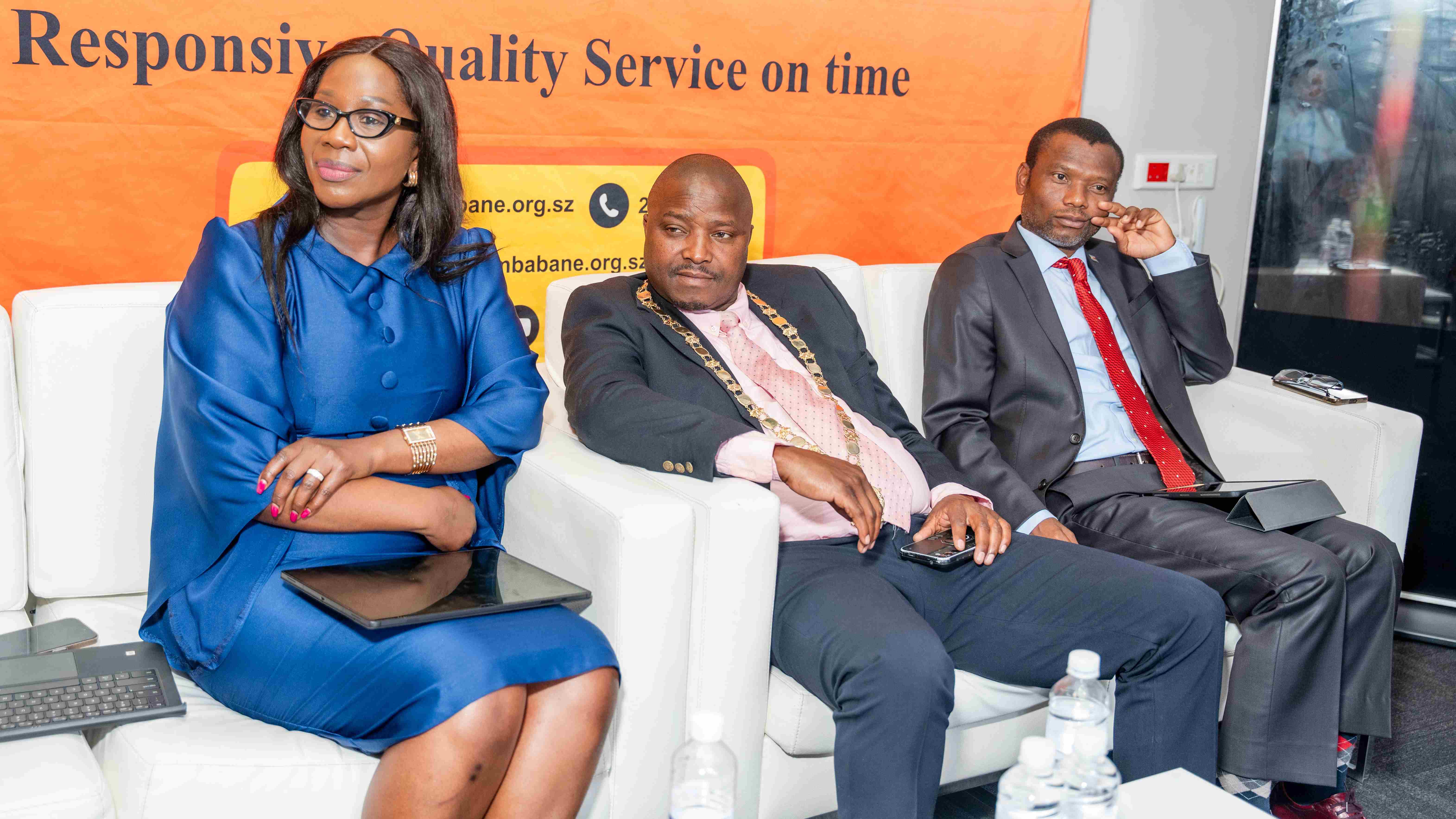
A new chapter in urban innovation unfolded on Thursday, August 28, 2025, as the Municipal Council of Mbabane launched its first-ever Smart City Living Masterclass; the beginning of a thought-provoking series that promises to reshape the nation’s capital. Under the theme ‘Property as an Asset’, the session explored how ownership in a smart city extends beyond land and buildings, touching on value, growth and legacy. This pioneering platform is designed to spark bold dialogue, challenge conventional thinking and inspire inclusive governance.
The council’s Chief Executive Officer (CEO), Gciniwe Fakudze, highlighted that the reason why the masterclass was focusing on property as an asset is because many times when you interact with owners of title, the focus always becomes about what they perceive as a high cost of owning property in an urban space. “This could be or could not be true because the context of how you are looking at it or perceiving that its expensive, is based on how you perceive the asset you are holding in your hand.
“So many times when rate payers visit us, the conversation then becomes around ‘do you realise the opportunities of what you are holding?’ because for many of us in some of the areas that we stay in, are home to us and this is where I grew up, but if a businessman would stand in front of the same property, they would say ‘this is money sitting idle’, so yes it’s a home, but we want to trigger the thought in you that while it’s a property that could be handed down to generations, we want to open your mind to what you are holding is an asset to many.”
Property as secure substance – Minister for Housing and Urban Development, Appolo Maphalala
The Minister for Housing and Urban Development, Appolo Maphalala, delivered a keynote address on the day under the sub-theme ‘Property as Secure Substance’ (PASS). He mentioned that this theme could not be more timely or relevant, for it speaks directly to the aspirations of emaSwati and the responsibility they bear as leaders to ensure that housing, land and property rights are not privileges for the few, but secure foundations for all.
“PASS reminds us that property is more than bricks, mortar or a title deed. Property is security. It is stability. It is dignity. It is the foundation upon which families build their futures, communities shape their identities and nations advance their development. Without secure access to property, our citizens remain vulnerable; excluded from opportunities, exposed to poverty and denied the full enjoyment of their constitutional rights. Land is more than an economic asset, it is a source of identity, heritage and empowerment,” he mentioned.
In Eswatini, PASS means ensuring that every household, whether in informal settlements or in planned townships, can hold a credible, recognised right to land that allows them to access services, obtain finance and live with dignity and security.
“As government, we are conscious of the growing urban population, the pressure it places on land and the urgent demand for services and infrastructure, the demand for housing and lastly, the need for secure tenure,” he added.
Government has through the years facilitated and implemented programmes aimed at informal settlements upgrading such as the Urban Development Project which was funded by the World Bank. “The project’s efforts enabled the recognition and strengthening household tenure rather than displace communities and improved basic infrastructure services in urban areas such as Msunduza, Mahwalala and others,” stated the minister.
The minister went on to add that as government, they are committed to facilitating the expansion of housing options to emaSwati, from low-income housing to rental schemes, from site-and-service models to innovative financing mechanisms. “Through the implementation of the sectional titles schemes in Eswatini, we have strengthened and diversified housing tenure for the benefit of emaSwati,” he added.
The ministry is determined to advance a coordinated urban development agenda, working with local governments, the private sector and development partners to ensure that no one is left behind. “We pledge to advance policies that make property truly secure, urban spaces truly inclusive and access to land truly equitable,” concluded the minister.
Wealth in Net Storage – MD of EswatiniBank Dr Nozizwe Mulela
Dr Mulela highlighted property as one of the most enduring forms of wealth.
She explained that while many people see property merely as shelter, its true value lies in its ability to grow as an asset—even while you sleep.
Property, she said, outperforms inflation due to its long-term stability and tangible nature.
She urged citizens to view property as more than a home: It is savings, collateral for business funding and a driver of entrepreneurship.
Dr Mulela stressed the need for innovative mortgage models—such as rent-to-own and micro-mortgages—to improve affordability. Beyond individual wealth, she emphasised that property development fuels job creation, drives municipal revenue through rates and attracts foreign investment, making it a catalyst for both personal and citywide growth.
Real Estate Value – Director of Eswatini Realty Consultants Paul Malichi
Malichi delved into the science of property valuation, stressing its importance for buyers, sellers, lenders and government. Accurate valuation, he explained, ensures fair pricing, prevents overpayment, secures loans responsibly and informs property tax calculations.
He illustrated that development cost doesn’t always equal value—location and market conditions can dramatically shift returns. For him, real estate value is not just about what a property costs to build, but why and how it holds monetary worth in a dynamic market.
Revenue and Tax Systems – Revenue Manager at the Municipal Council of Mbabane Sibusiso Magagula
Magagula unpacked property taxation, describing it as the backbone of municipal revenue for essential services such as roads, lighting, waste management and health inspections. Drawing from the Urban Government Act of 1969, he explained how rates ensure sustainable city management.
He outlined rating methods:
- General rates apply across all land uses.
- Differential rates vary depending on how much strain each category (residential, commercial, industrial or vacant) places on municipal resources.
- Vacant land, he added, attracts higher rates to discourage land hoarding and promote development. He also emphasised exemptions for public institutions (churches, schools, hospitals) and relief measures for indigent groups such as child-headed or low-income households.
A word of note by Dr Mulela: “Where is your wealth sleeping? Is it in a bank account losing value to inflation or is it in an asset that grows while you sleep?”

















Leave a comment