

Food poisoning is caused by eating or drinking something that has been contaminated with germs. It’s rarely serious and usually gets better within a week. Food poisoning most often resolves by itself as it works out of your digestive system.
Food poisoning can be caused by any type of contaminated food or drinks, which includes contaminated water, especially when:
- Food is not cooked or reheated thoroughly.
- Drinking untreated water, especially when close to sewage drainage.
- Preparing food with dirty water.
- Food is not stored correctly, i.e. not been frozen or chilled.
- Food is left out for too long.
- Food is handled by someone who’s ill or has not washed their hands.
Symptoms can start anything from an hour to a few days after eating or drinking the contaminated food, drinks or water and include the following:
- Feeling unwell or being sick
- Nausea, or even vomiting
- Diarrhoea – loose, runny stomach
- Stomach pain and cramps
- Fever
- Headache
How to treat food poisoning yourself
Food poisoning is mostly self-limiting, meaning it resolves within a week or two and symptoms can usually be treated at home by following these recommendations:
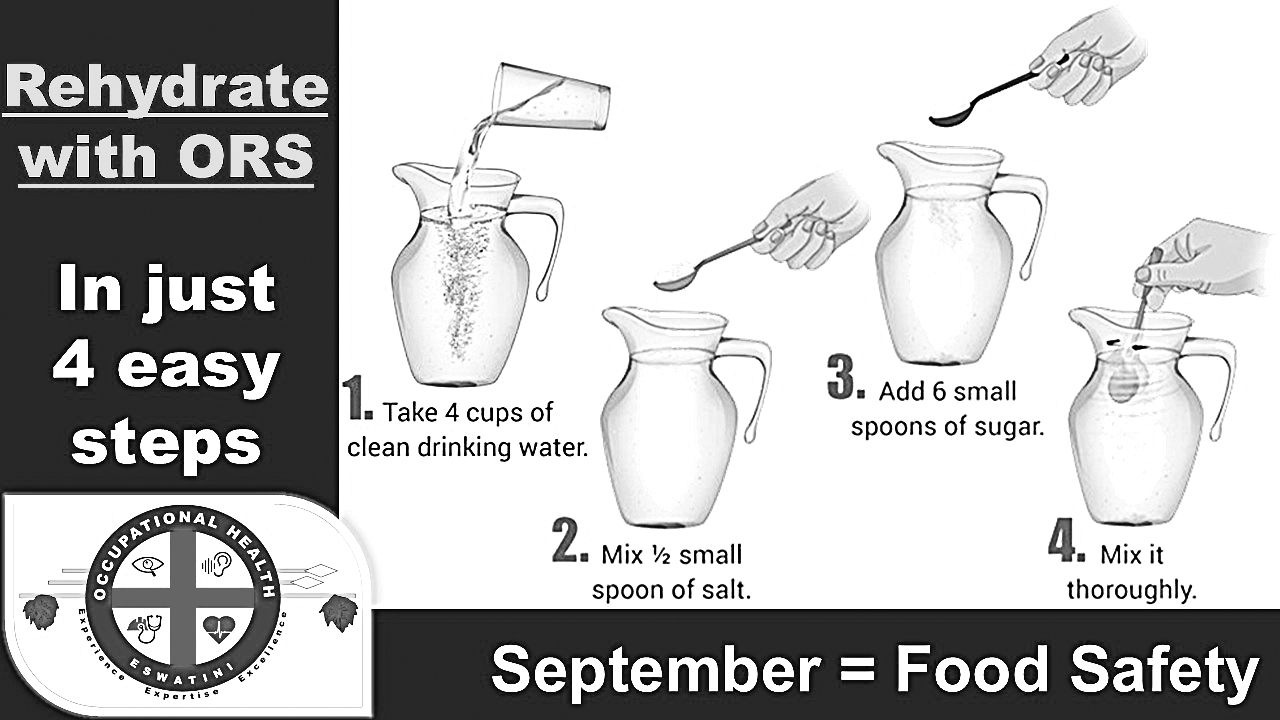
- The most important thing is to avoid dehydration by taking small, regular sips. The best rehydration includes electrolytes, i.e. ORS (oral rehydration solution) or isotonic sports drinks. Alternatively, water, clear broth or decaffeinated tea can also be used. (TIP: ORS can be made at home by using a litre of clean, safe water (boiled and cooled), the adding and dissolving 6 level teaspoons of sugar and half level teaspoon of salt.)
- Get rid of the contaminated food or drink.
- If you’re still vomiting, stick to liquids.
- Once you can eat and drink again, avoid spicy and fatty food. Stick to bland foods and eat just a little bit at a time to see how your stomach reacts.
- Avoid having fruit juice or fizzy drinks – they can make diarrhoea worse
- Pain or discomfort can be treated with paracetamol.
- Babies – Carry on breast or bottle feeding but try giving smaller feeds more often than usual. Babies on formula or solid foods should also get small sips of water between feeds.
- Don’t make your baby’s formula weaker – use it at usual strength
- Don’t give children under 6 years medicine to stop diarrhoea.














Leave a comment