

Potatoes are a versatile and nutritious crop that can thrive in Eswatini’s diverse climate with the right approach.
Whether you’re a small-scale farmer or a home gardener, growing potatoes can be rewarding and profitable with proper planning and care. This article, brought to you by Khuba Traders, provides practical steps and tips for planting potatoes in Eswatini, tailored to local conditions. The country’s varied climate, ranging from subtropical to temperate in higher elevations, allows for year-round potato cultivation with strategic timing, in different regions.
Step-by-step guide to planting potatoes
1. Choose the right time to plant
In Eswatini, the best planting time depends on your region and climate:
Frost-free areas (e.g., Lowveld): Plant from August to early June for optimal growth. August to October plantings can yield a December harvest, perfect for festive meals.
Frost-prone areas (e.g., Highveld): Plant from August to early January to avoid frost damage, as potatoes are sensitive to cold. Early planting in August or September reduces risks of pests like tuber moths and diseases like blight.
Spring plantings (August to October) are ideal for most regions, as cooler temperatures and increasing daylight promote healthy tuber development. Avoid late summer plantings in hotter areas, as high temperatures can reduce yields.
2. Buy quality seed potatoes at Khuba Traders
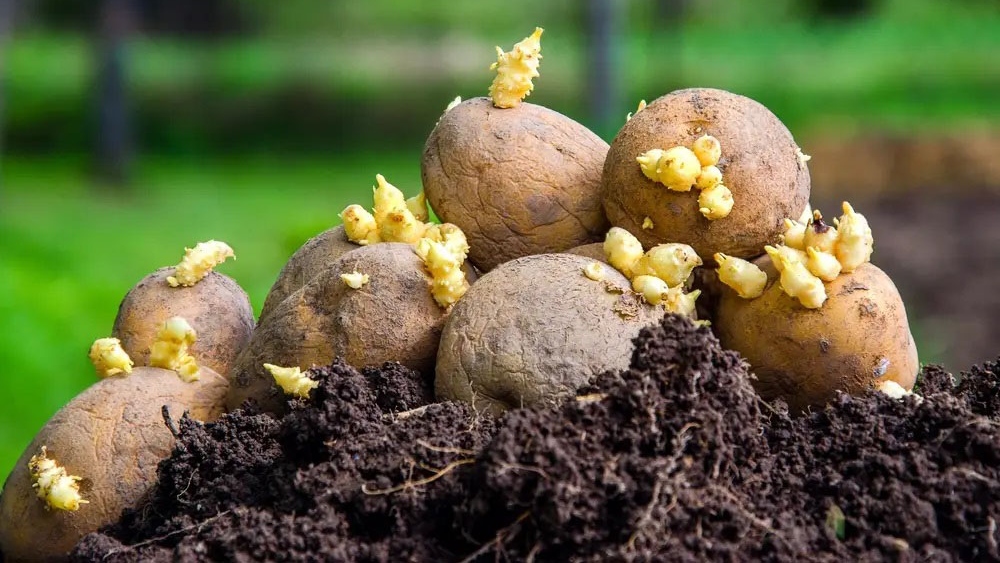
Use certified, disease-free seed potatoes from Khuba Traders to ensure healthy crops. Seed potatoes are tubers with sprouting ‘eyes’ that grow into new plants. Avoid using supermarket potatoes, as they may carry viruses or diseases that lower yields. In Eswatini, varieties like Mondial are popular for their high yield, early maturity, drought tolerance and firm, waxy texture.
Chitting: Before planting, place seed potatoes in a cool, light (not direct sunlight) area for 1–2 weeks to encourage sprouting. This process, called chitting, boosts early growth.
Cutting: If seed potatoes are large, cut them into pieces with at least one eye per piece. Let cuts dry for 1–2 days to prevent rot.
3. Prepare the soil
Potatoes thrive in well-drained, sandy loam soils with a pH of 5.2–6.4. Eswatini’s varied soils may require preparation to optimise conditions:
Test the Soil with Khuba Traders: Conduct a soil test via your nearest Khuba Traders branch to check pH and nutrient levels. Adjust with lime if too acidic or sulfur if too alkaline, available at your nearest Khuba Traders branch.
Enrich the soil: Add generous amounts of compost or aged manure to improve soil structure and fertility. Avoid fresh manure or strong fertilisers, as they can burn tubers or cause deformities.
Visit a Khuba Traders branch to seek advice on suitable fertilisers for your soil and crop.
Loosen the soil: Dig deeply to remove stones and break up clods, ensuring a loose, friable texture for tuber growth.
4. Planting potatoes
Trench method: Dig trenches 10–15cm deep and 30–40cm wide, spacing rows 45–100cm apart. Place seed potatoes 20–30cm apart with sprouts facing up, then cover with soil.
Container method: For small spaces or urban gardens, use pots or bags at least 30–50cm deep with drainage holes. Layer 15cm of compost and potting soil, place seed potatoes and cover with 10cm of soil. Add more soil as plants grow.
Fertilisation: At planting, apply an organic fertiliser like 2:3:4 (30) at a rate of about 1000kg/ha along rows. Six weeks later, apply 500 kg/ha of LAN or an organic alternative to support tuber growth.Khuba Traders offers organic fertilisers and tools to simplify your planting process.
5. Care during growth
Hilling: As plants grow to 25–30cm, mound soil around the stems to cover the base up to 20cm. This protects tubers from sunlight (which turns them green and toxic) and encourages more tuber formation. Repeat every 1–2 weeks for the first 4–5 weeks.
Watering: Provide 30–40mm of water weekly, increasing in hot weather or sandy soils. Keep soil moist but not waterlogged and avoid wetting leaves to prevent fungal diseases. Reduce watering as plants mature near harvest.
Pest and disease management: Scout regularly for pests like aphids, tuber moths and cutworms and diseases like early blight, late blight and common scab. Use crop rotation (avoid planting after tomatoes or other Solanaceae crops) and certified seed potatoes to minimise risks.
Companion plants like nasturtiums can repel / attract pests away from your crop.
For pest control solutions and disease-resistance solutions, visit a Khuba Traders store.
6. Harvesting
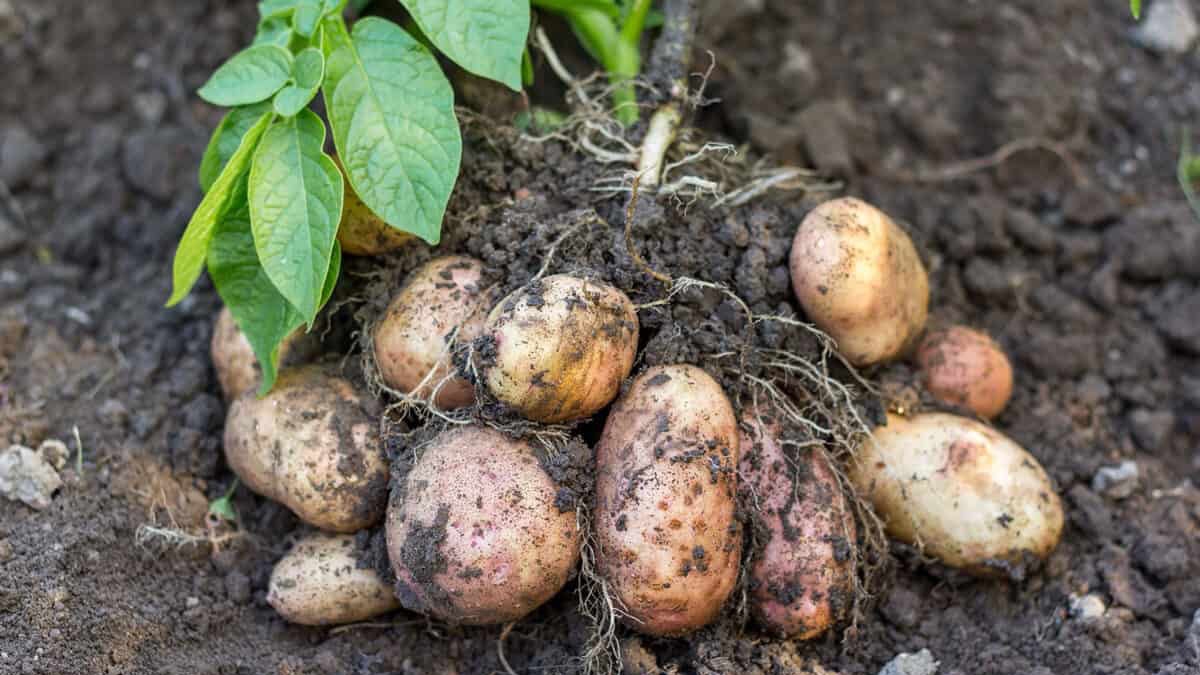
Potatoes take 110–150 days to mature, though ‘new’ potatoes can be harvested as early as 60 days.
When to harvest: Harvest when plants turn yellow and die back. For storage potatoes, wait until foliage is fully dry.
How to harvest: Use a garden fork to gently lift plants, digging 15–30cm from the stem to avoid damaging tubers.
For small-scale gardens, hand-digging works well.
Storage: Store potatoes in a cool, dark, dry place to prevent sprouting or greening.
Do not wash unwashed potatoes for informal markets, as they store longer.




















Leave a comment