

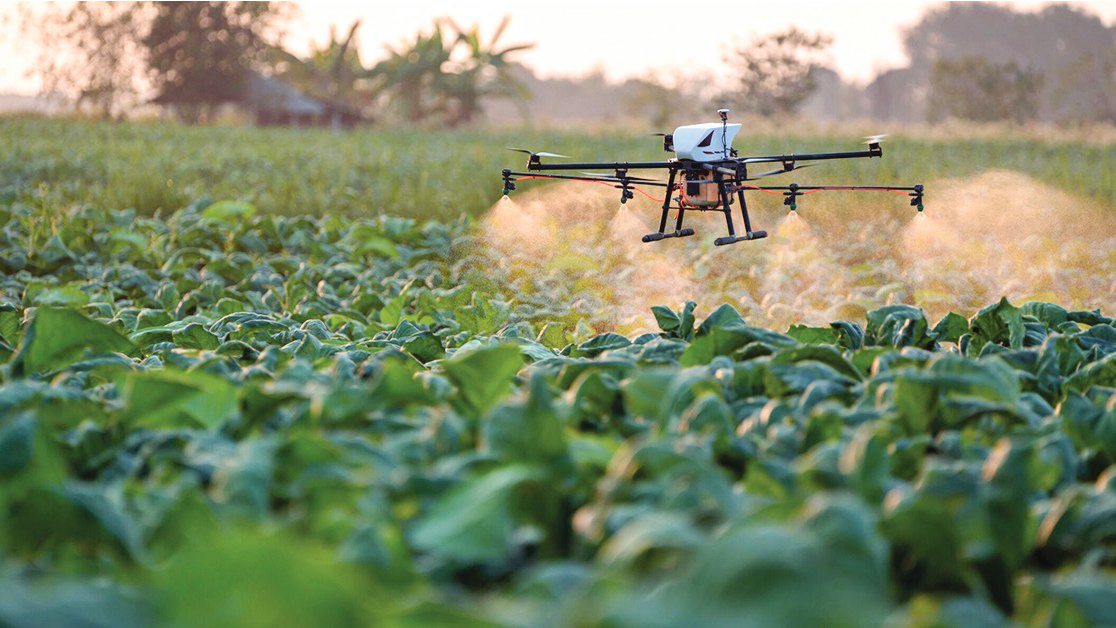
Across the gentle slopes hills of Eswatini’s sugar estates and the vast, sun-drenched fields of its maize and citrus farms, a quiet agricultural revolution is taking flight. Farmers, long accustomed to the challenges of climate variability, rising input costs and the constant pressure to maximise yields, are increasingly turning to a powerful new tool, the drone. Far from being mere gadgets, agricultural drones from global technology leader DJI are proving to be a transformative force, moving from novelty to essential equipment for modern, sustainable farming.
For emaSwati farmers, especially the large-scale commercial, the benefits are tangible and direct. The core advantage lies in a concept known as precision agriculture. Instead of treating an entire field as a single, uniform block, a practice that often wastes resources on healthy areas while neglecting struggling ones, DJI drones allow farmers to see and treat different zones based on their specific needs. This surgical approach directly translates to improved crop yields. A patch of maize suffering from nutrient deficiency or early pest infestation can be identified and rescued, while a thriving section is left untouched, optimising the entire farm’s potential.
The technology behind the transformation
The magic begins with data collection. Drones like the DJI P4 Multispectral are equipped with sophisticated sensors that capture far more than the human eye can see. They measure plant health by analysing how crops reflect different wavelengths of light, particularly near-infrared light. Healthy, chlorophyll-rich plants reflect this light strongly, while stressed or diseased plants absorb it.
This crucial data is then processed through specialised software, often directly on a tablet in the farmer’s hands, generating detailed colour-coded maps, known as NDVI (Normalised Difference Vegetation Index) maps. These maps act as a medical chart for the field, pinpointing problem areas weeks before any yellowing or stunting is visible to the naked eye, allowing for pre-emptive action that can save a season’s harvest.
Key functions on the farm
This intelligence fuels three key functions that make these drones indispensable. First is comprehensive crop monitoring. What would take a team of workers days to scout on foot can be accomplished by a drone in under an hour, providing a comprehensive health report of the entire farm from a bird’s-eye view. This is invaluable in Eswatini’s varied terrain, where uneven topography can hide problems.
Second, is precision spraying. Models like the robust DJI Agras T40 can carry large tanks of liquid fertiliser or pesticide. They fly autonomously along pre-programmed routes, using the prescription maps created from the scouting data to spray only the specific zones that need intervention. Their downward-facing rotors create a vortex that pushes spray droplets deep into the crop canopy, ensuring better coverage than traditional methods. This is a game-changer for controlling outbreaks of fall armyworm in maize or targeting specific blights in citrus groves.
Measurements
Third is high-precision mapping. Drones can create detailed 2D and 3D models of the land, providing accurate measurements of field size, slope and drainage patterns. For emaSwati farmers, this is critical for planning irrigation systems to combat drought and for managing soil erosion on hilly terrain, preserving their most valuable asset, the land itself.
Saving time, cutting costs, protecting the land
The ultimate impact for Eswatini’s agricultural sector is a powerful trifecta, dramatic time savings, significant cost reduction and a clear path to more sustainable practices. The efficiency gains are undeniable. Targeted spraying alone can cut the use of expensive chemicals and water by up to 50 per cent, representing massive savings. The reduction in labour hours for scouting and spraying allows farm managers to allocate human resources more effectively.
This precision is the very heart of sustainable farming. It means fewer chemicals enter the ecosystem, protecting local water sources and biodiversity. It promotes healthier soils and more efficient water use, a critical consideration in a country where rainfall can be unpredictable. For a nation where agriculture is a cornerstone of the economy and livelihoods, the adoption of drone technology is more than just an upgrade, it’s a strategic move towards a more resilient, productive and sustainable future, ensuring that Eswatini’s fields remain fertile for generations to come.
If you are interested in how an agricultural drone can save you time and money, please contact Computronics, the only authorised supplier of DJI drones in Eswatini. You can contact them at 7690 1211.
















Leave a comment