

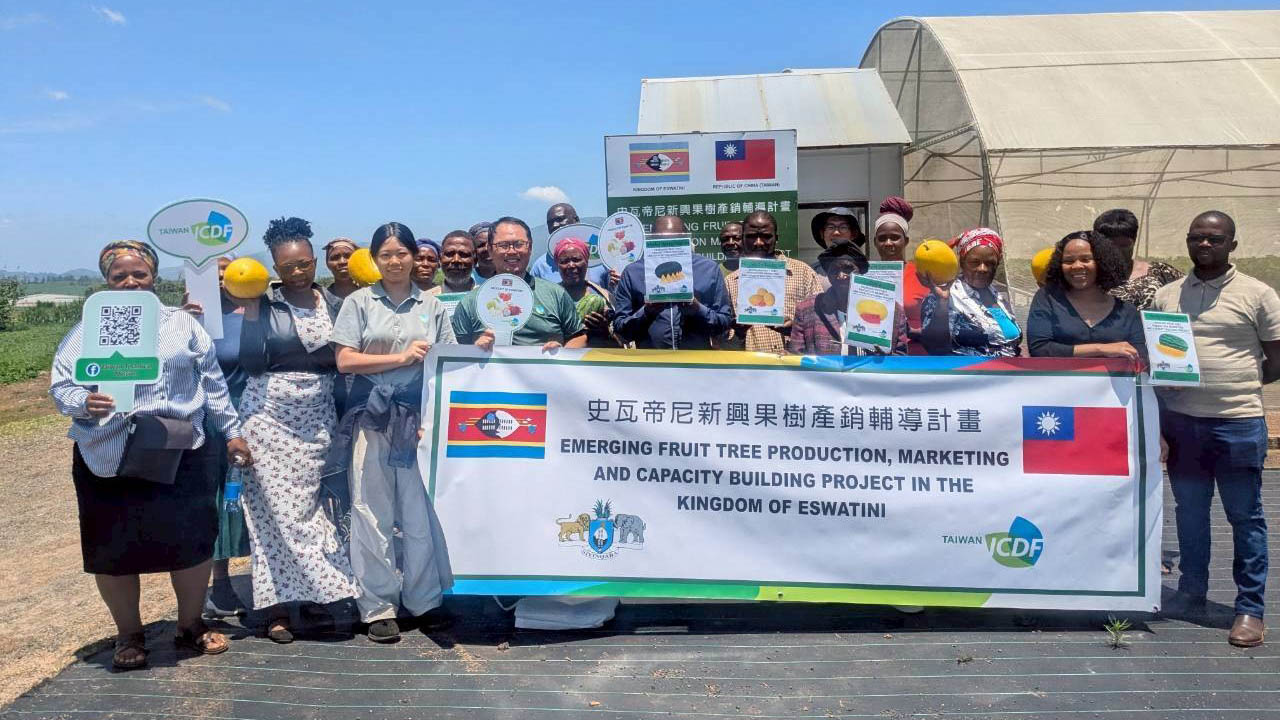
The Taiwan Technical Mission through its Emerging Fruit Tree Production, Marketing and Capacity Building Project, recently conducted a Guava–Watermelon Intercropping Training and Field Demonstration to support guava farmers during the early stages of orchard establishment.
The initiative aimed to enhance farm income, strengthen production skills and promote sustainable orchard management practices.
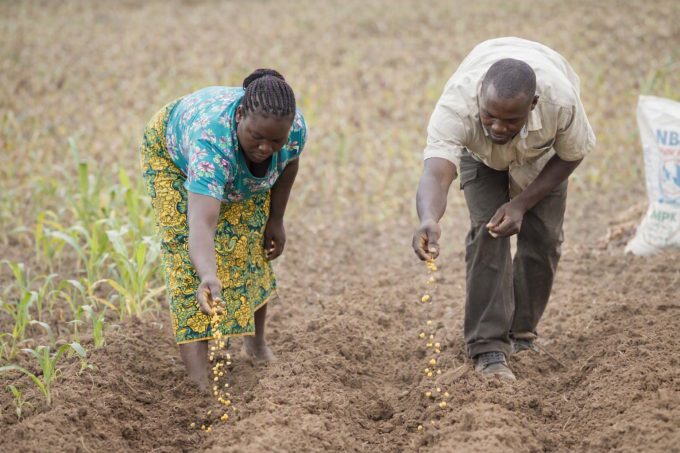
Guava production has been actively promoted with support from the Taiwan Technical Mission as a high-potential fruit crop for local farmers. However, during the first one to two years after planting, guava trees remain in a vegetative stage and do not produce marketable yields, creating financial pressure, as production costs continue without income. To address this challenge, the mission introduced watermelon intercropping as a practical strategy to generate short-term income, while making productive use of available land.
The training combined classroom instruction with hands-on field demonstrations. Farmers were introduced to the concept and benefits of guava–watermelon intercropping, including improved land-use efficiency, income stabilisation and sustained orchard maintenance during the non-bearing years of guava trees.
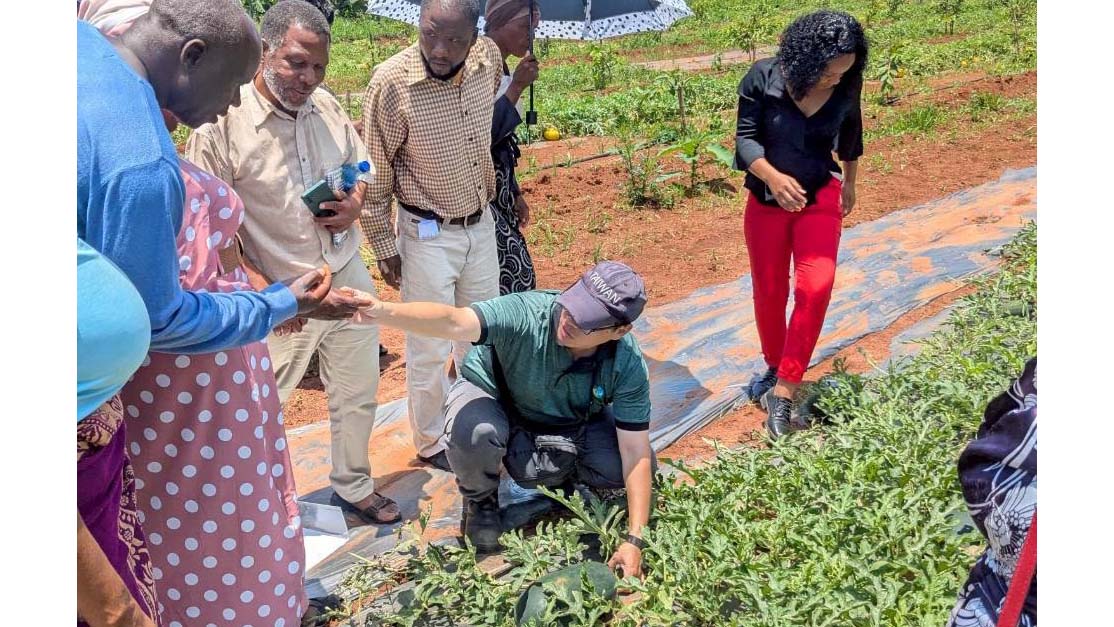
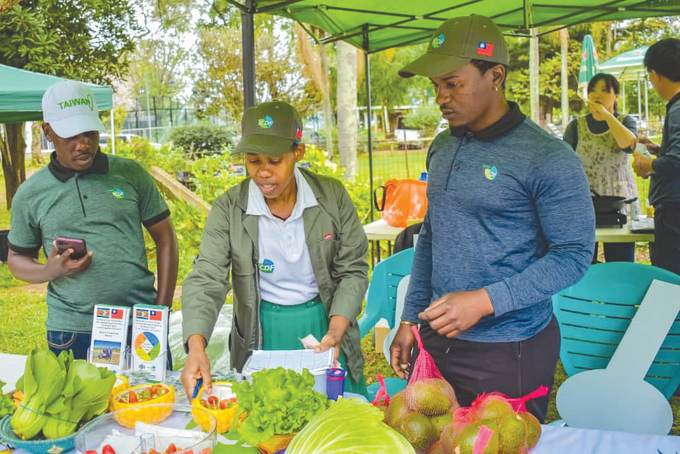
At the demonstration plot, Taiwan Technical Mission expert Shih-Lung Cheng presented six mini watermelon varieties selected for their short growth cycles, adaptability to local conditions, attractive appearance and strong market demand.
He explained each variety’s characteristics, including maturity period, fruit size, sweetness and harvesting time, enabling farmers to make informed, market-oriented choices.
Farmers learnt that mini watermelons are ideal for young guava orchards due to their production cycle of about 70 to 90 days, with some varieties maturing within 70 to 75 days.
This allows farmers to earn income within a short period, while utilising the open space between young trees. The training also highlighted Eswatini’s strong and consistent demand for watermelon.
Seasonal planning was emphasised, with farmers advised that the optimal planting period is from September to December. Winter months from May to July were identified as unsuitable due to low temperatures and poor germination.
Additional guidance covered nursery management, transplanting at the three- to four-leaf stage, field spacing, fertilisation, irrigation, pest management and harvesting techniques to ensure fruit quality and reduce losses.
Participants welcomed the training.
Farmer Sanele Shongwe described the approach as a realistic solution to early-stage income challenges, while Bonsile Mdluli praised the practical demonstrations and market-focused variety selection.
The Taiwan Technical Mission reaffirmed its commitment to promoting practical, market-driven agricultural technologies tailored to local conditions.

















Leave a comment