

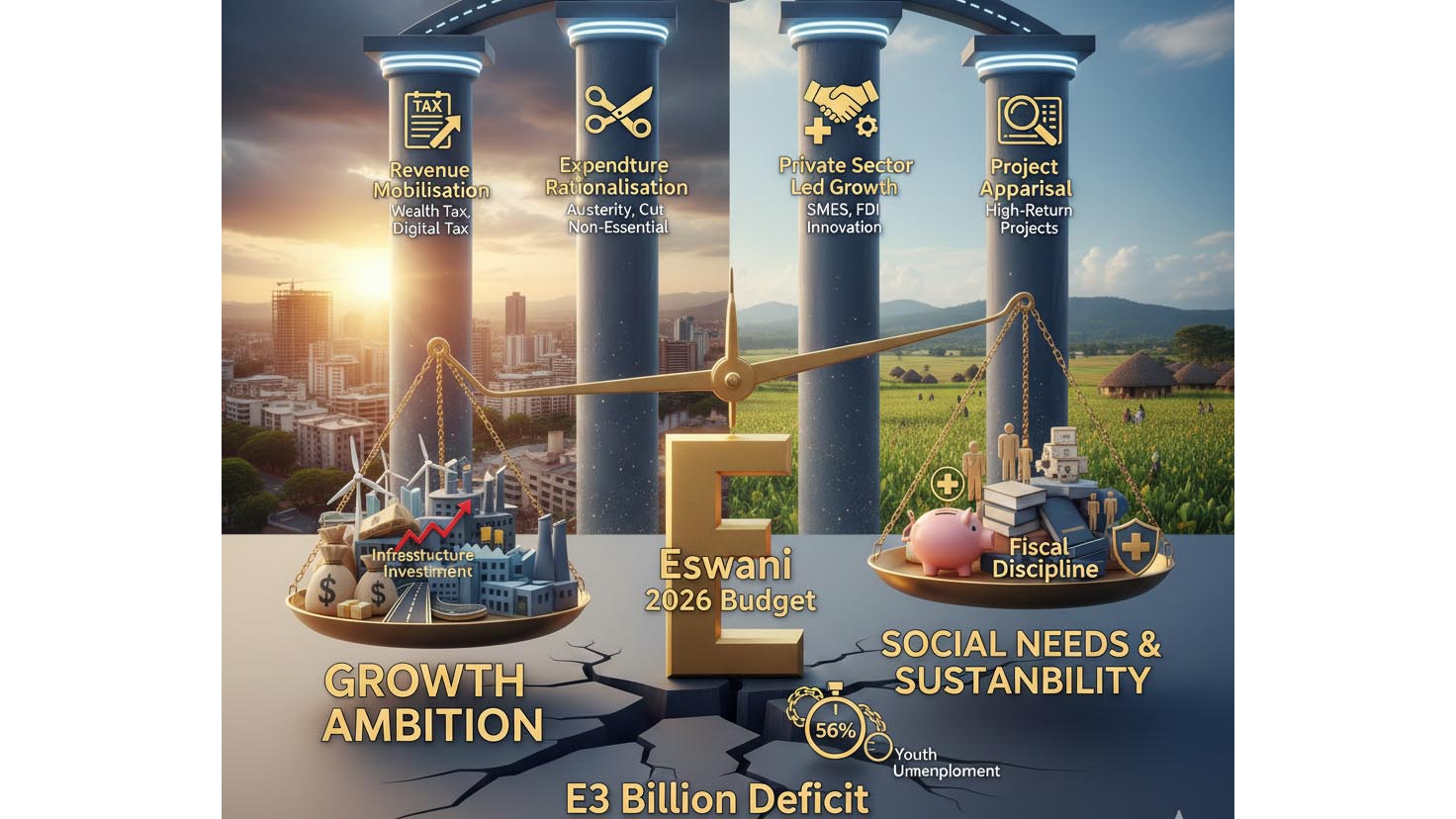
The upcoming 2026 budget presents both opportunity and risk. The upcoming budget requires careful balancing of the country’s growth trajectory through infrastructure led development, and fiscal disciple. The economy is projected to grow by 4.6 per cent, buoyed by infrastructure investments and regional trade opportunities. However, the 2025 fiscal framework revealed a deficit of E3 billion, which underscores the urgent need for fiscal discipline, debt management and a rethinking of how the country balances growth ambitions with long-term sustainability.
Capital spending – a double-edged sword
Infrastructure projects are essential for stimulating growth, creating jobs and modernising the economy. Roads, energy investments and industrial parks can unlock productivity gains and attract investment. Yet, these projects come at a cost, they widen deficits and increase borrowing needs. Without careful prioritisation, the country risks financing projects that do not yield sufficient returns, leaving future generations to shoulder the debt burden, projects must be appraised carefully in the 2026 budget.
Social needs and human capital
Poverty remains stubbornly high, with more than half of the population living below the lower-middle-income poverty line. Fiscal consolidation must not come at the expense of social protection. Health, education and social safety nets are critical for building human capital and ensuring inclusive growth. Cutting these sectors to balance the books would be short-sighted, undermining long-term development goals. It is incumbent on government to ensure that these sectors are adequately funded. The funding should translate to efficiency in operation, hospitals must be fully resourced. Schools must be financed adequately to ensure that access for education is not just about attending class, but also granting education that bridges the gap between the rich and the poor. We must ensure that we grant our people an education that will help emaSwati transcend into higher opportunities.
Youth unemployment – a fiscal time bomb
Youth unemployment is perhaps the most pressing challenge. At 56 per cent, it represents both a social crisis and an economic liability. A generation without jobs is a generation without hope, and the fiscal strain of supporting unemployed youth through social programmes would be immense. More importantly, the lost productivity and innovation potential weaken the county’s growth prospects. Addressing youth unemployment must therefore be central to any fiscal strategy. This year’s budget must have a direct allocation towards youth unemployment, a billion or 500 million towards strategic youth programmes, I must commend the Municipal Council of Mbabane for the youth quota in developmental programmes. Government can follow suit in terms of public works programmes and other procurement initiatives.
Four pillars of balance
Revenue mobilisation it is imperative that we broaden the tax base beyond SACU by strengthening domestic tax collection, introducing digital taxation, and formalising the informal economy. The country classified among the top 10 most unequal societies in the world. Tax strategies that should be proposed in this years budget must target the ‘ultra-rich’. This will broaden the tax base and also redistribute the economy. A proposal for a wealth tax must come with the budget. We need to move beyond income taxation and target the wealth given the unequal nature of wealth distribution in the kingdom.
Also, this year’s budget must prioritise highreturn capital projects, cut nonessential recurrent spending and improve efficiency in health and education. We must consider an austerity budget to minimise the deficit. Expenditure rationalisation will also mean a reduction in the levels of government borrowing. Furthermore, we must ensure that debt financed projects generate commensurate returns, thus adequate project appraisal is requisite. The private sector must lead growth. This year’s budget must incentivize SMEs, attract foreign direct investment, and streamline regulations to foster entrepreneurship and diversify the economy beyond traditional industries.
The tradeoffs
Each strategy carries risks. Raising taxes expands the revenue base but may burden households and businesses. Cutting spending reduces the deficit quickly, but risks underfunding social needs. Borrowing funds grows projects but raises debt sustainability concerns. Private sector growth diversifies the economy but requires reforms and investor confidence. The challenge is to strike the right balance, ensuring that short-term sacrifices lead to long-term gains.
Restraint
The temptation to borrow heavily and spend ambitiously is strong, especially when growth projections are optimistic. Yet the risks of unsustainable debt are real. Government must resist the allure of debtdriven growth and instead embrace discipline, diversification and sustainability. This means tightening expenditure, broadening the revenue base, and empowering the private sector to drive growth. The 2026 budget should not be remembered as the year the country mortgaged its future for short-term gains. Instead, it must mark the beginning of a new fiscal compact, one that balances ambition with prudence, growth with sustainability and investment with resilience. Fiscal discipline today is the price of prosperity tomorrow.
Balancing act
Balancing the 2026 budget is not simply a matter of numbers. It is a test of vision, discipline, and leadership. By embracing fiscal responsibility while investing in people and productivity, the kingdom can chart a path toward sustainable prosperity. The choice is clear continue down the path of deficits and debt, or seize the opportunity to build a resilient, diversified economy. The future depends on the decisions made today.

















Leave a comment