We are back to the word ‘populist’. In a political context, a populist is either a politician, political party or even government that claims to be leading the people against the corrupt of the nation and those elite that serve only themselves. The concept appeals widely in most democracies with a very similar approach in both left and right wing populism. It is only in the extremes of the two branches that the width of the gap gets worrying.
Left wing populism is the more conceptually sound, with the ‘people’ being the poor and working class and the system finding a solution in higher taxes for the wealthy and a more robust social welfare system. Right wing populism identifies the ‘people’ as the native-born and both working and middle class. It promotes nationalism and is much tougher on immigration. Unfortunately, throughout most of the significant democracies of the world we are seeing a highly visible shift to the right. Yet, whatever the ideology, a sizable majority of the ordinary people admire boldness in their leaders. You watch Mr Donald Trump survive the November 2026 mid-term elections despite his reputation being substantially weakened by his starting the Iran war; too much polarisation in US politics.
In England, or more correctly the United Kingdom, of which England is only one of the four component nations (know the other three?) populism – certainly right wing in nature – has emerged strongly through the new Reform Party, led until last week by Mr Nigel Farage. A bold and highly popular politician who has, however, landed himself in a spot of trouble.
What happened? By way of background, Nigel Farage became especially prominent in UK politics during the public discussions on BREXIT – the referendum back in 2016 where the British people voted to leave the European Union; an outcome that made no sense at all. The older people had turned out in big numbers and, when voting, gave vent to nostalgic criticism of their country, perceived as lost to mass immigration, most recently from European Union countries.
Nigel Farage was a compelling speaker in favour of BREXIT and he got what he came for, while Prime Minister David Cameron had to resign for his mistake in calling a referendum in the first place.
Farage then launched his objective to gain political control of the UK, through his newly formed political group, the Reform Party, fighting for sufficient acceptance by the British public. And he made a lot of progress; until something happened.
Quite simply, Farage is facing a parliamentary investigation into undeclared gifts received: One of five million Pounds sterling (around E100 million) from a crypto-billionaire, plus other contributions from a convicted fraudster. As in most countries of the world, the British public takes a sceptical view of politicians who receive very large gifts, especially ones concealed from official declarations. It raises questions that are rarely answered satisfactorily. Farage claimed that the five million Pounds gift was no different than winning a lottery. Not correct and getting benefits from a convicted fraudster inevitably raises questions about Farage’s own moral standards.
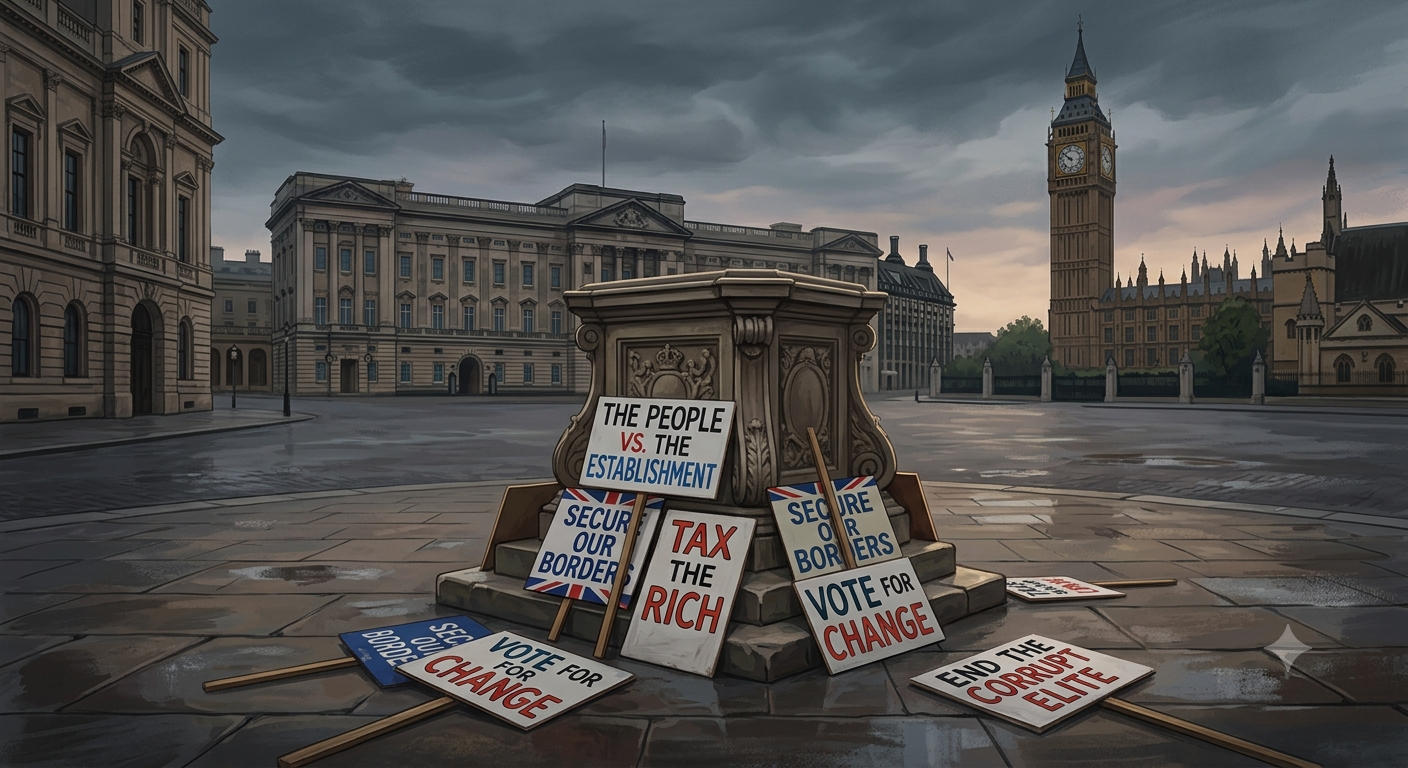
He then declared publicly on July 7, 2026, that he was standing down as a parliamentarian and Reform Party leader. Not for long though. He will seek re-election as a member for eastern town Clacton-on-Sea, a measure he has rather deviously identified as an election for ‘the people versus the establishment’.
It is a compliment to democracy that he should be held to account for his worrying behaviour. But it’s a shadow on a country’s pride in its democracy when such a leader feels comfortable and secure about cheating the system. That’s hypocritical when soliciting the trust of the ordinary person who expects a leader to be exemplary in their own behaviour. British politics currently lies in a degree of instability. You have the three major political parties in one of the oldest democracies in the world – the present political system started its development in the 1600s – where the prime minister is having to resign in a month’s time. That will make it the sixth such resignation in the past eight years from the Labour and Conservative parties. Surely with 65 million people in the UK, the politics of democracy can give rise to better leadership figures than that? Labour is struggling, the Conservative party is still reeling from an ineffective period of office up to 2024 and the Reform Party is taking a knock, through Farage.
It seems likely that Nigel Farage, once re-elected as Member of Parliament for Clacton, gets a rap on the knuckles for failing to disclose his entire wealth and then works his way back to the leadership. You don’t change a winning team and the Reform Party, which looked as if it had an outside chance of winning the next UK national election in 2029, knows that Farage is its ‘main man’ and the best conduit to multiple eminent positions in the future. Democracy does not necessarily provide the best leaders or the most loyal ideology within the interpretation of democracy. Despite that, it does bring society’s offenders to face judgment for dishonest behaviour; and there’s no bribing a way out of that.