

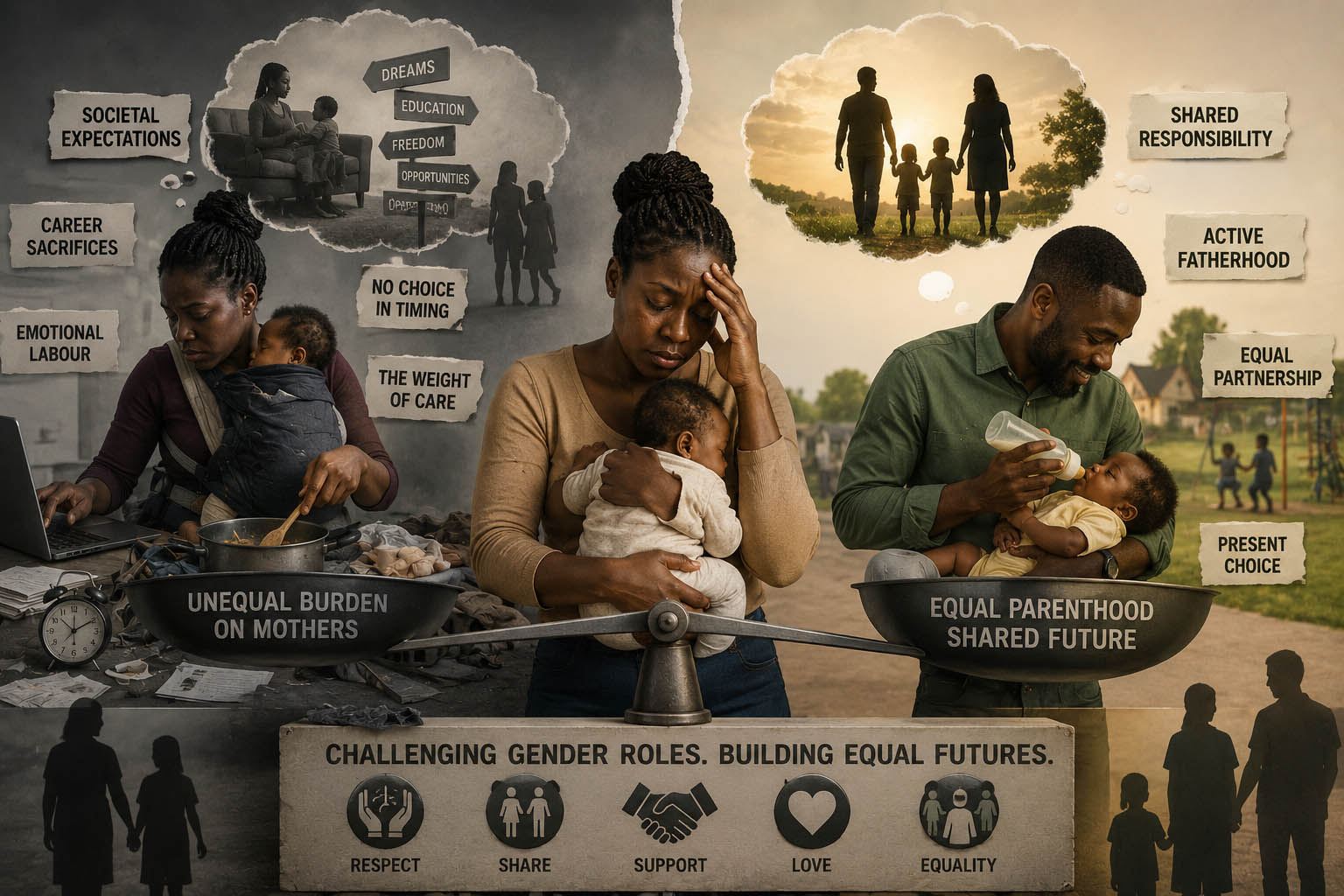
Avideo triggered me recently, one about ‘sondlo’ as I mindlessly scrolled through my social media feeds … then a thought hit me … parenthood is one of the most profound experiences in life, filled with love, growth and new responsibilities. However, beneath the surface of this journey lies a complex web of societal expectations and gender roles that shape how men and women experience parenting and often, how they are burdened or privileged within it.
The experience of a mother is totally different from that of a father, same child, different realities when it comes to experiencing them. One of the most glaring disparities in parenthood is the unequal privilege women have or are denied, regarding their choices about when and how to become parents. At the same time, societal norms often allow men the freedom to be absent or disengaged from their children, returning when it suits them, while women shoulder the overwhelming weight of caregiving. Now I know many might be tempted to think this is something that exists in a world where the parents do not end up together, but it is rather a reality even in marriage and for parents who are still together.
Unbalanced burden of motherhood
For women, motherhood is rarely a choice in the true sense; it is often an expectation embedded in cultural, social and sometimes even legal frameworks. From the moment a woman becomes pregnant, her body and life are subjected to societal scrutiny. She is expected to prioritise her role as a mother above all else, often at the expense of her personal aspirations, career and well-being. The societal narrative frames women as natural caregivers, placing the responsibility of child-rearing squarely on their shoulders. This expectation persists even when women are working full-time jobs or pursuing personal ambitions. The emotional and physical toll of motherhood can become a shackle, limiting women’s freedom, autonomy and opportunities.
Furthermore, women often do not have the privilege of choosing when to become mothers. Many pregnancies are unplanned and socio-economic pressures can make it difficult to access contraception or abortion services. Once pregnant, women are usually expected to carry the pregnancy to term, regardless of their circumstances or desires. The societal default leans heavily towards motherhood as an inevitable role for women, not a personal choice.
Absence of choice in parenthood
While women’s experiences are often constrained by cultural expectations, men are typically granted more freedom to choose their level of involvement or absence – in their children’s lives. Society often romanticises the idea of the ‘absent father’, portraying it as a form of independence or non-commitment. Men can choose to be physically absent or emotionally disengaged and society tends to accept this, sometimes even excusing their absence. Men frequently have the privilege of returning to parenthood at their convenience, coming back into their children’s lives when they want, without bearing the ongoing burden of caregiving.
This pattern perpetuates a cycle where women carry the full weight of parenting, often alone, while men retain the option to disengage or re-engage on their terms. This societal structure reinforces a dangerous imbalance: children are by default seen as the domain of women, with men having a role that is optional or secondary. The idea that men become fathers for women rather than to their children is a reflection of deep-rooted gender norms that prioritise male independence over shared responsibility.
Parenthood as a societal contract
In reality, parenthood should be a mutual decision; an acknowledgement of shared responsibility and love. Yet, the societal system often treats it as a privilege or a default for women, and a role that men can opt in or out of freely. This dynamic can have devastating consequences. Women often face the double burden of earning a living and managing the majority of caregiving duties. The emotional labour – nurturing, comforting, managing household chores – falls disproportionately on women, leading to burnout and a loss of personal freedom. Meanwhile, men’s role in parenting is frequently minimised or considered optional. They may be absent physically or emotionally, leaving women to pick up the slack.
When fathers do choose to participate, it is often seen as doing their ‘duty’, rather than sharing an equal partnership. To create a more equitable system, we need to challenge these entrenched norms. Parenthood must be recognised as a shared responsibility, something that both partners actively choose and commit to, rather than a default expectation placed predominantly on women. This begins with redefining masculinity and femininity. Society must value and support men who take on caregiving roles, emphasising that fatherhood is not just a biological role but a lifelong responsibility that requires emotional engagement and active participation.
















Leave a comment