LOBAMBA – Prime Minister (PM) Russell Mmiso Dlamini has defended his leadership style, insisting that what he describes as ‘disruptive leadership’ is essential to delivering the ‘nkwe’ mandate and accelerating Eswatini’s national transformation.
This is contained in his response which he tabled in Parliament yesterday in reaction to a motion that was moved by Mbabane East Member of Parliament (MP), Welcome Dlamini.
The MP moved that the PM must outline in detail a variety of issues including how what the MP has termed his disruptive style of leadership is consistent with, and fits into, the Tinkhundla System of Government as established under the Constitution of the Kingdom of Eswatini and the Tinkhundla framework, which emphasises consensus building, traditional authority and collective decision-making at both national and local levels.
The Mbabane East MP also called for the PM to detail the impact of this leadership style on service delivery across all sectors of the kingdom, including its effects on the efficiency, coordination and effectiveness of public service programmes, development projects and the overall welfare of emaSwati.
Furthermore, the Mbabane East MP moved that the PM’s response be accompanied by specific examples, timelines and measurable indicators to enable members to fully assess the compatibility of the said leadership approach with the foundational principles of the Tinkhundla System and its implications for good governance.
In the response, the PM has said that government would continue pursuing reforms despite resistance, arguing that disruption was necessary to overcome entrenched inefficiency, corruption and slow decision-making.
“I wish to express my sincere gratitude to the many MPs, members of the Diplomatic Corps and members of the public who have called and responded through social media to affirm that this leadership style is indeed necessary for the successful implementation of the ‘nkwe’ mandate.”
The PM rejected suggestions that his approach was incompatible with Eswatini’s Tinkhundla System of Goverment, maintaining instead that it complemented His Majesty’s vision for the country’s development.
He described disruptive leadership as a transformative approach that challenges established ways of working in favour of innovation, speed and measurable outcomes.
According to the PM, the concept is rooted in evidence-based decision-making rather than popularity and seeks to modernise government without abandoning the country’s traditions. “The call for disruptive leadership does not constitute a challenge to our traditions or to our system of governance,” he said, adding that implementing the ‘nkwe’ directive would strengthen governance and accelerate development.
Dlamini argued that His Majesty’s ‘nkwe’ instruction was never simply about working faster but about fundamentally changing how government operates.
“When His Majesty issued the ‘nkwe’ directive, he was commanding government to disrupt the ordinary manner of doing things. He was not merely directing us to quicken our step; he was commanding us to rise and run.”
He said the administration’s approach had been shaped by the national challenges identified during Sibaya and reflected in government’s Programme of Action, arguing that Eswatini could not achieve meaningful transformation while relying on outdated methods.
The PM also defended the constitutional role of the Executive, saying democracy and consensus should not be mistaken for an absence of leadership.
He noted that the Constitution places responsibility on the PM to chair Cabinet and direct government business in Parliament, requiring decisive stewardship in pursuit of national priorities.
Addressing concerns surrounding Cabinet discussions, Dlamini dismissed reports suggesting Eswatini had altered its diplomatic relations with the Republic of China (Taiwan).
He insisted Government policy remained unchanged and said the published 2026 Cabinet Retreat Declaration accurately reflected Cabinet’s position.
Beyond defending his leadership philosophy, the PM devoted much of his response to outlining what he described as the administration’s achievements since assuming office.
He said more than E30 billion in investments had been secured, while government had created over 16 000 jobs, including 11 000 for young people.
National unemployment, he said, had declined from 35.4 per cent to 33.5 per cent.
Among the flagship initiatives highlighted was the allocation of 500 hectares at Phocweni for the proposed Taiwan Innovation Park, a project expected to attract US$6 billion in investment and create around 10 000 additional jobs.
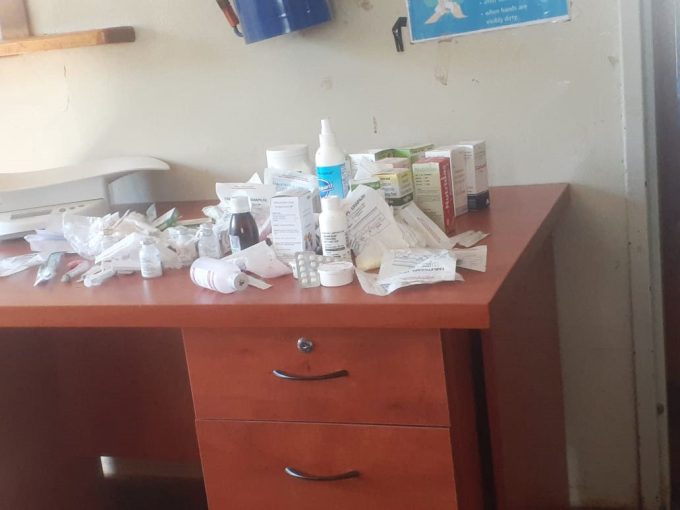
The PM also pointed to improvements in public health, saying medicine availability had increased from approximately 30 per cent when the Administration took office to about 90 per cent.
He said Eswatini continued to exceed the global 95-95-95 HIV targets and had become one of the first countries to introduce injectable Lenacapavir PrEP as part of efforts to eliminate HIV.
On education, the PM said government had increased scholarship beneficiaries by 1 000 students, raised monthly allowances from E1 690 to E2 000 and improved the efficiency of payments, resulting in fewer student protests.
He also confirmed that implementation of recommendations from the University of Eswatini review had begun, while preparations for the SADC University of Transformation were progressing.
The Pm cited economic indicators which he said reflected improving living standards, including inflation falling from four per cent in 2024 to 2.6 per cent, a reduction in the national poverty rate from 58.9 per cent to 53.5 per cent and an improvement in the country’s Gini coefficient to 0.45.
Government, he added, had expanded food security programmes, established the Eswatini Agriculture Development Fund, launched the Hamba Ubuye Maize Revolving Fund and successfully contained the country’s worst foot-and-mouth disease outbreak in recent years.
Infrastructure development also featured prominently in his response. Dlamini said government had made significant progress on major road projects, constructed more than 1 000 houses for vulnerable families, expanded access to safe drinking water and sanitation, and advanced work on the national strategic oil reserve and the Mpakeni Dam project.
In the energy sector, he said Eswatini remained on course to generate 188.6MW of renewable electricity by 2030 while considering licences for an additional 1 400MW, moves intended to eliminate dependence on imported electricity and support industrialisation.
He also highlighted reforms aimed at improving governance and public administration, including the establishment of the Government Efficiency Team to streamline procurement, the rollout of the Integrated Financial Management Information System, adoption of international public sector accounting standards and implementation of a Performance Management System across the civil service.
The PM further outlined progress in digital transformation, tourism, disaster risk management, mining, public transport and anti-corruption measures, including the creation of a specialised task team involving the Directorate of Public Prosecutions, the Royal Eswatini Police Service and the Anti-Corruption Commission (ACC) to expedite corruption cases.
On the international stage, the PM said Eswatini had strengthened diplomatic relations with several countries, retained access to the United States’ African Growth and Opportunity Act market, secured a E4.1 billion bilateral health agreement with the United States and successfully negotiated its removal from the special paragraphs of both the SADC Troika agenda and the International Labour Organization.
He also noted that the country had received international recognition for its governance, including an African Union award for effective governance in the peace category and the presidency of the Global Council for Political Renewal for the 2025–2028 period.
Concluding his response, he acknowledged that government continued to face fiscal constraints, external dependencies and lengthy legislative processes, but insisted these challenges had not derailed its development agenda.
“We will continue to focus on transforming Eswatini from a lower to an upper-middle-income economy,” he said, urging MPs to support the administration’s efforts to address challenges in the economy, health, education, employment and social protection.
He maintained that disruptive leadership, implemented within the framework of the Tinkhundla system, remains central to achieving the ambitions of the ‘Nkwe’ programme of Action and the country’s long-term national transformation.