


Last year, your tenant may have paid you more than E100 000 in rent.
Now ask yourself one uncomfortable question; how much of that money did you actually keep?
Not how much was deposited into your bank account. Not how much your tenant paid. How much remained after every repair, every municipal bill, every insurance premium and every unexpected expense had been settled?
If you cannot answer that question, you may not know whether your rental property made you money or simply collected rent.
That may sound like the same thing. It isn’t.
For generations, property has been regarded as one of the most dependable ways to build wealth. That belief has encouraged many emaSwati to invest in rental properties, confident that as long as the tenant pays every month, the investment is working, but collecting rent and building wealth are not the same thing.
One of the biggest mistakes landlords make is measuring the success of their investment by rental income alone. They know exactly how much the tenant pays every month, but very few can say with certainty what the property actually earned them at the end of the year.
Those are two very different numbers. Imagine two landlords who each own a similar rental house.
Both charge E8 500 per month. Both enjoy reliable tenants who never miss a payment. By the end of the year, each has collected exactly the same amount in rent.
From the outside, their investments appear equally successful. Then the numbers tell a different story. One landlord spent E18 000 maintaining the property during the year. The other spent almost E100 000 replacing a leaking roof, repairing plumbing, fixing electrical faults, installing a new geyser and repainting after tenants moved out.
Both collected the same rent. They did not achieve the same return. The difference is not what came into their bank accounts. It is what remained.
That is why serious property investors should stop asking only: “How much rent did I collect?”
The better question is: “What did this property actually earn me?”
To answer that properly, a landlord should be able to account for the major numbers affecting the investment, including:
- Rental income actually received
- Municipal rates and other property charges
- Insurance and levies, where applicable
- Maintenance and repairs
- Property management fees
- Bond interest and other finance costs
- Legal and administrative expenses
- Rental income lost through vacancies
These expenses rarely arrive at the same time. That is precisely why their impact can easily be underestimated:
A plumbing repair Happens in February:
- Insurance is paid in April
- The geyser fails in June
- The tenant leaves in September
- Painting is required in October.
Individually, each expense may appear manageable. Add them together at the end of the year and the picture can look very different.
Maintenance is not the enemy
Maintenance is perhaps one of the most misunderstood costs of owning rental property. Many landlords see maintenance as money disappearing from their investment. In reality, proper maintenance protects the asset that generates the income.
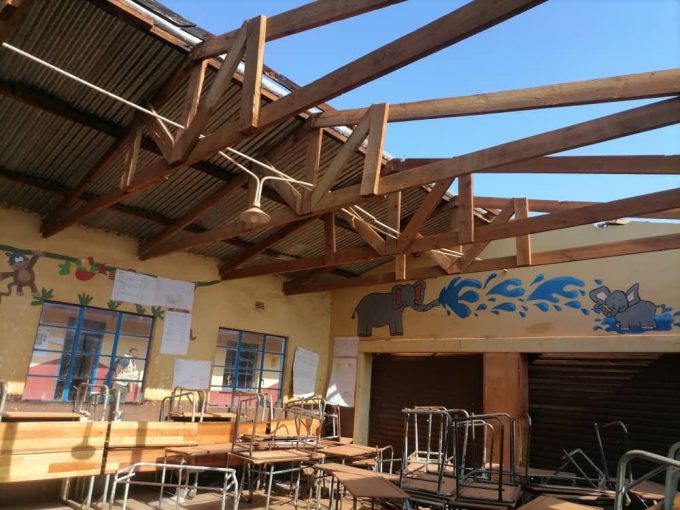
A leaking roof repaired today may cost a few thousand Emalangeni. Ignore it, and the same leak could eventually damage ceilings, walls, electrical wiring and flooring.
The small expense you avoided today can become the large expense you cannot avoid tomorrow. The cheapest repair is often the one carried out early.
At the same time, not every amount spent on a property should automatically be regarded as money lost. There is a difference between maintaining a property and improving it.
Replacing broken roof tiles or repairing faulty plumbing restores what is already there. Other expenditure may actually improve the property’s competitiveness.
Depending on the property and its target market, this could include:
- Adding another bathroom
- Installing a remote-controlled gate
- Building a proper carport
- Improving security
- Modernising an outdated kitchen
- Providing practical connections for appliances tenants increasingly expect
- Such improvements may help attract better tenants, reduce vacancy periods and support stronger rental income.
- Some expenditure protects value. Other expenditure creates value. A good investor understands the difference.
The property may be empty, but the bills are not
Then there is another expense landlords sometimes underestimate: Vacancy. If a property that could have been occupied for 12 months stands empty for one month, almost one-twelfth of its potential annual rental income has already been lost.
Yet the property’s expenses do not disappear with the tenant.
Namely:
- Rates continue
- Insurance continues
- Bond repayments continue
- Security may still be required
- Maintenance may still be necessary
- The property may be empty, but the bills are not
This is why keeping a good tenant, maintaining a competitive property and responding to changing tenant expectations are not merely management issues. They are investment decisions.
It is time to take stock
Every landlord should periodically sit down and conduct an honest review of each rental property. Not because the bank requires it. Not because the accountant asks for it, but because every investment deserves to be measured.
Take out your rental statements, municipal accounts, maintenance invoices, insurance records and bond statements.
Then establish three simple things:
What came in?
What went out?
What remained?
That final number deserves far more attention than the monthly rental figure and if you own several rental properties, do not simply combine everything and conclude that the portfolio is doing well. Look at them individually:
- One property may be carrying another
- One may have excellent occupancy but excessive maintenance
- Another may produce lower rent, but require very little expenditure
- Another may have appreciated significantly while delivering modest rental returns.
Taking stock allows you to see which properties are genuinely working for you and which ones may need intervention.
Perhaps the rent needs reviewing. Perhaps maintenance has been neglected. Perhaps an upgrade is necessary. Perhaps management needs improving. Sometimes, an investor may eventually have to confront the hardest question of all: Is this still the right property to own?
That is not failure. That is investment discipline. Property investment should never become a sentimental exercise where ownership itself is regarded as success.
The objective is to build sustainable wealth. So, before another year passes, ask yourself the question that started this conversation.
After everything was paid, did my rental property build my wealth or did it simply collect rent?
The answer may be uncomfortable, but knowing the truth about an underperforming investment puts you in a far stronger position than celebrating rental income while never knowing whether there is real profit behind it.
Jaguar Perspective
The most successful landlords are not necessarily those collecting the highest rent. They are those who know exactly what their properties are doing financially. Rental income is what your tenant pays. Wealth is what your investment keeps. Take stock, measure the numbers and allow the numbers to guide your next move.
Till next week, Buy smart. Wait with discipline. Grow with confidence.
By Musa Nhleko
















Leave a comment