

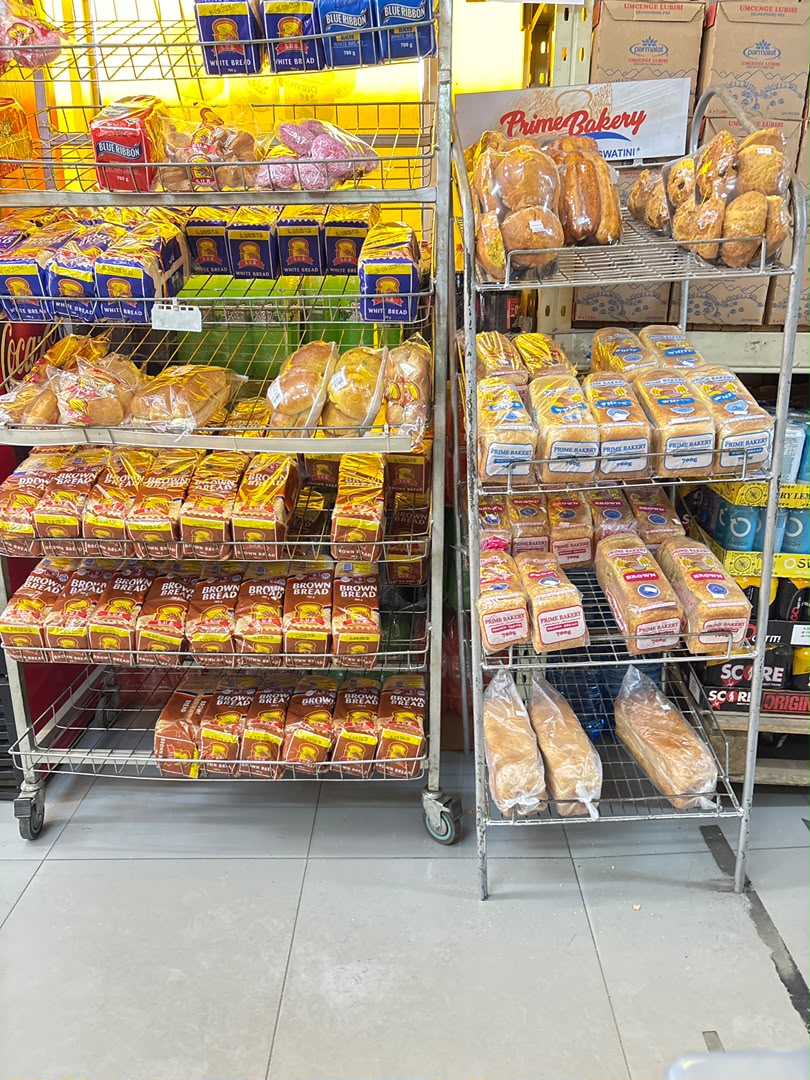
MBABANE – Consumers are set to dig deeper into their pockets for bread from next month after Cabinet approved another increase in the regulated price of the staple commodity.
The proposed adjustment of 4.23 per cent will come into effect on October 1, 2026, according to sources. This follows that the Eswatini Bakers’ Association submitted a request to the Ministry of Commerce, Industry and Trade seeking the increment.
The increase comes 11 months after the last bread price adjustment, when the price of bread rose by seven per cent from November 1, 2025.
That increase pushed the maximum retail price of an 800g white loaf from E16.73 to E17.90, while an 800g brown loaf increased from E14.58 to E15.60.
Under the latest proposed adjustment, the price of an 800g white loaf will rise from the current E17.90 to E18.66, while the price of an 800g brown loaf will increase from E15.60 to E16.26.
For the commonly purchased 700g loaf, the maximum retail price of white bread will increase from E16.36 to E17.05, while brown bread will rise from E14.64 to E15.26.
Chief Commercial Officer in the Ministry of Commerce, Trade and Industry Sonto Hlophe acknowledged that the Eswatini Bakers Association requested an increment following a hike in their operational costs.
She said Cabinet has approved it. Hlophe said: “The ministry received a request from the Eswatini Bakers’ Association to increase the price of bread by 4.23 per cent of the current price. This request stems from rising input costs and economic pressures adversely affecting the sustainability of local bakeries. The last bread price increase was 7 per cent and took effect on November 1, 2025.”
However, according to sources, the request saw the cost of key inputs used to produce a standard 700g loaf increased significantly between November 2025 and June 2026.
It is said the Bakers’ Association attributed much of the pressure to rising fuel prices, which have increased transportation and other production costs.
The sources said the Bakers’ Association had requested the adjustment amid what it described as increasing input costs and economic pressures threatening the sustainability of local bakeries.
It is worth noting that bread remains a necessity in households and it was submitted that the viability of bakeries was important to ensuring continued supplies and protecting jobs in the sector.
The latest increase means consumers will have faced two regulated bread price adjustments in less than 12 months.
The previous seven per cent increase was reported by the Times of Eswatini in October 2025 after Cabinet approved the adjustment and it was subsequent to a price effected in July 2022, which was 20.76 per cent.
The proposed increase comes as households continue to deal with higher costs in other areas of their monthly budgets following the increments of fuel in the past months, which had trickle effects to the cost of food, among other things.

It is worth noting that the Central Bank of Eswatini (CBE) recently reported that credit extended to households and non-profit institutions serving households reached E9.9 billion in June 2026.
That represented a 0.8 per cent increase in a single month and an 11.6 per cent increase compared with June 2025, signalling continued growth in household indebtedness.
Other personal loans, which include unsecured borrowing, rose by 1.1 per cent during the month to E4.1 billion, while motor vehicle loans increased by 3.4 per cent to E1.5 billion.
On the other hand, electricity tariffs were increased from April 1, 2026. ESERA initially approved an average increase of 13.61 per cent, although government intervention subsequently reduced the effective average adjustment to 11.74 per cent.
Also, fuel prices have also undergone significant increases this year. In April, petrol increased by 14.9 per cent while diesel rose by 21.2 per cent. In May, petrol increased by a further 13.1 per cent and diesel by 25.4 per cent.
Although a subsequent fuel review in June reduced diesel and paraffin prices, petrol increased again by 90 cents to E26.17 per litre.
Transport costs have also been under pressure. A proposed adjustment before Parliament would increase the maximum short-distance bus fare from E10 to E12.50, representing a 25 per cent increase, while the proposed maximum taxi fare for the first three kilometres would rise from E60 to E72. The proposal has yet to be debated by Parliament.
The pressure is not limited to regulated commodities. In June, the Times of Eswatini reported that major South African food manufacturers Premier Group and Tiger Brands had warned that further food price increases could become unavoidable because of rising fuel, packaging and other production costs.
Premier Group indicated that it could increase prices by about five per cent across its portfolio of food brands, while Tiger Brands warned of selective price increases amid global supply-chain pressures. The companies supply products widely consumed in Eswatini, including bread, flour, maize meal, rice, cereals, canned foods and cooking ingredients.
More recently, NAMBoard announced that it would enforce a 24 per cent levy on imported edible oils from September 1, 2026. The authority said the levy was an existing legal requirement rather than a new measure.
The developments come against a backdrop of renewed inflationary pressure. Eswatini’s annual inflation rate rose to 2.8 per cent in August 2026, according to the latest figures by the CBE.
With bread now set for another increase, households will have to contend with higher prices for one of their basic food items, while also managing increased electricity, fuel and transport costs and the prospect of further food price adjustments.
The new maximum wholesale and retail prices are scheduled to take effect on October 1, 2026, in terms of Section 5(1) of the Price Control Order of 1973.

















Leave a comment