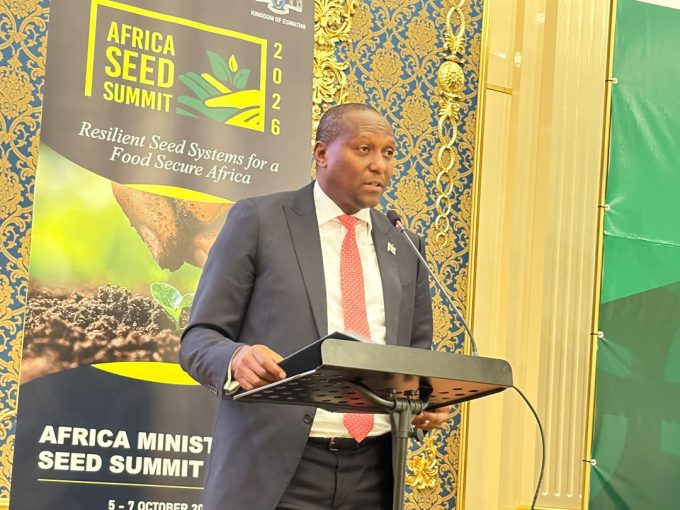
EZULWINI – Agriculture must be repositioned as a viable business through technology to fight rising youth unemployment, Minister for Agriculture Mandla Tshawuka has said.
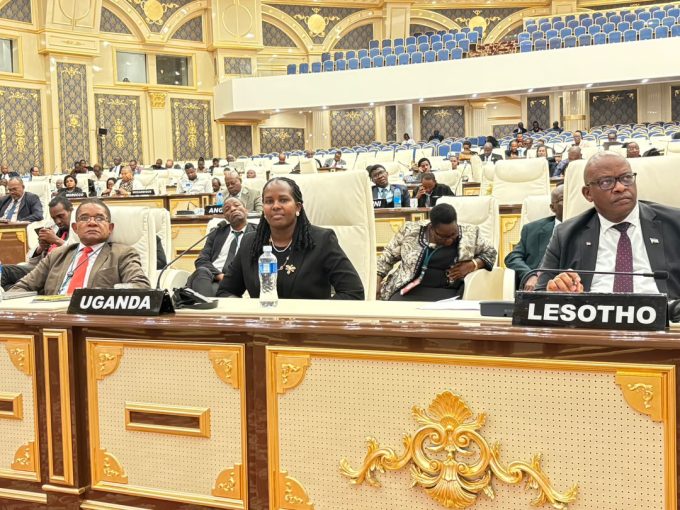
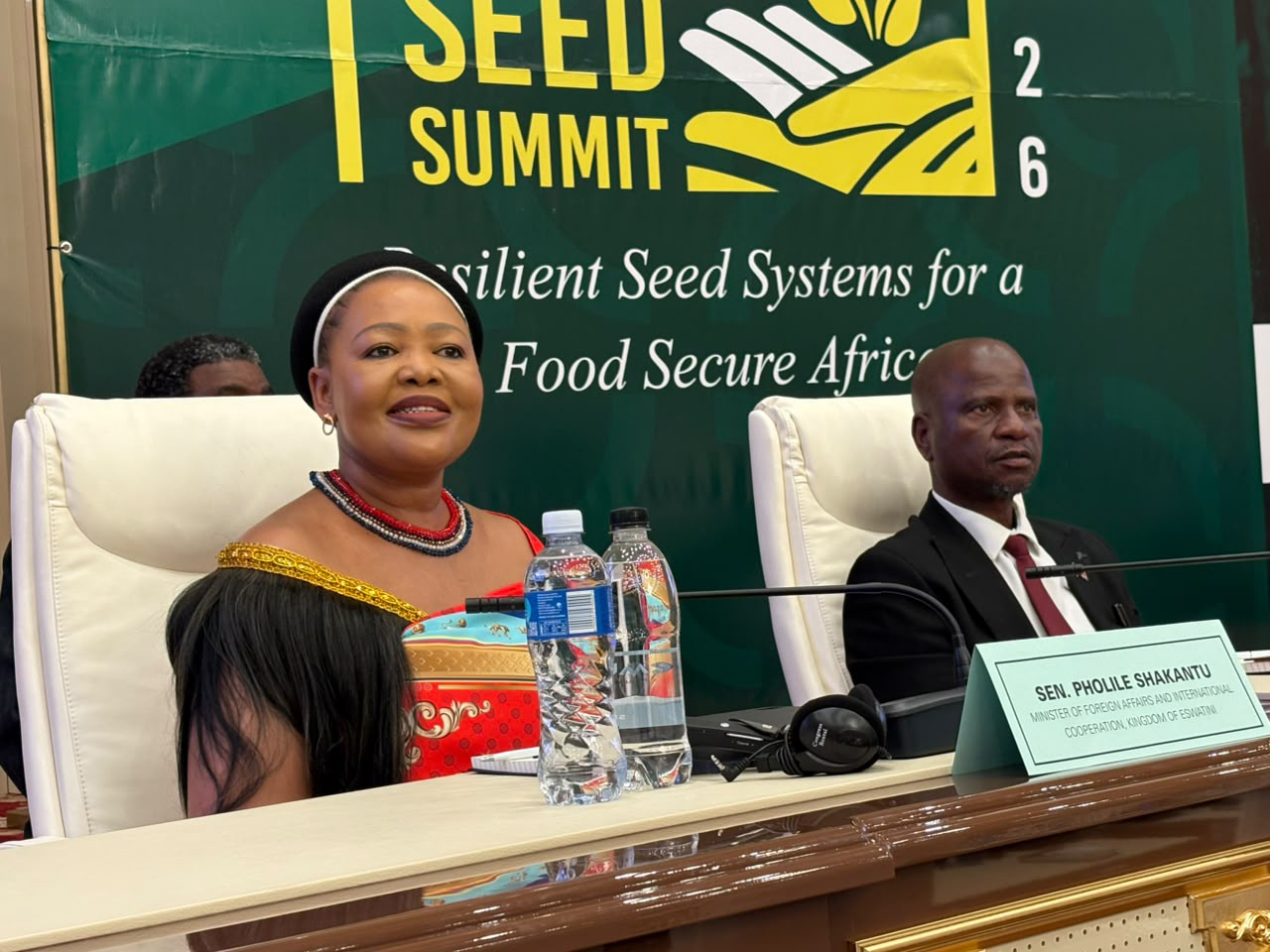
Addressing delegates during the official session of the African Union Seed Summit in Ezulwini, Tshawuka stated that modernising Eswatini’s agricultural landscape is critical to creating sustainable economic opportunities for young people.
“As a government, we realise the value of agriculture in combating unemployment through both primary production and downstream industries. We are therefore positioning the sector as a viable business and investment opportunity for the youth through agro-technology and innovation,” he said.
He also highlighted that structural funding support remains a vital pillar for enabling smallholder farmers and young agri-preneurs to scale up their operations successfully.
“Financing remains an important element of any agri-food transformation. We are therefore providing targeted and blended funding through the Eswatini Agricultural Development Fund,” he said.
Tshawuka explained that government interventions extend across the entire value chain, including infrastructure development to move local produce directly from farms to high-value markets. He said this includes dedicated cold storage facilities established at the King Mswati III International Airport to support agricultural exports.
Linking local youth enterprise to the wider continental landscape, Tshawuka called on African states to eliminate cross-border trade restrictions and harmonise seed regulations to achieve long-term food self-reliance.
“The message from Eswatini is clear: Africa must move from dependence to greater seed sovereignty. Seeds do not recognise national borders, and neither do climate change, food insecurity, and emerging agricultural threats. No single country can build a resilient continental seed system alone,” he said.
He urged all stakeholders to ensure that high-level summit deliberations lead to practical outcomes for local producers.
“The decisions we take at this summit must ultimately translate into something tangible for the African farmer: better seed, better yields, better incomes, and greater food security,” Tshawuka said.
Meanwhile, African Union Commissioner for Agriculture, Rural Development, Blue Economy and Sustainable Environment Moses Vilakati said raising Africa’s agricultural output by 45 per cent by 2035 is key to sustainably feeding the continent and uplifting millions of farmers.
He stated that transforming the continent’s food systems relies heavily on achieving this ambitious target.
Vilakati highlighted that member states committed to this benchmark under the CAADP Kampala Declaration 2026–2035. He said the strategy aims to accelerate agricultural transformation, increase productivity, expand agribusiness opportunities, and eliminate hunger and malnutrition.
“Amongst this commitment is the ambitious target of increasing agricultural output by 45 per cent by 2035, and ensuring that Africa can sustainably feed itself while improving the livelihoods of millions of our farmers within our continent,” Vilakati stated.
He stated that every aspect of agricultural progress begins with quality seed inputs.
“Every agricultural transformation begins with a seed. If we seek higher productivity, it begins with a seed. If we seek climate resilience, it begins with a seed. If we seek greater competitiveness and stronger agricultural value chains, it begins with seed. If we seek food security and food sovereignty, it begins with a seed,” he said.
Vilakati further stated that food security is unattainable without guaranteed seed security. He noted that efforts to build resilience against climate change, pests, diseases, and market volatility depend on whether smallholder farmers can access high-quality, affordable, and climate-resilient crop varieties.
Despite recent advances across the continent, Vilakati observed that many farmers still face significant challenges in obtaining the right quantity and quality of seeds at the right time and price. He pointed to weak regulatory harmonisation, limited production capacity, inadequate funding, and fragmented markets as major bottlenecks restricting the growth of Africa’s seed sector.
To address these challenges, Vilakati urged member states to establish an African Continental Seed Bank backed by regional and national networks. Such an infrastructure, he said, would preserve genetic diversity, protect indigenous and improved crop varieties, and support ongoing research to secure Africa’s long-term agricultural resilience.
He reaffirmed that the African Union Commission remains committed to facilitating partnerships, coordinating frameworks, and supporting member states as they work to implement the Kampala Declaration to achieve total food self-reliance.