

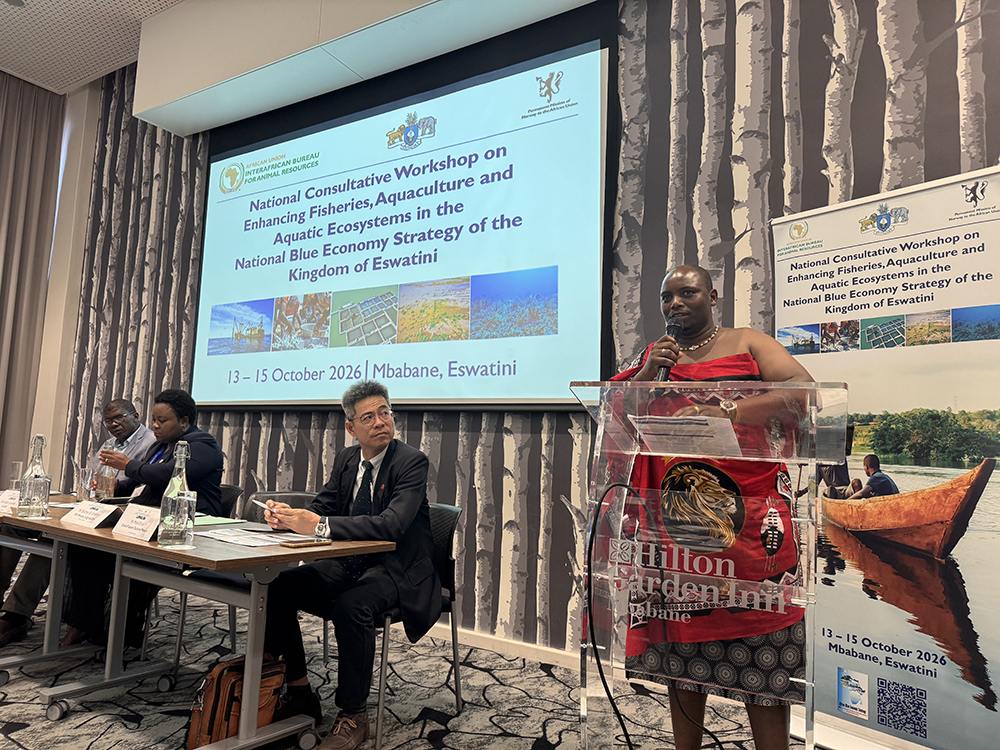
Eswatiniis being urged to look beyond its fields and unlock the economic potential of its rivers, dams and other aquatic resources as the country seeks to strengthen food security, create employment and reduce its reliance on imported fish products.
This emerged during the official opening of a three-day Consultative Workshop to Strengthen Fisheries, Aquaculture, Conservation and Sustainable Ecosystems, which started yesterday, October 13 and will conclude tomorrow, October 15, 2026.
The workshop brings together stakeholders to develop a practical Strategic Action Plan for fisheries, aquaculture and freshwater ecosystems, aligned with Eswatini’s National Blue Economy Strategies.
From the Ministry of Agriculture, Under Secretary Nhlanhla Motsa represented the Principal Secretary (PS) Sydney Simelane.
In the remarks, he emphasised the need to recognise aquatic resources as an important contributor to national economic growth and the fight against food insecurity.
“As a landlocked nation, the Kingdom of Eswatini has historically looked to the soil for our sustenance. However, as His Majesty King Mswati III has wisely guided us on numerous occasions, true national economic growth and the decisive defeat of food insecurity require us to look across our abundant rivers, dams and aquatic resources,” he stated.
TURNING WATER RESOURCES INTO OPPORTUNITIES
Eswatini’s dams and river systems hold significant potential to expand local fish production, support livelihoods and strengthen the agricultural sector. The remarks identified the Maguga and Mnjoli dams, alongside the country’s river basins, as part of this untapped potential.
Although Eswatini has traditionally imported a significant portion of its aquatic products, the country has a growing community of fish farmers and institutional initiatives aimed at developing the sector.
These include ongoing developments at the Malkerns Aquaculture Research and Production Centre, as well as broader efforts to modernise agriculture and strengthen the resilience of food systems against climate change.
The workshop is expected to help translate national policy ambitions into practical interventions that can support the sustainable growth of fisheries and aquaculture through 2035 and beyond.
FROM SUBSISTENCE TO COMMERCIAL PRODUCTION
A key priority is to move fish farming beyond subsistence production towards commercial-scale operations that can supply the domestic market more consistently.
According to the PS, this will require improved institutional coordination between government ministries, private businesses and community structures, as well as stronger measures to protect aquatic biodiversity, water quality and natural habitats.
Access to affordable fish feeds, reliable local supplies of fingerlings, market linkages and inclusive financial support were also identified as important requirements for unlocking investment and strengthening the value chain.
These interventions could help local producers increase output, improve their businesses and participate more effectively in the growing aquaculture sector.
YOUTH AND WOMEN MUST BENEFIT
Beyond increasing production, he stressed that the development of fisheries and aquaculture should create meaningful economic opportunities for young people, women and local communities.
The PS called on technical experts, private sector representatives, civil society organisations and development partners to make their contributions practical and forward-looking.
“To our technical experts, private sector representatives, civil society actors and development partners in the room: I urge you to be bold, candid and pragmatic. Do not leave the hard questions for tomorrow. Design an action plan that respects our ecological limits while unleashing the full commercial and nutritional promise of Eswatini’s waters,” he said.
The PS also reaffirmed its commitment to taking the workshop’s recommendations forward into policy implementation. “The ministry stands fully committed to walking this journey with you, taking your recommendations forward into policy execution, and turning our shared vision into tangible harvests on the tables of every liSwati.”

















Leave a comment