

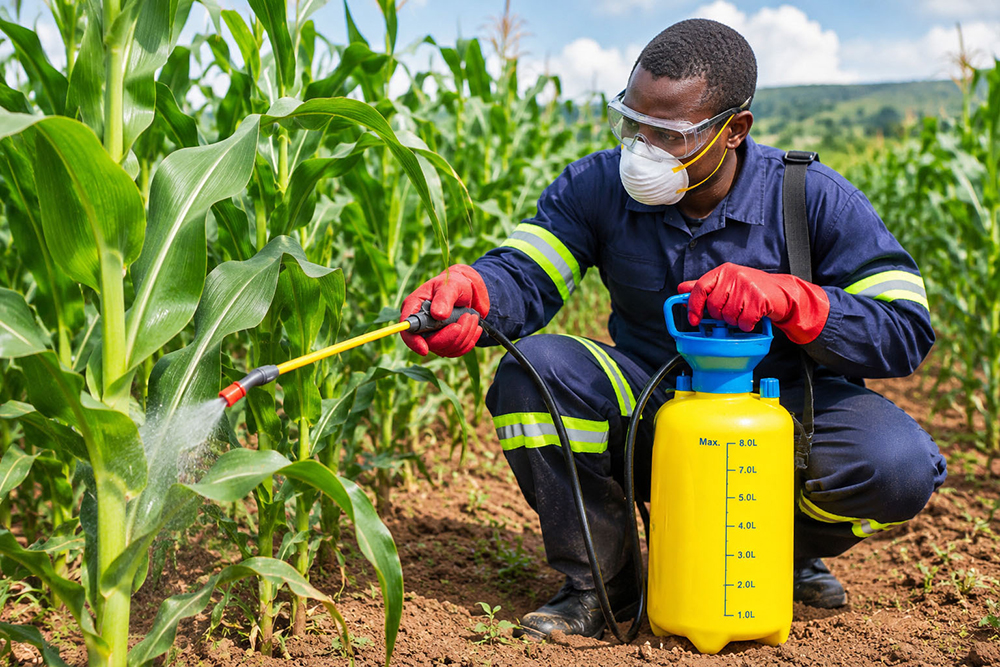
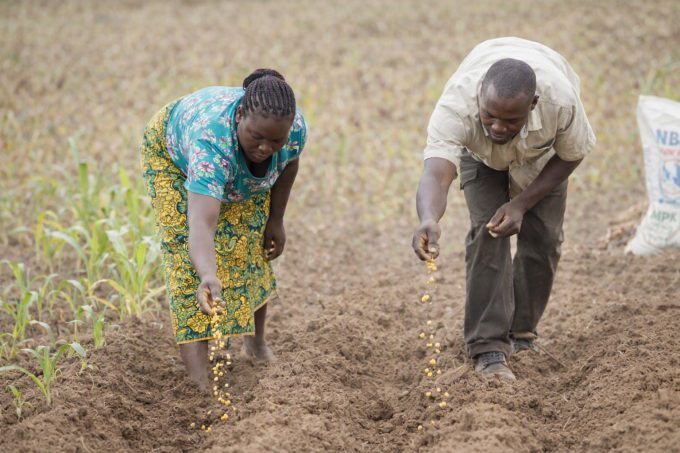
With the maize planting season underway, farmers are being encouraged to adopt Integrated Pest Management (IPM) strategies to protect their crops and improve yields. Moving beyond reliance on chemical sprays, IPM offers a smarter, sustainable and cost-effective approach to controlling pests.
By combining different pest control methods, farmers can minimise crop damage, protect beneficial insects, reduce chemical costs and safeguard the environment. Entomology Researcher Zinhle Gama takes us through the key principles of managing pests in maize production.
WHAT IS IPM?
Integrated Pest Management (IPM) is an environmentally sensitive approach that combines different practices to manage pest populations. Its main objective is to minimise crop damage through the most economical methods, while reducing potential risks to people and the environment.
THE FOUR-PILLAR STRATEGY
IPM is a decision-making process that combines compatible pest control methods to keep pest populations below levels that cause economic damage. It is built on four key pillars:
- Know your enemy: Scouting and monitoring: Successful pest management begins with understanding which pests are present and how much damage they are causing.
- Regular field scouting: Walk through fields frequently, checking for early warning signs such as windowing (small holes on leaves), dead hearts (wilted central shoots), and pests such as Fall Armyworm (FAW) and stem borers.
- Use traps: Instal pheromone traps to monitor male FAW moth populations. This helps farmers anticipate egg-laying periods and plan interventions. Traps can also be used for mass trapping.
- Economic threshold level (ETL): Avoid spraying simply because pests are present. Control measures should be applied when populations reach the economic threshold, where the potential cost of crop damage outweighs the cost of treatment.
2. Cultural controls: The first line of defence: Cultural practices make the farming environment less favourable to pests while promoting healthier maize growth.
- Crop rotation: Avoid planting maize continuously on the same land. Rotating with non-host crops such as legumes and certain vegetables helps break pest and disease cycles.
- Timely planting and harvesting: Planting at the recommended time allows maize to develop beyond its most vulnerable stages before peak pest populations emerge.
- Intercropping: Growing maize alongside crops such as cowpea or Napier grass can help deter pests. The Push- Pull system, for example, uses repellent plants within maize rows to push pests away and attractive trap plants around field borders to pull them away from the crop.
- Field sanitation: Remove and destroy crop residues, including stems and leaves, after harvesting. These materials can harbour pests between seasons, making proper field cleaning important.
3. Biological control: Nature’s helpers: Biological control involves protecting and using pests’ natural enemies, including predators, parasites and pathogens.
- Protect natural enemies: Avoid unnecessary use of broad-spectrum pesticides that also kill beneficial insects such as lady beetles, lacewings and parasitic wasps. These organisms provide natural pest control.
- Introduce biopesticides: Consider naturally occurring products based on the bacterium Bacillus thuringiensis (Bt), which target caterpillars such as FAW, while posing fewer risks to humans, livestock and beneficial insects when used according to label instructions.
4. Chemical control: A last resort: Although IPM prioritises cultural and biological methods, insecticides remain an important control option when destructive pests, particularly FAW, exceed the economic threshold. Their use should be targeted and responsible to minimise environmental damage and delay pesticide resistance.
THE RIGHT TIME AND PLACE
- Timing is critical: Apply insecticides only after monitoring confirms that pest populations have reached the economic threshold. For FAW, this is typically when 20 per cent of plants show fresh whorl damage.
- Target vulnerable stages: Focus on young larvae (first and second instars), which are more susceptible to treatment before boring deep into stalks or cobs.
- Specific application: When controlling pests in the maize whorl, direct the spray into the plant’s funnel. Blanket spraying is inefficient and can unnecessarily harm beneficial insects.
UNDERSTANDING THE PESTICIDE LABEL: YOUR SAFETY AND CONTROL GUIDE
A pesticide label is a legal document and the most important reference for safe and effective application. Farmers should understand the following sections before using any maize insecticide.
SAFETY AND HAZARD INFORMATION
This sect ion explains how to protect yourself and others.
- Signal words: DANGER/POISON indicates the highest toxicity, WARNING moderate toxicity and CAUTION the lowest.
- Precautionary statements: Specify the required personal protective equipment (PPE), including gloves, respirators, coveralls and goggles.
- First aid: Provides instructions for accidental ingestion or contact with skin and eyes.
- Environmental hazards: Highlights risks to wildlife, fish and bees, including restrictions on spraying during bee-foraging hours.
PRODUCT AND PEST INFORMATION
Check the product name and active i ingredient to understand what chemical provides pest control. Confirm that maize is listed as an approved crop and that the product targets the pest being treated, such as FAW or stem borers. The formulation type, whether EC (Emulsifiable Concentrate), WP (Wettable Powder) or GR (Granule), also determines how the product is mixed and applied.
APPLICATION AND RESISTANCE MANAGEMENT
- Dosage: Follow the recommended quantity per knapsack sprayer or hectare. Under-dosing can encourage resistance, while overdosing is wasteful and potentially illegal.
- Application method: Check whether the product requires foliar spraying, whorl application or soil incorporation.
- IRAC Mode of Action Group: Rotate insecticides with different group numbers, such as IRAC Group 28, across successive pest generations to help prevent resistance.
- Re-entry Interval (REI): Observe the required waiting period, commonly 24 or 48 hours, before entering treated fields without protective clothing.
- Pre-harvest interval (PHI): Respect the minimum number of days between the last application and harvesting to ensure food safety.
- Storage and disposal: Store pesticides securely in their original containers, away from food and out of children’s reach. Follow label instructions when disposing of unused chemicals and empty containers, including triple-rinsing and puncturing containers where prescribed. Never reuse pesticide containers.
“IPM is about making informed decisions. It allows farmers to cut input costs on chemicals, while improving the safety and quality of their maize. It’s the future of sustainable maize production,” says Gama.
By adopting these integrated strategies and using chemicals responsibly, when necessary, maize farmers can protect their crops, improve economic returns and contribute to a healthier and more sustainable farming environment.















Leave a comment