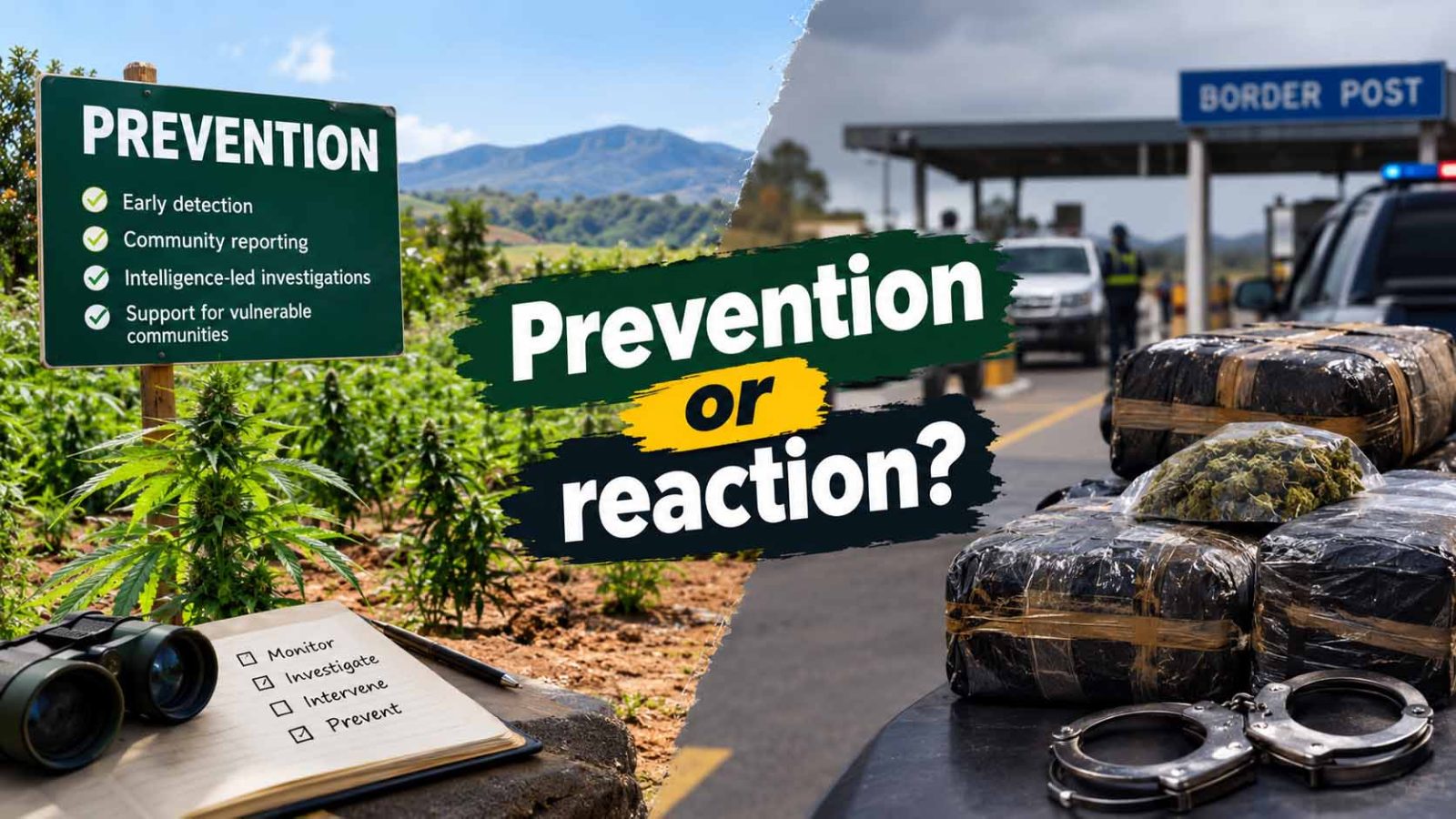
There is something worth examining when reports of emaSwati being arrested for dagga-related offences continue to emerge, sometimes involving substantial quantities of the drug and, in other cases, arrests across the border. While these arrests may demonstrate that law enforcement is actively pursuing those involved in the trade, they also raise an uncomfortable question: Are we doing enough to stop the problem before it reaches the point of arrest?
Dagga does not simply appear in large quantities at border posts or in the hands of suspected smugglers. Before it is transported, sold or intercepted, there is often a process involving cultivation, harvesting, storage and distribution. Depending on the circumstances, this process can take considerable time.
This raises questions about whether sufficient attention is being paid to identifying and addressing illegal cultivation before the produce enters the supply chain.
The issue is not whether those who knowingly participate in illegal dagga trading should be held accountable. Rather, it is whether Eswatini is making adequate use of opportunities to prevent the trade from developing in the first place.
If dagga is being cultivated on some homesteads for commercial purposes, it is worth asking whether there are effective measures to identify unlawful cultivation and intervene before the harvested crop finds its way into the market. Are the relevant authorities adequately assessing the scale of illegal cultivation in rural communities? Are there mechanisms for communities to report suspected commercial operations and are such reports followed up?
These questions matter because the point at which dagga is discovered during transportation may be far removed from where it was grown. By then, the crop has already consumed resources, changed hands and potentially attracted the involvement of several people. An arrest at the border may disrupt a particular consignment, but it does not necessarily address the source of the supply.
Any enforcement strategy must distinguish between different situations and respect the law. Nevertheless, understanding where illegal commercial cultivation occurs is an important part of tackling the wider trade.
When large quantities of dagga are intercepted, the immediate focus is understandably on the suspects, the drugs seized and the potential criminal consequences. These are important aspects of law enforcement. However, the public also deserves to understand what happens beyond the arrest.
How often do investigations into major seizures lead authorities back to the farms or homesteads where the dagga originated? How are suspected cultivation networks identified? What cooperation exists between law enforcement agencies, local communities and relevant traditional structures in preventing illegal commercial production? And how effectively are intelligence and information from previous arrests used to prevent future consignments from reaching the roads and borders?
These are not accusations against the police or other authorities. They are legitimate questions about whether the country is addressing every stage of the problem. Arrest figures alone cannot tell us whether illegal cultivation is increasing, whether enforcement has become more effective or whether the same supply networks continue operating despite repeated interceptions. Such conclusions require reliable information about cultivation, seizures, prosecutions and repeat offences.
Eswatini needs a prevention strategy that complements arrests with intelligence-led investigations, appropriate monitoring of suspected commercial cultivation and stronger cooperation with communities. Where the law permits, early intervention could help disrupt illegal supply networks before crops are harvested and transported. Public education could also clarify the legal consequences of participating in the trade, particularly for people who may underestimate the seriousness of trafficking offences.
There is also a need to understand the economic circumstances that may draw people into illegal cultivation and trading. Where financial hardship is a contributing factor, appropriate livelihood initiatives may help reduce vulnerability to recruitment into criminal networks. Such measures would not excuse criminal conduct, but they could form part of a more comprehensive response.
Ultimately, the objective should not simply be to increase the number of arrests or the quantity of dagga seized. It should be to reduce the illegal trade itself, while ensuring that investigations are fair, evidence-based and consistent with the law.
Every seizure represents an opportunity to investigate how the dagga entered the supply chain and what could have prevented it from getting that far. If the same questions continue to arise with every new report, perhaps the country needs to look more closely at what happens before the drugs reach the border.
The question, therefore, is not whether arrests are necessary. They are. It is whether we are intervening early enough to make those arrests less necessary in the first place.